Tag: economics

  • China’s Coral Reef Economic Stimulus

    China’s Coral Reef Economic Stimulus

    Chinese manufacturing policies are unsustainable. That doesn’t mean they won’t accomplish China’s goals.
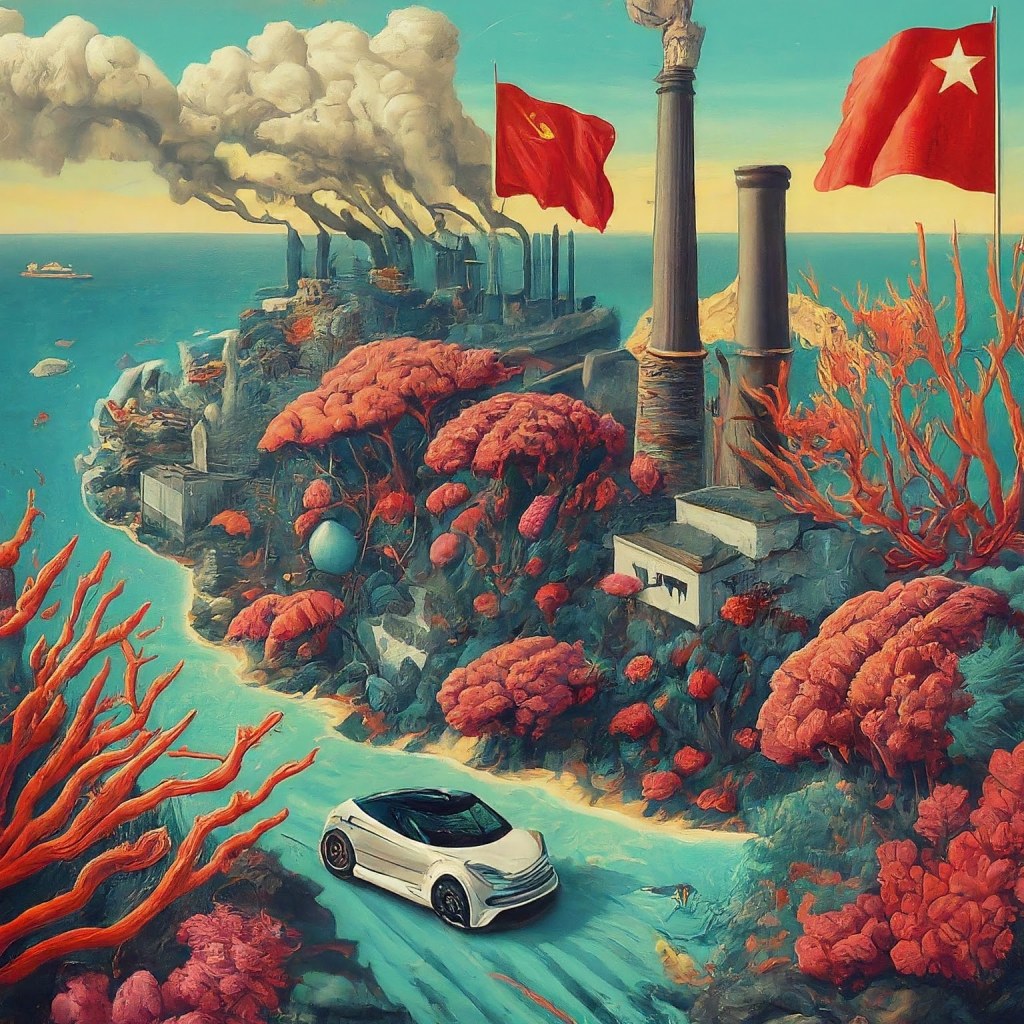
    The Chinese economy has been drawing contradictory comments in recent months. Amidst the gloom and doom of prognosticators declaring that the Chinese economic engine may finally be stalling, there is the new and sudden alarum about the flood of cheap Chinese exported goods that are now overwhelming global markets. While these opposing narratives may seem incompatible – how could a stalling economy be so productive and competitive? – they are actually very closely related. China may be pursuing a stimulus strategy that I liken to a coral reef: though many subsidized companies will fail, their skeletons will scaffold the success of China’s future industrial titans.

    The Disease

    On the one hand, it is incontrovertible that the Chinese economy is not what it once was. Property giants are imploding, Chinese outbound tourist numbers have not recovered to pre-pandemic levels, and the deflationary cycle of low consumer confidence threatens a long malaise. Chinese economic growth, even according to the official numbers, is clearly in a new low-growth mode, one deemed by the Economist as “economic Long Covid”.

    The Uniquely Chinese Cure

    But the way in which China is choosing to address this crisis is showing some signs of success, and is the result of Xi Jinping’s unique ideological outlook. Under Xi, the Chinese Communist Party has begun a slow return to its socialist ideological roots and sought a different form of stimulus than the standard prescription other economies would employ. In most of the world, the textbook response to a slowing economy would be a Keynesian, demand-side stimulus meant to put money into consumers’ pockets and jumpstart spending, keeping the economic engine moving – think of the American “stimulus checks” cut under Obama in 2009 or Trump and Biden during the pandemic in 2020-21. Xi Jinping and his tongzhi, however, view that kind of stimulus as capitalist decadence, fearing that any direct payments to individuals from the government would precipitate the kind of needy indolence that western conservatives love to lambaste (just one of the many ways in which Chinese governance is actually quite right-wing on the western spectrum). They refuse to pursue that textbook route. In seeking a resolution to the policy dilemma, the PRC has decided to use a variation on the same stimulus strategy they used during the 2008-9 crisis, which then injected money into local governments, construction programs, and large industrial corporations. The hope was then, as now, that by tying access to stimulus funds to jobs and industry, individual citizens would be compelled to go out and be productive, stimulating the old-school Maoist spirit of nationalist industriousness. At the same time the government could make long-term investments in critical areas like infrastructure and industrial technology.

    This time around, instead of injecting money into bloated and debt-ridden local governments and construction sectors, China is focusing on what it sees as the future: high-tech export-oriented manufacturing, with a clear emphasis on electric vehicles.

    “In June last year, China introduced a 520 billion yuan ($71.8bn) package of sales tax breaks, to be rolled out over four years. Sales tax will be exempted for EVS up to a maximum of 30,000 yuan ($4,144) this year with a maximum tax exemption of 15,000 yuan ($2,072) in 2026 and 2027.

    According to the Kiel Institute, a German think tank that offers consultation to China, the Chinese government has also granted subsidies to BYD worth at least $3.7bn to give the company, which recently reported a 42 percent decrease in EV deliveries compared with the fourth quarter of 2023, a much-needed boost.”

    https://www.aljazeera.com/economy/2024/4/20/are-chinese-evs-taking-over-the-car-market

    Beyond these significant numbers, EU and US policymakers suspect even larger, undisclosed boost from the Chinese government (particularly debt-driven incentives from local governments), prompting official investigations and declarations, and an even an official Chinese acknowledgement of  industrial overcapacity was real – a claim that Premier Li Qiang later reversed course on.

    The finger-pointing and blame game dynamics aside, the policy is not sustainable. Whether the subsidies are paid for by local government debt or by spending down of China’s cash reserves, or whether these industries are truly competitive, having large, tax-free industries is not sustainable for China fiscally, and in any event not acceptable for the world marketwise: “China is now simply too large for the rest of the world to absorb this enormous capacity” stated US Treasury Secretary Janet Yellen. In short, the world was unprepared to prevent the first China Shock, but will not accept a second one. Eventually, there will be a reckoning of China’s industrial overcapacity, many unprofitable zombie firms will close, and global markets will react as they deem necessary.

    The Coral Reef Economy

    There are two ways to understand the current dilemma. The first way is to assume that Chinese policymaking is a shortsighted reaction to a slowing economy and that policymakers did not anticipate the global backlash. The second is to think that policymakers took these steps despite these obstacles because there was a longer-term goal in mind. What, then, might that longer-term goal be? I find the analogy of a coral reef to be potentially helpful here. Though coral reefs are huge rocky structures, corals themselves are small living animals. In their deaths, the skeletons they leave behind make up the structure of the reef itself and remain useful to their successors, serving as scaffolds, the reef as a whole growing fractally upwards and outwards on the bones of the corals’ ancestors. Likewise, the Chinese EV push may be hoping for a similar outcome: although most of the current EV manufacturers will not survive once debts are called in, stimuli are removed and global markets harden, their skeletal infrastructure will remain in place to serve their kin: skilled workers, upstream supply chains, downstream market and aftersales contracts, distribution networks, and most importantly technical innovations, will remain in place and can be bought out and more efficiently utilized by the (as China perhaps hopes) handful of surviving EV manufacturers who can, like corals, use the skeletons of their comrades to grow upwards and outwards. Furthermore, growing corals compete with other coral species for space, and an EV sale by a Chinese company, even a company destined for failure, is one fewer sale for a non-Chinese EV company. The Chinese “surge” in EV exports are not just beneficial for China directly, but, in China’s zero-sum vision of global competition, are indirectly beneficial for China by depriving rivals of the same sale, suffocating the competitiveness of the Teslas and Volkswagens of the world. The reef after the stimulus-fueled surge will be one in which the surviving Chinese companies can reign supreme.

    I will not argue that the second analysis is indeed the perspective of PRC policymakers, or even if it is that the “coral reef” scenario will play out as outlined here. Many would argue that China’s policy responses are indeed short-sighted and reactive, and that only the long-promised shift to higher consumer spending will guarantee China’s long-term financial stability and comfortable integration into the global political economy. But it is difficult to deny that Chinese EV manufacturing has made impressive leaps in both technology and capacity in recent years, and regardless of the fate of the current market situation, it seems likely that at least a few such manufacturers will remain globally competitive in the long term.
  • Culture as a Trade Barrier

    Or one way illiberal states get the better deal on trade agreements

    A concept that I would have imagined was thoroughly discussed, but which I somehow cannot find discussed anywhere, is the concept of culture as a trade barrier. Now the idea that culture affects trade is nothing new – no one ever claimed that every country should buy equally all the products of the world; culture is a normal and expected part of the global marketing and trade landscape. But what I have never seen discussed is the extent to which culture can act as a hard barrier which can act one way more strongly than the other, or as one that is malleable for the purposes of statecraft – particularly in the hands of totalitarian societies that can shape public opinion and craft cultural trade preferences more easily than democracies.

    What I mean when I say that culture can be a trade barrier, and often should be studied and analyzed as one, is this: different peoples in different countries tend to buy different things. Sounds simple, right? But it’s not simple. Some cultures can be very fussy about the products they consume coming in particular forms or from particular places, and these preferences can make foreign producers of ostensibly similar products (replacement goods, to use the formal term) have to fight uphill battles to get their products into those markets, even if there’s not an equivalent in the other direction (I list several examples below). These preferences can take many different forms: sometimes people tend to buy things that are from their own country, or tend not to buy things that are from a specific country, for completely irrational reasons or even without any particular reason, just by background cultural “by-default” programming. Or sometimes, because of the cultural traditions and preferences of the country, there may be an extreme difficulty getting the citizens of the country to buy things from somewhere else. Critically, these preferences are not fixed, and are susceptible to marketing campaigns, but are equally susceptible to state programs of marketing or propaganda (depending on your perspective).

    Nationalized Preferences

    For an example of “national preference” trade barriers, we need only think of “buy American” campaigns. In the context of World Trade Organization or other free trade agreement (e.g. the European Union or USMCA), national governments have their hands tied on providing direct subsidies, protections, and benefits to the industries covered by the agreement. For example, if it is agreed that countries should trade bicycles without trade barriers, it would be a violation if a party to the agreement were giving government subsidies to their domestic bicycle industry, or doing something to restrict the imports of bicycles, causing an unfair advantage in their competition with trade partners; the WTO has mechanisms for levying punishments on violations by members. However, countries have the possible workaround of trying to shift national preferences. A campaign encouraging people to “buy American” can potentially have small effects that shift buying preferences and result in some difficulty in non-American products competing in certain contexts – a slight raising of the cultural trade barrier. Though in practice these campaigns don’t have much effect in the US, in other countries waves of national sentiment can constitute huge trade barriers: the Chinese government has long fanned the flames of anti-Japanese sentiment, causing Japanese shops and factories to be damaged and close due to Chinese protests, and even causing rebranding of Chinese brands accused of being “too Japanese”; when this happens, Japanese sales to China of many goods predictably fall. Critics may argue that preferences of national origins are often “signals” of quality (i.e. with no further information about products that appear identical, most western consumers would likely judge “made in China” to be lower quality than “made in Germany”), this is not a 1:1 correlation with preferences for buying things from a specific country – people may choose to buy from one’s own country even if it doesn’t mean cheaper or better quality, or buy from “friendly” countries over “unfriendly ones” as seen by American boycotts of French-sounding products at the outset of the Iraq War. So clearly there is something else going on aside from signaling.

    Denationalized Preferences

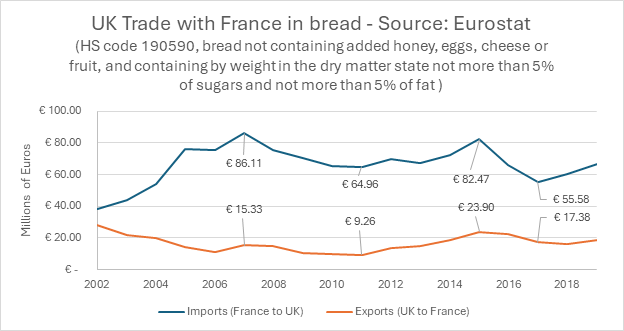
    For the denationalized “cultural preference” barrier, take milk for example. In country A people may be perfectly willing to buy and use UHT (Ultra-High Temperature pasteurized, i.e. shelf-stable) milk as any other milk. And in a neighboring country B people may overwhelmingly prefer to use fresh, refrigerated milk. As a result, country B can UHT-pasteurize and export all of its excess milk production into country A, but country A will have a much harder time shipping fresh milk to country B at affordable prices, since such shipments would require refrigerated trucks and much more efficient logistical planning to ship the milk larger distances over international borders. Thus, the culture of country B constitutes a form of trade barrier relative to that of country A. For a data-backed real-world example, consider the preferences in bread consumption of France versus the UK. In the UK, bread is often consumed, as in the US, in a soft, pre-sliced form, easy to pop in the toaster for breakfast, and just as easy to keep fresh on the shelves for days on end; in France, bread is by and large consumed fresh, with a crackly-crusty exterior while still being soft on the interior, a juxtaposition that breaks down within hours if wrapped in plastic, or becomes too dry and hard if left unwrapped – in short, impossible to pack and ship internationally. As a result, we got the following (before Brexit):

    French exports of bread to the UK dwarfed the inverse – France could produce and ship the kind of bread that Britons wanted to eat, but the UK couldn’t produce and ship the kind of bread that French wanted to eat. Thus French exports to the UK were, since 2005 or so, 3-6x UK bread exports to France. There are certainly other possible explanations for this phenomenon, but I imagine that the cultural barrier is a significant one.

    Another notable real-world example, though slightly more abstract, was salmon. Prior to the 1990s, Japan consumed very little salmon and almost exclusively in a cooked form, viewing salmon as a fish prone to parasites that should not ever be consumed raw, whereas in Norway raw or lightly smoked salmon is a staple of the national cuisine. In the late 1980s, Norwegian fishermen found themselves with a surplus of Salmon and insufficient markets to offload it into, and thus they sought to change the culture of Japan through a fierce marketing campaign that transformed the culinary culture of the land of the rising sun – salmon sushi is now arguably one of the most iconic emblems of Japanese cuisine. The culture of Japan constituted a trade barrier, and clever Norwegian marketing lowered, or even reversed, the cultural trade barrier.

    The Illiberal Advantage

    As I mentioned, one aspect of this discussion – the impacts of culture on trade – are nothing new. But what is often missed from these analyses is that it does not operate equally for all countries – some countries have much stronger cultural “walls” than others. It stands to reason that authoritarian regimes with tight media controls (e.g. China) have much more power to shift culture in a direction that  brings economic benefit – for example, encouraging Traditional Chinese Medicine as a way of stimulating the domestic market and raising a trade barrier to foreign pharmaceuticals, or perhaps doing behind-the-scenes manipulation to discourage state-affiliated firms (increasingly all major Chinese firms) from buying from geostrategic competitors. As such, liberal democracies have a strong incentive to understand this greater power of their non-democratic rivals and trade competitors to shape tradeflows and effectively circumvent and nullify aspects of free trade agreements. A solution would be to create monitoring offices at the WTO or embedded in trade agreement arbitration mechanisms to set limits on the scale or intensity of marketing campaigns or state manipulation of cultural preferences that affect trade.

  • State Capacity Libertarianism Reviewed

    At the beginning of 2020, Tyler Cowen brought forward a formulation for what he tentatively dubbed “state capacity libertarianism”. More than a few events of global significance have transpired since then, but the idea has remained in my head and has been spreading through the world of political economy. I have been meaning to engage with the concept and synthesize some of its precepts with my own view on political economy and the role of the state – versus the absence thereof – in crafting a “good” society.

    I would recommend that anyone reading this piece read the outline of State Capacity Libertarianism (henceforth SCL) as outlined on Marginal Revolution. For those who do not choose to do so, and also to be up front about my own mental summary of what SCL means to me, I would summarize it as this: Cowen’s definition starts from the libertarian precept that the market should be largely free and should be the primary instrument for determining the allocation of resources within and between countries – and that the state should in general do no more than is necessary. Where Cowen’s definition breaks with this traditional libertarian minarchical view, however, is in taking a much more expansive view of what is “necessary”, seeing an important role for the state in subsidizing scientific research, financing megaprojects, and building and maintaining infrastructure. Cowen also sees SCL as having high state authority and capacity in enforcing its narrow responsibilities, and also is interventionist (or at least not anti-interventionist) about allying with or fostering kindred regimes around the world.

    My own views come from a prior synthesis – a college leftist who went to work for the Oklahoma Department of Commerce, and interacted with the application and rationale of supply-side principles into the real world. In my time working for the government of one of the most pro-business states in the US, I learned that what most people want most is good jobs, and what job providers want most is a good workforce, a thing sadly missing in many areas that are most badly in need of jobs. For an area to have a good workforce it needs technical schools and universities to prepare the workforce, medical providers to keep them healthy, and infrastructure to get them to the jobs. I thus view the relationship between business and labor as inherently cyclical, with the role of the government in the economy to prevent stagnation and keep things moving dynamically. It is thus no surprise that one of the most highly sought tax incentive programs of the state essentially subsidized the education costs of aerospace engineers.

    What I arrived at is a formula I would dub a kind of socially-minded neoliberalism or, to coin a decidedly inelegant term, “Growthcialism”: I too start from the highly evidenced proposition that a mostly free market and economic growth are of primary importance to societal wellbeing as well as the vitality and longevity of a nation-state. But I depart from the libertarian (and SCL) formula in thinking that the market and economic growth can and should be fostered by social programs that maximize economic efficiency, worker productivity, innovation and general economic dynamism. In one view, I am essentially a modern Hayekian, though with a leftist emphasis on Hayek’s view on the role of regulation and government interference. To wit, take this passage from Hayek that is often glossed over by modern Hayek fans:

    “The successful use of competition does not preclude some types of government interference. For instance, to limit working hours, to require certain sanitary arrangements, to provide an extensive system of social services is fully compatible with the preservation of competition. There are, too, certain fields where the system of competition is impracticable. For example, the harmful effects of deforestation or of the smoke of factories cannot be confined to the owner of the property in question. But the fact that we have to resort to direct regulation by authority where the conditions for the proper working of competition cannot be created does not prove that we should suppress competition where it can be made to function. To create conditions in which competition will be as effective as possible, to prevent fraud and deception, to break up monopolies – these tasks provide a wide and unquestioned field for state activity”

    Hayek, Road to Serfdom, 46

    Despite these exceptions, on the whole, the historical evidence is clear that markets and capitalism are powerful without rival, and should be channeled rather than opposed. The success stories of East Asia in the 20th century are golden examples of the power of export-oriented, mostly capitalistic industrialization, though analyses such as Joe Studwell’s How Asia Works do illustrate an important role for active state intervention in such areas as land reform, export quotas, and a protected fostering of capital markets. However, that consensus seems most applicable to industrializing or industrial economies like those of East Asia in the mid-20th century. Observations of Northern European economies (Germany, Denmark) demonstrate that substantial social programs are not antithetical (and may be necessary preconditions) for growth and competitiveness in post-industrial economies.

    To discuss one area where I disagree with SCL, consider Cowen’s[1] hand-waving dismissal of social programs with the curt phrase “demands of mercy are never ending”. Social programs viewed through the “growthcialism” lens are not mercy – they are net benefits to the overall economy. They improve the quality of the workforce, they distribute costs associated with goods that have distributed benefits (such as health and education), and they improve things like labor mobility, an underrated measure of overall labor market health. In this way they work exactly like small-scale megaprojects, which Cowen/SCL openly embrace. One of the many touted pro-libertarian benefits of UBI is its supposed ability to liberate people to pursue their dreams, to innovate with startups, learn new trades, or tinker away at inventions. The same holds true at least in part for programs that free people from the need to work through college to pay for tuition, or that allow people to quit their jobs without fear of losing medical coverage.

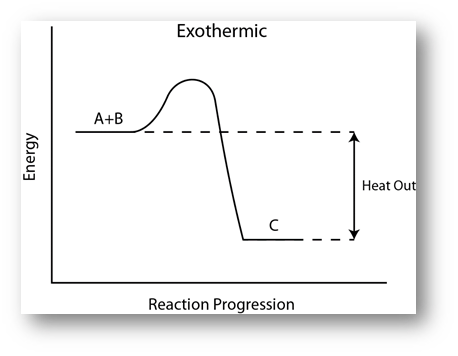
    To tangentially segue, I began my university education in Chemical Engineering, and I have always maintained an engineer’s viewpoint when addressing questions of political economy. I find that good social program and megaprojects work very similarly to the chemistry concept of Activation Energy: sometimes a chemical reaction is primed to happen and would be able to sustain itself once it begins occurring, and indeed would generate a net output of energy, but it requires some sort of exogenous “push” to get the ball rolling (a mundane metaphor would be a boulder at the top of hill that just needs a jolt to get rolling).

    A worthwhile megaproject or social program is like an exothermic reaction – even though the initial cost may be prohibitive for some actors, once it is overcome the net output can be highly positive

    Megaprojects like the interstate highway system, Hoover Dam, Manhattan project, Apollo Program or national broadband can have prohibitive startup costs that even the largest private corporations would struggle to justify maintaining on their balance sheets for years, even if on the scale of decades they are clear economic winners.[2] For governments, however, these costs are often drops in the bucket, and investments in national wellbeing do not have to be recouped directly; growing GDP is often justification enough for investments in the minds of bondholders. If SCL advocates see megaprojects as beneficial, why does a college education, effectively a megaproject in the life of an individual, not count as a mass-distributed megaproject? Why does the same logic not apply?

    In short, Growthcialism also starts from the libertarian precept of the power of the market and the immense social good of economic growth, though with some caveats about the market taken into account.[3] However, the SCL still shares with classical libertarianism a core false assumption about human nature, the idea of a homo economicus capable of making rational calculations about things like healthcare and education. The problem is that homo sapiens often has trouble calculating things that involve such factors as social standing, present-versus-future utility, etc. High upfront cost of education or medical treatment may never at any one point be worth it compared to a slow trickle of marginally lower productivity or earnings over a lifetime, and we are all familiar with the reasons why medical treatment does not obey the traditional assumptions of supply and demand.[4] The state has an active role to play in transforming those high upfront costs into low lifetime costs via tax-funded public financing of health and education.

    Coming as I do from a left-leaning perspective (meaning that my median policy position falls on the left of the American political spectrum, though I have opinions (and follow academic consensuses) that fall all over the map), SCL presents an interesting alternative model to the libertarianism I have grown up knowing and rejecting– and indeed, it presents a model of libertarianism that is steelmanned and harder to assail. And if SCL is the rival to a left-leaning welfare state and this is the dialectic for the creation of new sociopolitical regimes around the world, I think the world will be better for it. However, these are changing times, and populism and nationalism are infusing national politics around the world, from the US to the EU even unto China. Increasingly, governments are pressured to be interventionist and responsive, to embrace democratic legitimacy over rationality and science, as the state is forced into a mode of reactivity against a public armed with ever more powerful hooks and levers (a la Martin Gurri). My fear is that unfortunately both Growthcialism and State Capacity Libertarianism are naïve idealist views, and that politics, as usual, will find a way to screw everything up.


    [1] It is (perhaps intentionally) ambiguous whether Cowen is describing his own views. However, as Cown has in the past described himself as libertarian, and says that “smart libertarians” have gravitated to SCL, it seems a safe assumption that Cowen is attempting to codify his own views via the coining of this term. What’s the Straussian reading, as Cowen would say?

    [2] and private corporations might struggle to actually harvest the diffuse economic benefits.

    [3] For me the primary errors of market fundamentalism are that 1, need is not concomitant with ability to pay; and that 2, need (defined as real material benefit of a good or service) is not coterminous with want (the perception of material benefit of a good or service), the decoupling of these being the entire foundation of the field of marketing, to the end of being able to inflate the latter.

    [4] Urgency, lack of transparency, possibility of complications, high barriers to entry, etc

  • If you’re eating locally for environmental reasons, you’re doing it wrong

    If you’re eating locally for environmental reasons, you’re doing it wrong

    If you’re eating locally for ecological reasons, you’re doing it wrong. If we’re talking about the economic and cultural benefit to local producers and sellers, that is another story. But ecologically, since transport makes up a negligible part of the ecological impact of food (see the chart below), it is better to make use of an idea I call comparative ecological advantage (defined after the chart).

    https://ourworldindata.org/food-choice-vs-eating-local

    What is comparative ecological advantage?

    It should be clear that not every region, state, or country can easily produce every kind of food. Kansas may be perfect for growing grain, Wyoming is ideal for grazing cattle, and Southern California is excellent for growing fruits and vegetables. Similarly, avocados grow relatively better in Mexico and oats grow better in Scotland. None of these natural advantages are insurmountable – we can always create greenhouses, hydroponic systems, and microclimates to grow everything anywhere, even in space. But at what cost? Bringing water to the desert, heating winter greenhouses, and replacing tropical soils come at an immense environmental cost that defeats the point of eating in environmentally responsible ways. We can think of eating locally at any cost and refusing to transport food long distance as a form of ecological mercantilism.

    In the 1800s, David Ricardo helped to deconstruct the accepted wisdom that countries should strive to produce everything they need internally and import as little as possible (mercantilism). He showed mathematically that it produced more prosperity for everyone if countries specialized in what they could produce most efficiently, and then freely traded internationally. This idea was called “comparative advantage” – the thing that a country was best equipped to produce, relative to the other things that they could choose to produce. This destruction of the prevailing logic of mercantilism unlocked the first era of globalization and created the trading system that we still use today, two centuries later. The exact same logic – the faulty logic of ecological mercantilism and the economic logic of ecological comparative advantage – is at work today. Specialize, trade, and reap the fruits of global integrated markets for the benefit of all mankind.

    Less desirable alternatives

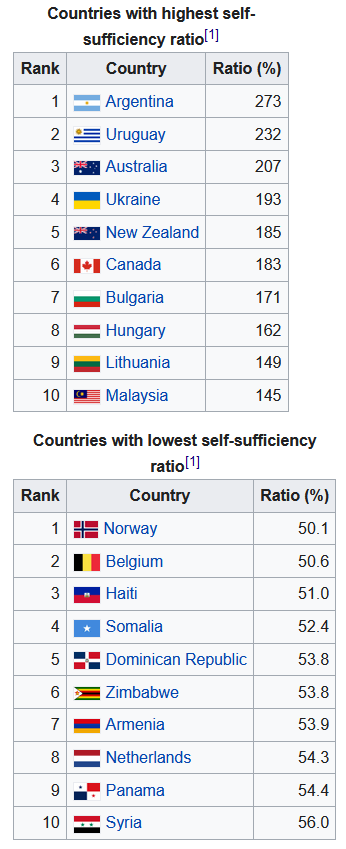
    Of course, we could also go another route: maybe each country or region should only eat the things that it can grow well in the vicinity. But we need to think this through a bit. Self-sufficiency in food is an unreachable dream for many regions of the world (see the chart below). Some countries like Argentina or Australia are lucky exceptions – they are sparsely populated with lots of arable land, and thus able to feed themselves many times over. However, countries like The Netherlands, Belgium, and Norway, for example, can only produce 50% of the food they consume. When we consider that countries like Australia or Canada are overwhelmingly producing things like meat and grain, it means these areas would be faced with rather poor diets were they to eat only locally produced foods. To implement local-only consumption globally in nutritionally and culturally acceptable ways, there would need a restructuring of the entire population of the world into high-fertility areas (which would necessitate converting the land of these high-fertility areas into buildings, the most ecologically destructive thing we can do). But why would it be better than a system of production and exchange according to comparative ecological advantage?

    https://en.wikipedia.org/wiki/List_of_countries_by_food_self-sufficiency_rate

  • An Economic Policy Film Review: “Default”

    An Economic Policy Film Review: “Default”

    mv5bowexyzlinjytmmvhyi00ntdmlwe1ogitztnmyty2yzzmnznhxkeyxkfqcgdeqxvyoda4odiwndm40._v1_

    I recently had the opportunity to watch the Korean film “Default” (Gukgabudo-ui Nal) (2018). The film models itself quite transparently on “The Big Short” (2015), aiming to be a behind-the-scenes tell-all about the lead-up to the Korean chapter of the 1997 Asian Financial Crisis. To the extent that I knew far too little about this Korean leg of the crisis, the film was informative and interesting; however, I was awed with how much this film seemed to advocate policies that ran counter to good and standard economic practice, and how much of a biased and one-sided perspective the film took against everyone’s favorite perennial punching bag, the IMF. Allow me to give a quick summary before giving a few salient scenes and a counter from the perspective of orthodox economic policy.

    In 1997, The East Asian Financial Crisis was underway due to a sudden loss of confidence in East Asian governments/economies and a pull-out of credit and investment from global investors. The intricately interwoven economies of the area fell like dominoes as each country had to call in favors and liquidate investments in the next in order to stave off complete collapse. In the fall of that year, after it seemed that most of the damage had been confined to Southeast Asia, Korean policymakers came to realize that they were overexposed and would soon go over the cliff as well. Quixotic Bank of Korea head of monetary policy Han Shi-hyeon, the film’s main protagonist, is shown attempting to take the side of “the people” against the banks and big corporations who, as the film would portray, created the mess.


    Criticism 1: Money alone does not an economic crisis make

    As the drama unfolds, the governments economic officials strongly urge that no information about the impending crisis be made public, but the film wishes us to side with Ms. Han’s plan to “tell the people” about the issue so that they can begin saving and can avoid making poor investment and savings decisions. To really sell this argument, the film weaves in another vignette of a factory owner who takes out a large loan just hours before news of the crisis breaks. The film’s obvious lesson and argument are that “the government should have been transparent about the problem as soon as it could, and the opacity caused undue tragedy for common people”.

    So what exactly is wrong with this perspective? The simple answer is that economies are not made up entirely of dollars and products. They are equally composed of expectations and perceptions. As John Maynard Keynes dubbed them, “animal spirits” like consumer confidence can cause economic effects that dwarf many material realities. It is not balance sheets, but rather perceptions of and reactions to those balance sheets, that make a crisis. An issue on a balance sheet can be corrected, or policy safeguard can be effected, without consumers or traders ever knowing and without a crisis ever occurring. The goal of any government in such a situation should be to delay the public realization of a problem as long as possible while stopgaps and corrections can be put into place. It is a race against the public finding out – to go directly to the public and announce a crisis is to call one into being. The couple of factory owners who make bad investments because of the lack of news surely exist, but are red herrings here, very small unfortunate situations in the scheme of an economy of millions of people.


    Criticism 2: Whether to Turn to the IMF

    A little later in the film, the question comes up of whether to turn to the IMF for help. Just a few of the the most egregious tidbits:

    • “The IMF Doesn’t just lend money. They’ll make demands about running our economy”
    • Ms. Han: “In return for a bailout loan, they[the IMF]’ll require unreasonable conditions”

    This line of critique of the IMF is extremely common, but misses the point entirely. The IMF is a lender of last resort. Any country would rather go to a bank or an allied national creditor first. No one compels a country to go to the IMF. The IMF is bitter medicine for a country in such a bad financial situation that no other bank or lender in the world wants to take a risk. And if a country has gotten itself into that situation, it needs medicine, no matter how bitter. The reforms required by the IMF are often radical, though are always in line with global economic best practices and policies for restoring financial solvency. But any country has the option of not agreeing to those reforms and not taking the loan. As the IMF representative in the film retorts to Ms. Han, the IMF offers nothing other than “the funds you asked for…you’re not exactly in a position to make a deal”.

    Relatedly, Ms. Han’s proposed alternative, going to the US and EU for loans and then “using government-owned assets as security” for ABS (Asset-Backed Security) bonds, is not different in principle from a common IMF policy of selling off bloated government assets into the market to raise capital. Either way, government assets are being marketized.


    Criticism 3: the Nature of Developing-Country Economic Crises

    This criticism is a bit of my own soapbox about an issue that I have never seen put in the terms that I think of it in. As Ms. Han states in the film, “The question of improving the Korean economy should be considered separately from the foreign reserves issue.” But to counter Ms. Han, when a developing country has a crisis, it does not have just one crisis. If it has an economic crisis, it also has a financial crisis and the two are inextricably linked, with only one way out. This presents a terribly inflexible situation.

    To explain what I mean, let us consider how things work in a “developed” country like the United States. When the US faced its financial and economic downturn in 2008, there was an immense decline in consumer confidence and consumer spending that threatened to turn a recession into a depression. At the same time, however, there was very little lack of confidence in the solvency of the US dollar or the solvency of the US government. As a result, lenders were happy to back the expansion of the US deficit to pay for TARP, the Auto Bailout, and the Stimulus, three massive Keynesian expenditures that sought to – and by all indications ultimately were able to – stabilize consumer sentiment and market confidence and reverse a slide into depression.

    When an economy has a downturn, what the government should do according to modern post-keynesian orthodoxy is inject money into the economy through stimulus programs – be they checks or tax incentives – to rev it back up. But to do this, the government must have at least one of two things: the cash reserves to do it, or the confidence of lenders to be able to finance it at a deficit.

    So how does it work differently in developing countries like 1997 Korea? Such countries often lack these latter two resources. When an economic crisis hits, developing countries often have relatively little cash on hand to directly pay for a keynesian injection of funds into the economy; they also don’t enjoy the unwavering confidence of the markets in the way the US does. So they cannot really pursue Keynesian stimulus policies to any realistic degree. One of their few policy levers available for economic stimulus in such a situation is inflation: lower the value of the currency so that the country imports less and exports more, increasing the balance of trade and helping to stabilize the economy, but coming at the cost of consumer purchasing power, as well as the competitiveness of some import-heavy sectors, as well as overall standard of living. One problem with this is that if the country’s external debts are denominated in other currencies (e.g. if Korea took out loans in Yen and US Dollars), the cost of those debts would increase in terms of the domestic currency (e.g. the Won). Thus, what is good policy for paying of government debt is bad policy for stimulating the economy, and vice versa.

    I do not envy the government of a developing country during an economic crisis.


    Criticism 4: The Bundling of Neoliberal Policy Positions with General Assholery

    This is not a policy critique exactly, but a critique-of-a-critique. In the film, the primary proponent of seeking the assistance of the IMF and pursuing neoliberal reforms in the Korean economy, the unnamed Vice-Minister of Finance, is made out to be a general asshole. Shortly after giving his strawman argument for seeking IMF assistance, he devolves into a sexist and classist tirade, insulting his female colleagues as overly emotional and demanding they – cabinet level or other high-ranking women- bring him coffee. It should go without saying that I find these attitudes repulsive in and of themselves – once again, I unabashedly favor the complete and total socio-politico-economic equality of the sexes  – but I also find it repugnant that the only defender of any sort of neoliberal policies in the film is also made to be an asshole.

    This is a common trope, without question: neoliberal reforms are heartless and cruel, they put money before people, they put big faceless institutions ahead of society, etc. Rarely do we see strong and explicit support for such policies. Rarely do we hear how free trade brings peace and prosperity; rarely do we hear about where a lack of regulation actually improves well being (not that I favor complete deregulation of the economy, far from it, but there are many wonderful bright spots – the early days of Silicon Valley come to mind). And we never get to see the counterfactuals of what countries that do seek the help of the IMF would do if the IMF did not exist.  We do not see the counterfactual world in which the moral hazard of writing off the loans of many developing countries runs rampant. And when we do get to see these policies defended in popular media, it appears to always be by the most shallow, arrogant, and cold-hearted of representatives.


    Concession and Conclusion:

    Ms. Han does have a few valid criticisms, however. She notes with alarm that some of the IMF conditionality requirements, such as the requirements of hostile takeovers and several capital and labor market reforms, coupled with the involvement of the US treasury, may serve primarily to advance US interests rather than to simply shore-up the solvency of the Republic of Korea. These criticisms are valid, and indeed there has been a chorus of criticisms for decades that IMF reforms do unfairly privilege large businesses in the market at the expense of SMEs and social stability more broadly. These critics must at least be listened to, if only to secure the legitimacy of neoliberal institutions. For if these systems and institutions are not defended, there are others waiting in the wings to take their place.

  • Free Trade – the American Past and Future

    Aside from human decency, several minorities, and general faith in the American political system, one of the lesser-lamented victims of the post-2016 turn in American politics was Free Trade. Strangely, from it being one of few things that most American politicians agreed upon in 2012, free trade has fallen to the wayside as a cornerstone of American economic policy. Before we so lightly abandon it, let us consider what it has done for us, and what it can still do.

    In the wake of the second world war, the united states stood alone as a colossus of industry. Western Europe and the Japanese Empire, the most industrialized places outside the Americas, as well as secondary centers like the Soviet Union and the Middle East, had been devastated by years, in some places nearly a decade, of total war. In 1945, the United States possessed nearly half of the world’s industrial capacity (estimates vary but over 40%) – literally all of rest of the world combined could barely equal the combined industrial output of the United States.

    During this period, it made complete and total logical sense for the United States to pursue policies of free trade, and to get others to do the same. But let us dig a little bit into the why of the thing. To some, this idea is intuitively obvious; to others, free trade means hemorrhaging jobs overseas and impoverishing workers and undercutting the power of unions. But in the postwar years, the United States with its unrivaled industrial capacity was doing two things that benefitted from free trade: 1, exporting these manufactured goods like cars, radios, and the nascently popular television, and 2, importing the raw materials like wood, agricultural products, and metals to be turned into these manufactured goods. For a country in these situations, it was beneficial to go knock on the doors of trade partners, and propose an exchange: the US would allow their exporters to sell without tariffs into the US, and in return they would allow US exporters to sell without tariffs into their markets. For many of these countries like Latin America, East Asia, and the Middle East, who were major exporters of these raw materials and importers of finished goods, these free trade deals made intuitive sense as well; there was little need for coercion and strong-arming or massive expense of diplomatic capital to see most of the world embrace a regime of free trade and open borders, especially considering that a major cause for the great depression and ensuing Second World War was the imposition of punitive, beggar-thy-neighbor trade barriers and the ensuing collapse of global commerce (global trade in 1933 collapsed to 1/3 of its value in 1929).

    Now back in the United States, surely this embrace of free trade in the immediate postwar era meant that these foresters and coal miners and farmers were being outcompeted by these cheap imports and leaving their communities impoverished, and the CEOs were getting fat off the profits, like many people allege is happening today with deals like NAFTA, right? Quite the contrary. There are many different contributing factors to why this didn’t turn out poorly (and in fact turned out so well) and intense political debates and entire academic careers surround the relative importance of each one, but amongst the most important (in no particular order) are these:

    • American (and indeed global) industry in this period was still highly labor intensive and much of it did not require many special skills; those unemployed miners, farmers, etc. did not have very much trouble finding work, preventing mass layoffs and unemployment
    • The 1944 GI Bill provided funding for returning military personnel who had served in WWII to get training and educations, allowing immense mobility into the growing and expanding higher-skilled post-industrial sectors of the American Economy. Between 1944 and 1956, nearly 10 million veterans received these education and training provisions (considering the US population in 1950 was only about 150 million people, this is an enormous swath of the American workforce receiving post-secondary education assistance).
    • The top marginal tax rate in much of the 1950s was nearly 90%. Economic inequality remained very low and social mobility remained very high. The increased government revenues resulting from these tax rates funded the infamous Military Industrial Complex as well as such far-reaching investments as the Interstate Highway System which circulated massive amounts of money throughout the economy.

    As a result of these and other factors, what happened was that American companies had massive demand for their increasingly advanced manufactured goods as the economies of Western Europe and East Asia rebuilt, and sold easily as a result of lowered or absent tariffs and barriers to trade; additionally, their access to cheap tariff-free raw materials from Latin America and elsewhere meant that they stayed profitable, were able to grow and soak up massive amounts of excess labor in the US labor market, preventing mass unemployment and contributing to a growing middle class and the halcyon prosperity of the 50s and early 60s. High marginal tax rates and high investments in social programs, education, and infrastructure ensured unparalleled levels of socioeconomic mobility. And many developing countries, many of them still under the yoke of European empire, were either struggling with fundamental problems of internal development and wartime devastation (e.g. Korea) or finding their own path to prosperity via more efficient and productive exploitation and export of basic agricultural goods and natural resources such as via the route that Argentina followed in the late 1800s when it briefly surpassed France, Sweden, or Italy in economic output. Eager for access to US markets in exchange for lowered tariffs on imported manufactured goods, much of the world climbed aboard the trade bandwagon.

    In this new regime of free trade, between 1945 and 1970 the volume and value global exchange skyrocketed, and American prosperity along with it.

    The current state of world affairs could not be more different. Countries like China and Mexico are not content to sell agricultural products and ores and buy American cars and televisions; they produce televisions, cars, and durable goods of their own, and often more cheaply and innovatively than those produced in the US. What began in the late 60s as Volkswagens and later Hondas began outcompeting GM and Ford in the US market has become the new global status quo – the United States holds no monopolies on manufactured goods, electronics, or post-industrial services.

    Politicians like Bernie Sanders and Donald Trump are in one respect right when they assert that the United States cannot maintain prosperity by doing exactly what it has been doing with regards to free trade, and that continue going down that path will lead to the end of the American working class and the continuing hemorrhaging of jobs and wealth to developing countries. If one defines the working class as the class that can make a decent living off of relatively unskilled labor, particularly in manufacturing, those are some of the jobs that are inherently likely to relocate to areas with cheaper labor, like the Chinas or Mexicos of the world.

    However, the politicians like Sanders and Trump are completely wrong in the assertion that the response to this loss of jobs and massive trade deficits should be protectionism and a retreat from neoliberalism and free trade. Rather, an advanced post-industrial economy like the United States has no business trying to compete with developing and industrial economies in unskilled manufacturing; the Chinese manufacturer of bicycles or computer monitors will always be able to outcompete the American manufacturer in such products, because the Chinese factory worker only requires the wages to sustain a Chinese factory worker standard of living. Unless the United States is willing to sacrifice all of the advances in comfort and standards of living for the last 50 years, we will never be able to compete with China in basic manufacturing. Instead we should strive to be competing with Japan and Germany in advanced electronics and engineering, energizing our Infotech sectors on the West coast and biochemical clusters in the Northeast, and investing in clean and renewable energies in the Midwest, not striving to protect the dying industries of the Rust Belt.

    The only obstacle is that the US will have to rebuild much of the institutional foundation of 1950s prosperity in order to accomplish this transition. The US should be investing in trade and technical schools and public universities to make sure that those previously unskilled manufacturers have the skills and talents necessary to work on advanced manufacturing, in the way that was done with the GI Bill in the 40s and 50s. We must invest in new infrastructure; in a 21st century analog to the Interstate Highway System, the US must craft nationwide broadband and smart grids for all, allowing underprivileged students access to the socioeducational benefits of resources like Wikipedia, Khanacademy, and Youtube as well as for Midwest energy production in wind, natural gas, biofuel, and solar energy to power the major coastal cities. We must strive for the future, not the past; we must strive to compete with countries whose standard of living we envy, not those whose standards of living we have surpassed long ago. A brighter future is possible. But we must fight for it.