This post is based on a true story from my wife’s family. She is from southern France, and several of her family members, including a great aunt and uncle, were refugees from Spain in the broad context of the Spanish Civil War and early Francoist regime. Because of this background, they carried with them certain habits and values shaped by hardship, what can only be described as a “culture of poverty.” One of the most poignant and interesting of these legacies was that at one point my wife’s great aunt and uncle voluntarily ate stale, hard bread for most of their lives, even when they had fresh bread in the house.
To understand this, it helps to know something about Southern European bread culture. In France, Spain, and Italy, bread doesn’t typically mean the pre-sliced, plastic-wrapped loaves common in the U.S. and Northern Europe. Bread in Southern Europe generally means a preservative-free loaf, baked every day at the local bakery (the exact composition for typical loaves is even codified in French law). In these cultures, the texture of the bread is everything: a good loaf is hard and crackly on the outside but soft on the inside. If these loaves are sealed in plastic bags like American sandwich bread, the moisture equalizes between the interior and crust, and the entire thing becomes unappetizingly spongy. So this bread is always sold in paper, which keeps the crust crunchy, with the downside that within a day or so the bread will get dry and hard.
Some days my wife’s great aunt and uncle would do their shopping and pick up their usual loaf of bread, only to find upon returning home that for whatever reason they hadn’t finished their loaf from the previous day. And like many who live through poverty and hunger, they obeyed one cardinal commandment above all others: thou shalt not waste food. So they would eat the previous day’s loaf, lest it go to waste, before beginning the next one. There would inevitably be some of the new loaf left over, and the cycle would repeat the following day. As a result, most of the bread they ate in their lives was stale, hard, day-old bread. It is easy to imagine that through a slight tweaking of their preferences and choices, they could have foregone eating the old bread and found another use for it, and eaten the fresher, better bread every day. But their preferences were deeply ingrained, hard-coded by their early lives and lived experiences, as unchangeable as the color of their eyes.
There is perhaps a lesson in this for all of us. We may not eat old, hard bread, but most of us are probably doing irrational things that result from cultures and habits that we have unthinkingly inherited. Many of them are rational, logical choices given certain initial conditions, but these may be material conditions that no longer exist. This is true not just of individual behaviors, but entire cultures and ways of being. Some, like those of my wife’s family, are hard-coded, and we will never be able to change them or even think about changing them, for example Sam Harris once very insightfully pointed out that by all rational analysis, no one with alternative heating systems should be lighting a fire in their fireplace, and used this to explain to rationalist-atheists why some people still believed in God. Others may be preferences, heuristics, or automatic choices that with rational reflection we may realize are inefficient or wrong for the modern world, for example daylight savings time, office work, or the 40-hour workweek. As we go about our days, let us be critical in asking ourselves: what aspects of our cultures, what habits in our lives, are merely stale bread?
A simple theory could explain the fundamental shift in Western politics in recent years. I propose that we are witnessing a shift in the way governments acquire and maintain legitimacy in the eyes of their populace. In determining whether governments and regulatory bodies are “legitimate”, judgements fall primarily into one of two beliefs: process legitimacy, or outcome legitimacy. Until recently, Western polities overwhelmingly believed in “process legitimacy”: democratically elected governments were inherently legitimate because they followed the process, i.e. they obeyed the laws, and came and went with elections. Whether they passed good or bad policies would make them more or less popular, and would help them to win or lose the next elections, but rarely did their basic legitimacy to govern depend on whether their policies were good or bad.
In recent decades, though, this has begun to shift, and the populaces of western polities increasingly believe in “outcome legitimacy”: governments are legitimate or illegitimate as a function of how well they respond to the socioeconomic and sociocultural insecurities of their constituents. Many polls and studies reveal this deteriorating belief in democracy. Belief in the legitimacy of the Supreme Court or Congress are abysmal. We can see this in stark relief not only Trumpist claims to the illegitimacy of pluralistic Democratic victories, but also in France where Macron is decried as illegitimate in his accused abandonment of the working class. For the former, consider this excerpt:
“Even if they don’t subscribe to the more outlandish conspiracies propagated by Trumpists, many Republicans agree that the Democratic party is a fundamentally illegitimate political faction – and that any election outcome that would lead to Democratic governance must be rejected as illegitimate as well. Republicans didn’t start from an assessment of how the 2020 election went down and come away from that exercise with sincerely held doubts. The rationalization worked backwards: They looked at the outcome and decided it must not stand.”
And for the latter example of Macron, FranceInter could not put better the differences in claims to legitimacy:
Sur le plan institutionnel, les règles de la démocratie sont simples et claires, le président de la République est celui des candidats qui a obtenu la majorité des suffrages exprimés. Sur ce plan, la légitimité d’Emmanuel Macron est donc incontestable.
Pour autant, au soir du premier tour, sur les plateaux de télévision, il y avait quelque chose d’indécent dans la suffisance et l’auto-satisfaction des « dignitaires du régime », souvent passés par des gouvernements de gauche et de droite, avant d’échouer en Macronie… Comme un manque de gravité qui ne correspondait pas aux circonstances et aux enjeux…
Pourquoi cela ? Parce que si la victoire d’Emmanuel Macron est indiscutable, la crise de la démocratie est, elle aussi, indéniable. Le président de la République a été réélu sur fond d’abstention massive, en particulier des actifs, face à une candidate qui continue à être délégitimée et même vilipendée par presque tous.
On an institutional level, the rules of democracy are simple and clear: the President of the Republic is the candidate who has obtained the majority of the votes cast. In this respect, Emmanuel Macron’s legitimacy is therefore unquestionable.
And yet, on the evening of the first round, there was something indecent about the smugness and self-satisfaction of the “dignitaries of the regime” on television panels—figures who had often passed through both left- and right-wing governments before ending up in Macron’s camp. There was a certain lack of gravity that did not match the circumstances or the stakes at hand.
Why is that? Because while Emmanuel Macron’s victory is indisputable, the crisis of democracy is equally undeniable. The President of the Republic was re-elected amid massive voter abstention, particularly among the working population, against a candidate who continues to be delegitimized and even vilified by almost everyone.
It is not the first time that outcome legitimacy has been significant in the west: as Jurgen Habermas claims in his 2013 The Lure of Technocracy, “The [European] Union legitimized itself in the eyes of its citizens primarily through the results it produced rather than by fulfilling the citizens’ political will.” But in general this belief about legitimacy is new to the modern West. It is, however, perfectly valid in other cultural and political systems around the world: Middle Eastern monarchies make no pretense to democracy (in many the denizens are deemed subjects, not citizens, implying no role to play in the political life of the state); in China, the Communist Party historically has relied heavily on its ability to buoy material prosperity and defend China’s image abroad as its primary claims to legitimacy, rather than on claims to democratic processes or popular election (though China does maintain some nominally democratic institutions).
A fair follow up question to ask here is why this process has occurred. I am not entirely sure, but I have some hypotheses. The first is that the one-two punch of terrorism and the recession in the early 2000s created a climate of increased material insecurity and a need to ensure that governments were actually producing results that protected people physically and economically. A second, non-exclusive reason would be the Gurri hypothesis that distributed network technologies are making people more skeptical of governments and institutions, and want more explicit proof that they are working in the public interest. Other explanations surely abound and I would love to hear them in the comments.
One could conclude that if this trend towards valuing outcome legitimacy continues, Westerners will become increasingly tolerant of undemocratic and unlawful acts on the parts of their governments, so long as they are able to deliver desired results. The stunned tolerance of Elon Musk’s activities in the US Federal Government, to the extent that it holds, may be due in part to a sense of awe that he is able to move so rapidly and effectively and produce the kind of results that Trump campaigned on.
I have recently been contemplating the question of whether there can be said to be aesthetic (or artistic) “progress”, or whether changes from era to era are a kind of “random walk” in response to changing tastes and attitudes from generation to generation [in this post I refer primarily to visual art, but we can imagine similar discussions on the matters of literature or music]. Would someone from the 12th century walking through an art museum today see some things and say “wow, this is clearly better than anything from my time”, or would they think “hum, I don’t really see anything that appeals to my 12th century artistic sensibilities”? At some level we can say that there is unarguably technical progress, in that the invention of perspective drawing and the chemistry and economics of modern paint colors (or digital screens) enable modern artists to depict things they never would have been able to prior to the advent of these mechanisms. But how does that square with the question of tastes and sensibilities?
To some extent this is a false binary, and a hybrid view might bring us closer to understanding the way things really work: while stylistic trends often evolve unpredictably, there is a discernible trajectory toward optimizing aesthetic effects for specific goals, an expansion of the possibility-space of art. Art is not a one-sided enterprise of the consumer, but a dualistic relationship between the audience and the artist. The artist seeks to respond to the desires of the audience, and as techniques and technology advance the artist can have a broader pallet of potential tools to meet (or shape) the demand of the audiences. The aesthetic preferences themselves may be a random walk, but the ability of artists to meet them undoubtedly progresses.
If we look at this trend throughout history, artists have always sought to influence their audiences—this is intrinsic to artistic practice, whether trying to induce a noble to give his patronage or to elicit a religious experience by a biblical scene. What has changed in the modern world is the level of precision with which aesthetic choices can now be tailored to achieve intended effects. Previously guided by the artist’s intuition and cultural precedent, aesthetic decisions are increasingly informed by empirical research in the realms of graphic design, marketing, advertising, and Hollywood productions. The integration of psychology, neuroscience, social network data and data analytics suggests that we are advancing toward a model of aesthetic engineering capable of systematically eliciting specific emotions, or reactions from average audiences (or specific audiences). Rather than relying solely on subjective artistic instinct, creators can now leverage measurable data on human perception and cognition to optimize engagement and emotional impact.
But where is this leading as technological progress begins to outrun human creativity? This leads to an important and dystopian question: does the increasing precision of aesthetic manipulation enhance artistic expression, or does it bleed into manipulation or outright control? While it seems evident that different personality types exhibit varying levels of susceptibility to algorithmic predictability (many people follow mass entertainment while others gravitate to niche ventures), suggesting that while the majority may be influenced by data-driven design strategies, there will always be outliers who resist standardized aesthetic appeals. However, the scope of algorithmic influence continues to expand. Psychology and neurology are very likely “solvable” problems that AGI or ASI may be able to use to decode human perception and cognition as systematically as current AI systems are beginning to do with protein folding. If human psychological responses become fully mapped, aesthetic design may transcend broad statistical targeting and instead achieve personalized precision—where an artwork, advertisement, or political message is dynamically adapted in real time to maximize its impact on an individual’s neurological profile, or perhaps to force particular thoughts or actions. Can a human brain be subliminally “hacked” by extension of the same channels by which flashing lights can trigger an epileptic seizure in some individuals?
I have no answers to these questions, other than suspecting that the answer is probably “yes” to all of them. If we’re going to live in a world with a machine god, we should prepare for the numinous, miraculous, and infernal.
The murder of Brian Thompson is a morally and emotionally challenging event. Many people feel that some sort of justice was administered, even though the matter concerns premeditated murder. What is justice in this situation? Why has this event provoked such strange and passionate reactions?
We return to a topic I wrote about recently, the difference between deontological and consequentialist moralities. In the deontological sense, murder is usually considered to be wrong (it depends on precisely which deontological system we are referring to, but most moral systems tend to say that murder is always wrong). In the consequentialist sense, murder can be moral if the results are sufficiently beneficial. The idea that this murder was justice derives from a consequentialist understanding of justice: a sufficiently ostentatious display of a punishment for a behavior, even a brutal and disproportionate punishment (think cutting the hand off of a thief and hanging it above the city gate), can prevent the offending behavior from re-occurring and thus in the long term improve the aggregate quality of life.
When I posted on social media explaining the consequentialist justice argument, a wise acquaintance responded asking if it was not exactly the same as pro-lifers advocating the killing of a doctor who performs abortions. He also posted Meditation 17 by John Donne:
No man is an island, entire of itself; every man is a piece of the continent, a part of the main; if a clod be washed away by the sea, Europe is the less, as well as if a promontory were, as well as if a manor of thy friend’s or of thine own were; any man’s death diminishes me, because I am involved in mankind, and therefore never send to know for whom the bell tolls; it tolls for thee.
I appreciated the critique and understood the invocation against murder. I agree that consequentialist reasoning can potentially be used to excuse anything, and a world in which more people felt emboldened to murder those they had sociopolitical disagreements with would be a worse one for everyone. But consider the following: what if Thompson had been shot with a bullet that instead of inflicting physical damage had instead inflicted bankruptcy and years of heartache and misery like his choices had done to his clients?
What I mean to say is, consequentialist excuse for murder is a game anyone can play at, progressives and pro-lifers alike, yes, but for those who revel in the murder, Brian Thompson’s own actions and executive choices as symptomatic of another brand of legal and moral decay, one that allows the wealthy and powerful to prey on the weak with complete impunity so long as it follows the byzantine prescriptions of laws written by the same ilk for their own benefit. Should the penalty for this immorality be murder? Deontologically, clearly not. Even consequentially, as I said, it would be bad if everyone started murdering everyone they disagreed with. But I think even deontologists agree that there should be severe punishment for the actions of Brian Thompson and those who do similar things – enough to force those in his position to think twice about the welfare of their clients whose lives and livelihoods depend on the companies delivering certain services. This is a legal and institutional failure. The solution for the pro-lifers was to take control of institutions and effect the legal changes to make abortion stop in the polities they control.
The answer is institutional and legal, then: if the clients of a company could all get together and vote to dispense bankruptcy and misery on CEOs who did this kind of thing to them, then that would probably be a better world from both consequentialist and deontological perspectives.
Until then, the question is: which is closer to justice for the actions of Brian Thompson: murder, or impunity?
Tyler Cowen recently posted on Marginal Revolution the question “How Important is the ‘scientific method’?” This called to mind the following paper I wrote several years ago in which I analyzed how many of the most important scientific discoveries of all time had come about from scientists who eschew “good science” and follow their hearts, biases, convictions – whatever you want to call them. Since writing this analysis, my opinion on the matter has ebbed and flowed – I think increasingly we need to turn to established institutions and procedures to help navigate the rising tide of disinformation, fake news, and fake science, but at the same time I think we must be more skeptical and critical of such institutions as they do maintain the ability to shut down dissenting voices or heterodox research. The recent Washington Post article on heterodox research in anthropology/archaeology is a great case in point. Open sourcing the publication and peer review of research, as the article illustrates, is one possible avenue, but does that solution prevent or facilitate the capture of those review processes by bad actors (botnets, special interests, internet vigilantes)? Without question the world is heading toward a fundamental restructuring of core processes and institutions that have served us well for centuries, and Western Civilization is facing its greatest epistemic upheaval since the Protestant Reformation. For those of you seeing this blog for the first time, that is a core theme of my writings. For other articles touching on this theme, check out this, this, or this.
Without further ado, my paper to the point:
Scientific progress comes in a variety of forms, be it via flashes of inspiration, methodical research and investigation, or simply the products of fortunate accidents. Nevertheless, through the history of western science, certain standards have arisen regarding the way in which “true” science should be done. The scientific method remains the centerpiece of these standards, stressing repeated observation, testing of hypotheses both new and old, and checking our assumptions against the realities of the physical world. In general, it is also considered standard to report all findings, whether they support current theories or not, and thus manipulation and selection of data to support preconceived notions is frowned upon, and generally considered unscientific. This stance, however, is the ideal; in reality, manipulation and staging of data has given us some of the greatest scientific breakthroughs in history – and perpetuated some of the worst misconceptions. The question, therefore, is not whether manipulation takes place in good science, but why it takes place and how science can be good despite it. Ultimately, we find that selection and staging of data has occurred throughout modern science, and that the reasons for it are based not on failures of the methods and standards of scientific practice, but rather on external social and personal influences which take advantage of the fact that science is, at its core, a human endeavor.
In their critical analysis of the history of modern science, The Golem, authors Collins and Pinch discuss at length the 19th century debate over spontaneous generation versus biogenesis, and the role that Louis Pasteur played in the battle of scientific viewpoints. The account provides an excellent illustration of how good science can still be wrong, while “impure” practices can still illustrate the truth. Pasteur’s rival, Felix Pouchet, a staunch proponent of spontaneous generation, conducted a series of experiments to prove that life could arise from non-living material. His results were fully documented, and his experiments always showed the rise of life from his supposedly sterilized materials (Collins and Pinch 84-86). On the other hand, Pasteur conducted many experiments, of which some also seemed to show abiogenesis. Pasteur conveniently disregarded those experiments, only publicly reporting those outcomes which supported his hypothesis; “he did not accept these results as evidence of the spontaneous generation hypothesis” (C&P 85). Ultimately, Pasteur was able to align the scientific community in his favor, and biogenesis became the accepted theory of the propagation of life (C&P 87-88). The question this requires us to ask, though, is how selected and staged data ultimately came to be proven correct. Clearly, Pasteur’s methods broke with “standard” scientific practice even in the 19th century and even more so today, so there appears to be no direct connection between factual accuracy and adherence to the scientific method. Yet the scientific method remains the cornerstone of scientific research and investigation, so perhaps there is more to the nature of science than the example of Pasteur can adequately illuminate.
Perhaps a more blatant example of staging and manipulation is that of Arthur Stanley Eddington and his astronomical expeditions in 1919. Determined to prove Einstein’s theory of relativity correct, Eddington and his fellow researchers set sail for the equator to make observations of a solar eclipse, a unique opportunity to test relativity’s predictions of gravitational lensing. The expedition’s observations, however, seemed vague, with some observations supported Einstein’s predictions, others Newton’s (C&P 48-49). Eddington chose only to publicize those data which supported Einstein. His reasons for this are mixed, and both The Golem and Matthew Stanley’s article explain his staging in different ways. The account from The Golem portrays Eddington’s thought process as simply ignoring systematic errors and focusing on those results which seemed devoid of irregularities; as a result he was conveniently left with those results which confirmed relativity. By that account, Eddington was doing “good” science, because he knew well the objective realities of his work, and was able to determine what data should and should not have been taken into consideration.
The Stanley article, on the other hand, paints a very different picture of Eddington and his motives. The article notes that prior to the time of Eddington’s observations, international science had grown petty and nationalistic, in many ways tied to the bellicose technological advances during the First World War. The horrors which destructive technologies such as the battle tank, advanced artillery, and poisonous gasses had wrought by the end of the war led to public apprehension and disdain toward scientific achievement (Dr. Ralph Hamerla, Lecture). According to Stanley, Eddington sought to change that sentiment. Raised a Quaker, and thus with a more humanistic and anationalistic outlook, Eddington sought a transnational approach to solve the problems of mankind (Stanley 59). He believed that a British expedition into Africa and South America to confirm a German’s theory would speak volumes for the international approach necessary for beneficial scientific advancement (Stanley 59). In light of Stanley’s article, then, Eddington maintained a personal motive and religious background which may have biased his observations and decisions regarding the staging of his data.
This brings us to an important question about not only Eddington, but manipulation and staging of data in general. Are data and observations manipulated intentionally and consciously by those who present them, staged because of subconscious influences, or is there more to the matter than that? Returning to the example of Pasteur, The Golem reveals that “Pasteur was so committed in his opposition to spontaneous generation that he preferred to believe there was some unknown flaw in his work than to publish the results…He defined experiments that seemed to confirm spontaneous generation as unsuccessful, and vice versa” (C&P 85). Here, then, is another example of a scientist who does manipulate and disregard data in a conscious way, but not for any conscious reasons. Rather, his preconceived notions about what was to be expected influenced his interpretation of the data. Eddington’s actions likely followed a similar path. His Quaker, internationalist attitudes and desires may have subconsciously caused him to see systematic error in the observations he made, and those observations which confirmed relativity appeared relatively flawless to him. It is always possible, however, that he made his interpretation purely out of scientific objectivity, but Pasteur’s example seems to make the first possibility more likely.
These examples cannot be taken to imply that manipulation is always done without conscious intent, however, nor that such staging of data always contributes to a better understanding of natural realities – quite the contrary on both counts.
Though one could imagine that a conscious manipulation of data and figures would be intended to change the perceived outcome of the experiment, Charles Darwin used staging to the opposite effect: to better explain the argument he was already making, from the conclusions he had already drawn. Philip Prodger’s “Inscribing Science” addresses the idea that Darwin’s intentions behind the manipulation of photography. In his The Expression of the Emotions in Man and Animals (heretofore “Emotions”), Darwin makes great use of the then-fairly-new medium of photography to provide actual images of expressed emotions in people. As Prodger asserts, “His photographic illustrations were carefully contrived to present evidence Darwin considered important to his work” (Prodger 144). Given that the medium was relatively new at the time, it had its limits in terms of both detail and exposure time, “in the order of tens of seconds” (Prodger 156). As a result, some tweaking, staging, and manipulation were necessary to accurately convey Darwin’s selected evidence. He collaborated with both Oscar Rejlander and Duchenne de Boulogne in generating images for Emotions, with the former providing photographs of posed emotions, and the latter, photos of electrode-induced facial expressions. Darwin manipulated both for his book. In the case of Rejlander, Darwin removed electrodes and scientific equipment from the photos, leaving only the induced emotion visible in the book (Prodger 166-169). One of Rejlander’s photographs, known as Ginx’s Baby, was so important for the book that Darwin created a photograph of a drawing of the photo, so as to ensure that all details of the image were captured perfectly (Prodger 173-5). At the same time, for the photographs produced by both men, Darwin changed the settings of the subjects, going so far as to place Ginx’s Baby into a comfortable chair.
Ginx’s Baby:
Darwin’s reasons for his manipulations seem obvious enough. The photography of the day, with its long exposure times and imperfect detail, was incapable of distilling the split-second nuances of human emotional expression. It was thus difficult to communicate, via photography, the scientifically important intricacies which Darwin needed to support his claim. However, he could observe these emotions and draw his conclusions from them as they happened. Thus, Darwin was not truly manipulating his data, merely the means by which he passed it on to others, casting serious doubt on the idea that he may have had coercive motives behind his alterations.
Innocence may be questionable, however, in the case of the alteration and manipulation of data relating to racism and biological determinism during the 19th and early 20th centuries. In The Mismeasure of Man, Stephen Jay Gould analyzes the manipulative means – intentional or otherwise – that racial scientists and craniologists employed in the dissemination of data relating to innate racial differences and phylogeny. His analysis of Samuel George Morton gives keen insight into the thought process of a blatant manipulator of data. In Morton’s presentation of data about average brain size among races, Gould states that he “often chose to include or delete large subsamples in order to match group averages with prior expectations,” that in his reports “degrees of discrepancy match a priori assumptions,” and that “he never considered alternate hypotheses, though his own data cried out for a different interpretation” (Gould 100). All of these cases seem to demand the inference that Morton was consciously and actively manipulating data to match his own preconceived notions about racial characteristics. Yet Gould himself takes the other side, stating that he “detect[s] no sign of fraud or conscious manipulation…Morton made no attempt to cover his tracks…he explained all of his procedures and published all of his data” (Gould 101). He comes to the conclusion that the only motivation behind Morton’s warping of data was “an a priori conviction about racial ranking” (Gould 101). Yet despite such flawed data, “Morton was widely hailed as the objectivist of his day” (Gould 101). The fact that he was hailed as such clearly demonstrates the degree to which bias and misconceptions permeated society. Based on his and others’ studies, craniometry and racial sciences perpetuated the ideas of white racial superiority well into the twentieth century.
We are therefore left with an indecipherable mixture of outcomes based upon the manipulation of scientific data that is generated in departing from the purity of the scientific method. With Pasteur and Eddington their assumptions about the “correct” outcome of their experiments allowed them to “know” which data to exclude and which to accept. Both were ultimately proven correct, but whether their correctness was due to their superior scientific understanding or pure luck is not an answerable question . With Darwin, his choice of manipulation was clearly intentional, but the purpose benign: to better communicate technologically limited evidence and proof. His conclusions regarding the related emotions in humans and other animals are now supported by overwhelming scientific evidence – thus his case was one of superior scientific understanding. In the case of Morton and the racial scientists of the 19th and 20th centuries, it is clearly visible that preconceived notions can lead science down the wrong path as well as the right path. In the scientists’ quest to prove assumed facts, they ignored alternate interpretations and, instead, caused the stagnation of “objective” scientific perspective in the area of human physiology and evolution, while perpetuating social ills for a century or more.
It can be seen that assumptions and a priori conceptions about an area of science can utterly change the scientist’s perception of the outcome. However, our initial investigation into the cause of these preconceptions has many possible solutions. Social and religious goals are possible answers, from the example of both Morton and Eddington respectively, but pride, arrogance, or simple variances in scientific understanding are equally valid conclusions. It seems foolish, however to assume that humans, who carry opinions and preconceptions in every area of their personal lives, could be capable of completely ridding themselves of those same opinions when it comes to the pursuit of science. One can conclude that as long as humans engage in the endeavor of scientific inquiry, they shall bring with them their imaginations, opinions, and cultural biases, but whether bringing those variables into scientific pursuits ultimately adds or detracts from the quality of human scientific achievement is a purely subjective matter that we cannot hope to settle through prattling verbosity.
Chinese manufacturing policies are unsustainable. That doesn’t mean they won’t accomplish China’s goals.
The Chinese economy has been drawing contradictory comments in recent months. Amidst the gloom and doom of prognosticators declaring that the Chinese economic engine may finally be stalling, there is the new and sudden alarum about the flood of cheap Chinese exported goods that are now overwhelming global markets. While these opposing narratives may seem incompatible – how could a stalling economy be so productive and competitive? – they are actually very closely related. China may be pursuing a stimulus strategy that I liken to a coral reef: though many subsidized companies will fail, their skeletons will scaffold the success of China’s future industrial titans.
The Disease
On the one hand, it is incontrovertible that the Chinese economy is not what it once was. Property giants are imploding, Chinese outbound tourist numbers have not recovered to pre-pandemic levels, and the deflationary cycle of low consumer confidence threatens a long malaise. Chinese economic growth, even according to the official numbers, is clearly in a new low-growth mode, one deemed by the Economist as “economic Long Covid”.
But the way in which China is choosing to address this crisis is showing some signs of success, and is the result of Xi Jinping’s unique ideological outlook. Under Xi, the Chinese Communist Party has begun a slow return to its socialist ideological roots and sought a different form of stimulus than the standard prescription other economies would employ. In most of the world, the textbook response to a slowing economy would be a Keynesian, demand-side stimulus meant to put money into consumers’ pockets and jumpstart spending, keeping the economic engine moving – think of the American “stimulus checks” cut under Obama in 2009 or Trump and Biden during the pandemic in 2020-21. Xi Jinping and his tongzhi, however, view that kind of stimulus as capitalist decadence, fearing that any direct payments to individuals from the government would precipitate the kind of needy indolence that western conservatives love to lambaste (just one of the many ways in which Chinese governance is actually quite right-wing on the western spectrum). They refuse to pursue that textbook route. In seeking a resolution to the policy dilemma, the PRC has decided to use a variation on the same stimulus strategy they used during the 2008-9 crisis, which then injected money into local governments, construction programs, and large industrial corporations. The hope was then, as now, that by tying access to stimulus funds to jobs and industry, individual citizens would be compelled to go out and be productive, stimulating the old-school Maoist spirit of nationalist industriousness. At the same time the government could make long-term investments in critical areas like infrastructure and industrial technology.
This time around, instead of injecting money into bloated and debt-ridden local governments and construction sectors, China is focusing on what it sees as the future: high-tech export-oriented manufacturing, with a clear emphasis on electric vehicles.
“In June last year, China introduced a 520 billion yuan ($71.8bn) package of sales tax breaks, to be rolled out over four years. Sales tax will be exempted for EVS up to a maximum of 30,000 yuan ($4,144) this year with a maximum tax exemption of 15,000 yuan ($2,072) in 2026 and 2027.
According to the Kiel Institute, a German think tank that offers consultation to China, the Chinese government has also granted subsidies to BYD worth at least $3.7bn to give the company, which recently reported a 42 percent decrease in EV deliveries compared with the fourth quarter of 2023, a much-needed boost.”
Beyond these significant numbers, EU and US policymakers suspect even larger, undisclosed boost from the Chinese government (particularly debt-driven incentives from local governments), prompting official investigations and declarations, and an even an official Chinese acknowledgement of industrial overcapacity was real – a claim that Premier Li Qiang later reversed course on.
The finger-pointing and blame game dynamics aside, the policy is not sustainable. Whether the subsidies are paid for by local government debt or by spending down of China’s cash reserves, or whether these industries are truly competitive, having large, tax-free industries is not sustainable for China fiscally, and in any event not acceptable for the world marketwise: “China is now simply too large for the rest of the world to absorb this enormous capacity” stated US Treasury Secretary Janet Yellen. In short, the world was unprepared to prevent the first China Shock, but will not accept a second one. Eventually, there will be a reckoning of China’s industrial overcapacity, many unprofitable zombie firms will close, and global markets will react as they deem necessary.
The Coral Reef Economy
There are two ways to understand the current dilemma. The first way is to assume that Chinese policymaking is a shortsighted reaction to a slowing economy and that policymakers did not anticipate the global backlash. The second is to think that policymakers took these steps despite these obstacles because there was a longer-term goal in mind. What, then, might that longer-term goal be? I find the analogy of a coral reef to be potentially helpful here. Though coral reefs are huge rocky structures, corals themselves are small living animals. In their deaths, the skeletons they leave behind make up the structure of the reef itself and remain useful to their successors, serving as scaffolds, the reef as a whole growing fractally upwards and outwards on the bones of the corals’ ancestors. Likewise, the Chinese EV push may be hoping for a similar outcome: although most of the current EV manufacturers will not survive once debts are called in, stimuli are removed and global markets harden, their skeletal infrastructure will remain in place to serve their kin: skilled workers, upstream supply chains, downstream market and aftersales contracts, distribution networks, and most importantly technical innovations, will remain in place and can be bought out and more efficiently utilized by the (as China perhaps hopes) handful of surviving EV manufacturers who can, like corals, use the skeletons of their comrades to grow upwards and outwards. Furthermore, growing corals compete with other coral species for space, and an EV sale by a Chinese company, even a company destined for failure, is one fewer sale for a non-Chinese EV company. The Chinese “surge” in EV exports are not just beneficial for China directly, but, in China’s zero-sum vision of global competition, are indirectly beneficial for China by depriving rivals of the same sale, suffocating the competitiveness of the Teslas and Volkswagens of the world. The reef after the stimulus-fueled surge will be one in which the surviving Chinese companies can reign supreme.
I will not argue that the second analysis is indeed the perspective of PRC policymakers, or even if it is that the “coral reef” scenario will play out as outlined here. Many would argue that China’s policy responses are indeed short-sighted and reactive, and that only the long-promised shift to higher consumer spending will guarantee China’s long-term financial stability and comfortable integration into the global political economy. But it is difficult to deny that Chinese EV manufacturing has made impressive leaps in both technology and capacity in recent years, and regardless of the fate of the current market situation, it seems likely that at least a few such manufacturers will remain globally competitive in the long term.
International Causes and Effects of Portugal’s Democratic Transition
Author’s Note: I wrote this paper in 2014 as part of my MA program in International Studies, as part of my course on regime change. I am posting it now in commemoration of the 1974 Carnation Revolution and upon hearing news of a thorough new history of the revolution, The Carnation Revolution by Alex Fernandes. I am not a scholar or specialist of this particular revolution, but hope simply that this analysis may be of some use or inspiration to those who are.
Introduction
Portugal has, for its entire history, rested at the boundary between two worlds: from its creation, it occupied the dynamic intersection between Christian Europe and the Muslim World. Later, as a colonizing power, it was the doorway through which European ideas, peoples and goods flooded the rest of the world, and through which the world’s ideas, raw materials, and wealth entered Europe. In the twentieth century Portugal’s role as a gatekeeper took on a new meaning as it stood on the threshold between democracy and autocracy as both the last traditional European colonial empire and the country that began the Third Wave of Democracy.
Why did Portugal experience a democratic transition from 1974 to 1976? Why was the transition so peaceful and rapid? The question invites numerous theories, for Portugal is a unique and complex case. Valerie Bunce, in drawing her “big and bounded generalizations” about democratic transition, establishes regional rules but notes that Portugal was an obvious exception to the pattern of other Southern European transitions. This paper attempts to explain the whys. Ultimately we will see that transition was the result of the culmination of many factors, both domestic and external. Without discounting the importance of domestic causes, this paper aims to show that international causes were extremely important to both the beginning and outcome of the Carnation Revolution of 1974 to 1976. To do so it will first examine the nature of the regime and the circumstances surrounding its fall, then analyze them in the context of several mainstream theories of democratic transition.
The Regime
The regime was born in the economic woes of the Depression. “Under the first republic political and economic conditions had developed that favored a rightist takeover” including voter apathy, distrust of parliament, decline in individual wealth and fear of socialism” (Chilcote 29). António Salazar, a secluded and private clergyman-turned-politician, bought and manipulated media sources to create “an aura of financial infallibility” around himself which he used as a bargaining chip to be appointed Minister of the Treasury. In this post he cut down rivals in government and, cultivating alliances with both the Catholic Church and the military, attained the title of Prime Minister in 1932 (Birmingham 158). Under Salazar “the president served only in a ceremonial capacity” under the Prime Minister, the legislature was “subservient to the executive,” and Salazar’s regime, which by 1934 was known as the Estado Novo or “New State,” quickly produced a number of oppressive institutions such as “concentration camps for dissidents,” “an all-pervasive political police similar to…the German Gestapo,” and a new unifying ideology that stressed “an absolute and unquestioning respect for authority and all its agents, including the restored Catholic church.” There was even a “compulsory youth organization…modeled as a paramilitary group along the lines of its German and Italian counterparts” (Chilcote 33). Not surprisingly, the regime was almost universally described as fascist (Birmingham 158, Linz and Stepan 117, Ferreira and Marshall 7) by contemporaries.
Not all was as it seemed, however: almost all of the oppressive “fascist” institutions were perfunctory façades. Ideology was not a unifying melody, and there was no typical fascist drumbeat of military expansion and conquest. “The common aversion to pluralist democracy, and the violent treatment of opponents, masked differences of ideology and above all the absence of any Portuguese mass party which demagogues could rouse to attack ‘public enemies’” (Birmingham 159). Indeed, in contrast to the monolithic, society-encompassing workings of those states, the New State maintained a “democratic façade” that allowed small amounts of opposition, division, and protest (Chilcote 33). Further, “The Salazar regime in Portugal was not significantly different from the Franco regime in Spain. To be sure, the regime was at times described as totalitarian, but most scholars now concur that the regime never was totalitarian, even in the worst period under Salazar” (Linz and Stepan 117).
Given this diverse and rather contradictory set of institutions, it is difficult to find one label to encapsulate the nature of the regime at any one point. There is little doubt that the Estado Novo was, in the broad sense, an authoritarian regime. However, the search for more specificity about the nature of the regime leads to no academic consensus. It is therefore perhaps more useful to examine the nature of the regime as a dynamic historical entity. Arising in 1934 amidst the global political chaos of the Great Depression, the regime quickly modeled itself on the Fascist systems of Italy and Germany, creating secret police forces, a youth movement, a small cult of personality, and a party for national government and mobilization (Birmingham 163). However, quickly after the end of the Second World War and the fall of the model fascist regimes, the Estado Novo reversed course, and “In November 1945 the traditional opposition was born” as the state allowed some moderate parties and occasional (though perfunctory) elections (Machado 128).
In effect, the Estado Novo was a chameleon, adopting oppressive fascist institutions in a time of economic and political unrest and moderating the totalitarian tone after the violent end to fascism’s heyday. The latter tolerance of political parties and opposition movements are examples of “nominally democratic institutions” which serve the dual purpose of fostering a sense of legitimacy (to both internal and external observers) as well as co-opting rivals for power into the folds of the governing elite (Gandhi 41).
The Transition
The stroke and subsequent remove from politics of António Salazar in August 1968 marked the last chapter in the life of the Estado Novo. Though his successor, Marcelo Caetano, continued the same policies, Portugal’s continuing struggles to maintain control of its empire gradually became untenable. In February 1974 General António de Spinóla, commander of Portuguese troops in Guinea, published a book questioning the continued warfare for preservation of the empire and advocating a commonwealth-style arrangement. The book immediately struck chords with various junior officers in Portugal: some of whom had come to sympathize with the democratic rhetoric of the restive colonial subjects or had become disgusted with Portuguese repression, and others who were disillusioned with the lack of vertical mobility in the military – a pairing of common and classic grievances that may afflict the junior officer class (Demirel 2005). Further, “their own conditions began to make them aware of the conditions faced by the vast majority of the people. They began to interpret their grievances in political terms” (Bruneau 1974). On April 25th, a mere two months after the publication of the book, military forces loyal to the left-leaning MFA (Movimento das Forças Armadas – Armed Forces Movement) entered Lisbon, occupied important locations and buildings, and peacefully deposed the government, immediately ending military occupation in Africa and beginning a process of democratization that, aside from a rightist counter-coup inspired by fears of an “anti-democratic communist putsch” in November 1975, proceeded in a peaceful and stable fashion (Birmingham 179).
The curious aspect of this democratic transition is not only the relative absence of instability or a struggle for power, but rather the fact that it proceeded without any significant pacting between the elite and opposition. “Pacting” in this sense is “an explicit, but not always publicly explicated or justified, agreement among a select set of actors which seeks to define (or, better, redefine) rules governing the exercise of power on the basis of mutual guarantees for the ‘vital interests’ of those entering into it” (O’Donnell and Schmitter 1986 p 37). Or, to put it more simply, when a country’s political elites sense that the regime’s days are numbered, they may cut deals or offer concessions in order to preserve their own power or at least end up with the best possible outcome. According to Valerie Bunce in her comparison of paths of democratization, “pacting between authoritarian elites and leaders of the opposition forces is the mode of transition that seems to maximize the prospects for quick and sustained democratization in Latin America and southern Europe,” and further that “between regime transitions that bridge authoritarian and democratic rule and those that involve a sharp break with the authoritarian past…the first approach [i.e. pacting] has tended to be the most successful in producing full-scale and sustainable democracies in the south” (Bunce 716-7). However, Bunce mentions several times that “Portugal [is] clearly exceptional” and “the Portuguese case gives pause.” It is somewhat anomalous, then, when Bunce draws her overarching rule that “all new democracies confront the same three issues: breaking with authoritarian rule, building democratic institutions, and devising ways to elicit the cooperation of the former authoritarian elite” but does not grant Portugal an exception to that rule (Bunce 715). And indeed this pattern did not play out in the case of Portugal. According to Linz and Stepan (p 116), Portugal experienced the first two steps, “breaking with authoritarian rule” and “building democratic institutions” at the same time: they experienced a “simultaneous transition and consolidation”. Why? Linz and Stepan provide a very detailed account of the endogenous factors for the successful transition including that “the official party was not strongly organized,” that “the military were more unruly,” and that there were “regular elections to a parliament and even a short period of tolerated political contestation before the elections,” but in regards to foreign intervention that sources “require more research” (L&S 116, 117,126).
The following pages will attempt to do just that. This investigation will first discuss the concept of Democratic Linkage
Linkage and Leverage
Steven Levitsky and Lucan A. Way propound what they see as a dichotomy of “leverage” or coercive pressures and “linkage” or persuasive pressures that favor democratization – sticks and carrots, respectively. In their conception, “leverage” may be phenomena such as “political conditionality and punitive sanctions, diplomatic pressure, and military intervention.” “Linkage,” in turn, is a measure of the “density of [a country’s] ties to the United States, the EU, and Western-dominated multilateral institutions” along lines such as trade, migration, media, or civil society. Though Levitsky and Way note that “the end of the Cold War posed an unprecedented challenge to authoritarian regimes” and as such developed the linkage/leverage model with an eye toward the changed realities of post-Cold War geopolitics, the theory is (or at least first became) at least partially applicable in the case of Portugal’s 1974 Carnation Revolution in ways which I will expound.
Levitsky and Way mention that “Western powers have played a distinctly positive role in promoting democracy throughout much of the world” though that assertion comes with the caveat “since the end of the Cold War.” In regards to leverage, Levitsky and Way are correct that coercive promotion of democracy was rare before the end of the Cold War, whose geopolitical realities severely hampered democratic governments’ abilities to “leverage” authoritarian regimes. Though “political conditionalities” or “punitive sanctions” saw sporadic use such as in the US embargo on Cuba (which was primarily anti-Communist rather than pro-Democracy, though later US rhetoric in the OAS would argue the opposite), the West did not employ alternatives like “military intervention” to install democracy. Why? Partially because such interventions would serve as a tacit endorsement of the Soviet Union to militarily expand communism, but mostly because the West viewed authoritarianism as an acceptable alternative to communism, as Jeanne Kirkpatrick’s 1979 “Dictatorships and Double Standards” exemplified.
In the case of linkage, on the other hand, the interconnections of economies, societies, and cultures played an extremely large role in fostering the growth of democracy even as early as the Carnation Revolution at the very outset of the Third Wave of Democracy. As later sections shall show, the economic and sociopolitical ties between Portugal and the US and EEC proved critical in bolstering Portuguese democracy during its period of regime transition.
Socioeconomic Linkage
1) The deepening legitimacy problems of authoritarian regimes in a World where democratic values were widely accepted, the consequent dependence of these regime on successful performance, and their inability to maintain “performance legitimacy” due to economic (and sometimes military) failure. 2) The unprecedented global economic growth of the 1960s, which raised living standards, increased education, and greatly expanded the urban middle class in many countries.
Samuel Huntington, first two causes of the Third Wave of Democratization
The exogenous economic causes of the Carnation Revolution take two distinct forms, and both voluntarist and structuralist perspectives provide strong evidence that exogenous factors were crucial in Portugal’s peaceful democratic transition. Portugal provides a unique testing ground for two theories concerning regime stability: first, that economic development promotes democratization, and second, that economic downturn undermines the stability of autocratic regimes. The role that economic growth and expansion plays in the process of democratic transition and development has been the subject of academic debate for decades and falls largely into two categories: structuralism and voluntarism.
The structural perspective is closely related to the modernization school (as exemplified by W.W. Rostow) in its theory that economic growth precipitates sociocultural changes that serve to horizontalize power structures and make democratic participation more desirable and common. To quote Ingelhart and Welzel (2009), “high levels of economic development tend to make people more tolerant and trusting, bringing more emphasis on self-expression and more participation in decision making.” This theory shares much in common with the psychological principle of the Hierarchy of Needs, which argues that as individuals’ basic physiological and material needs are better met, their needs shift to more abstract needs such as societal respect and self-expression (Maslow 1943). It is important to note, however, that structuralism is not parsimonious and that “this process is not deterministic, and any forecasts can only be probabilistic, since economic factors are not the only influence” (Ingelhart and Welzel 2009).
In contrast to the structural perspective on democratization is the voluntarist school, which focuses, as its name suggests, not on the impersonal trends and forces such as economic development but rather on the conscious choices of actors, namely the political elites of a regime. As Samuel Huntington declares, “democratic regimes that last have seldom, if ever, been instituted by mass popular action;” that is, lasting democratic institutions are produced by the “James Madisons” and other “political leaders.” (Huntington (3) 212), or, as Burton et al. put it, “the consolidation of a new democracy requires the establishment of elite consensus and unity” (323). To see how voluntarism interacts with economic trends, one can turn to the literature not on democratic transition but rather on the stability of authoritarian regimes. “In a modern authoritarian regime…a leader… must distribute selective rewards to loyalists and impose selective punishments on rivals” (Slater 86). Or, more broadly speaking, an authoritarian government depends on economic surplus to maintain control:
“Availability of economic resources also decreases the probability of coups and of political destabilization. Correspondingly, higher levels of per capita income and stronger economic growth are associated with authoritarian stability. When dictators have the resources to induce cooperation from powerful groups within the elite and to fund a patronage system to co-opt the citizens, the state remains stable. When they lack these resources, they ‘cannot pay their civil servants (who may therefore turn to corruption) or their armed forces (who may then use their weapons to pay themselves)’.” (Magaloni and Kricheli 2010 (inline citations omitted))
That is, political elites maintain their positions by harnessing economic gains and distributing them for political support. We will see shortly how this proved to backfire on the Portuguese elites in the latter stages of the Estado Novo.
Let us first analyze the theoretical framework and then see how it applies in the case of Portugal. Though an initial gloss of voluntarist and structuralist approaches may find them to be diametrically opposed, a synthesis of the structuralist and voluntarist views on democratization would see these two forces working in harmony: on a long timeframe (for example, on the order of decades or centuries) economic growth allows for a more mobile and dynamic society that builds civic institutions and demands greater rights, liberties, and means of representation. In contrast, on a short timeframe (that is, on the order of months or years) economic growth or decline can respectively either bolster or diminish a population’s material wealth and comfort and thus the authoritarian elite’s resources, legitimacy, and ability to maintain control. Thus, structuralism and voluntarism in democratization theory are not mutually exclusive or incompatible, but merely focus on democratization from different timescales and with different ratios of proximal and distal rationales. How, then, do these theories (or their synthesis) apply to the Portuguese case?
First, on a structural level, the Portuguese economy, like those of other Southern European democracies-to-be, grew rapidly in the 1960s and early 1970s. As Huntington phrases it, “In the two decades before their transitions in the mid-1970s, Spain, Portugal, and Greece experienced explosive economic growth,” (Huntington (2) 68) and other sources indicate that “the annual average rate of increase of the GDP was above 6 percent [through the 60s]” – “the secondary sector [e.g. manufacturing and refining] averaged a growth rate of 9 percent annually [between 1961 and 1973]” (Machado 21). This economic growth was not due to domestic successes but rather to the exogenous global economic boom of the time period: “the third wave of democratization was propelled forward by the extraordinary global economic growth of the 1950s and 1960s” (Huntington 311).
However, these economic gains were not evenly distributed – quite the contrary. Indeed, “until the fall of the reactionary coalition, economic concentration and power were located in the monopolistic core” and few economic gains accumulated to the average Portuguese citizen (Machado 33). Further, “the benefits from Portugal’s economic growth which were not eaten up by Lisbon’s colonial wars accrued largely to the small cluster of controlling families” (Hunt 6). A glaring exception, however, was the military, which “consumed greater quantities of consumer goods” throughout the 60s and early 70s due to public spending on colonial wars (Machado 20). Though ongoing military conflict and external trade facilitated massive industrialization and rapid growth throughout the time period, the economic problems were not merely distributional, but also structural. Portugal was dangerously dependent on foreign oil, and thus an exogenous economic downturn helped precipitate the instability of the regime: “The oil price hike of 1973-74 triggered a global economic recession…it significantly undermined the efforts of Third World authoritarian regimes to use economic performance to bolster their legitimacy;” interestingly Huntington uses the term “Third World” here, though in the next sentence declares that “countries such as the Philippines, Spain, Portugal, Greece, Brazil, and Uruguay were particularly hard hit.” Whether or not Huntington intends to group Southern Europe into the Third World is beside the point – at issue is the fact that a sudden economic downturn spelled the end of the regime’s stability (Huntington 51). Huntington continues that in dealing with the oil shock, “authoritarian government…often made the economic situation worse, producing stagnation, depression, inflation [etc.]” and such is precisely what occurred in Portugal: “there were large deficits in the nation’s balance of payments. By late 1973 inflation had soared, and hundreds of thousands of workers had emigrated to other parts of Europe” (Chilcote 84). This vastly facilitated one element of the democratic linkage and will be discussed in more detail below.Before analyzing the results of those linkages, let us first consider the voluntarist angle.
From the voluntarist perspective, democratic linkage played a crucial role. As mentioned above, a primary source of democratic linkage is international commerce and trade: countries and peoples who engage in business transactions will invariably exchange some ideas and values, and it stands to reason that the larger the volume of these transactions, the higher the rate of ideational exchange (Levitsky and Way 23). The Portuguese case demonstrates this principle to great effect.
Seemingly paradoxically, during the era of the Estado Novo, the desire for closer relations with Europe was a rightist, non-democratic concept. Though this may seem initially backwards, the rationale is not difficult to follow: the element of society that stood to gain the most from the desired economic growth was the business elite who already controlled Portugal’s large businesses, sprawling farms, and international trade. Integration with Europe was seen “as one means of meeting the increasing commercial and technological needs” of the ruling monopolies – needs that were increasingly difficult to produce domestically (Chilcote 60). In addition, the Portuguese left, largely represented by the socialists and communists, were heavily focused on domestic development, the rights of small-scale landowners, and greater protections for domestic industrial workers (which often implied higher tariffs).
These same attitudes held true during and immediately after the 1974 Carnation Revolution. The rightist counterrevolutionary groups supported capitalist revitalization and “integration with Europe and a sacrifice of national interests to the European Economic Community” (Chilcote 239). In addition, the first provisional government after the April 25th coup, which comprised moderate rightist elements, sought to “intensify relations with the EEC, and establish diplomatic relations with all countries” (Chilcote 96). At the same time, however, pursuing closer ties with Europe was a double-edged sword, as it widened the avenues for democratic linkage. As relations with Europe became closer, democratic ideals spread freely. As the avenues widened even further, economic integration turned to wholesale migration:
“There was an increasing tendency, particularly after Caetano took office in 1968, for government technicians and businessmen to turn to Europe with hopes of ultimately joining the EEC. This definite propensity to look less to Africa and more to Europe for Portugal’s economic future was in a way illustrated by the massive emigration, caused not by a pro-European attitude on the part of the population but by a comparison of conditions at home with those abroad” (Bruneau 1974).
Very quickly, as travel, commerce, and migration between Portugal and the rest of Europe blossomed, popular desire for an insulated, domestic outlook waned. Before examining the larger political causes and effects thereof, let us first recapitulate on the economic democratization theories – namely the structuralist theory that economic development promotes democracy and the voluntarist theory that economic downturn undermines autocratic legitimacy. Regarding the development-democratization hypothesis, Portugal presents a complicated case study. Though the country as a whole did experience high rates of economic growth in the years leading up to the Carnation Revolution, that growth was inordinately confined to the existing political and economic elite and did not trickle down to the democratic elements of society or facilitate their ascendance on the Hierarchy of Needs. The notable exception is, of course, the military, which received a disproportionate share of the economic benefits yet and was the element of society that ultimately enacted the April 25th coup. The direction of causality here is unclear (was the revolution despite or because of the economic gains to the military class?) but of immense interest, as it would either confirm or contradict the structuralist developmental theory of democratization.
In addition, the voluntarist (in the elite-centric sense) model of democratization simply did not occur in the Portuguese case, as the Carnation revolution represented a clean break with the past that did not incur elite pacting behavior, as Valerie Bunce mentions above.
To gain some insight we can examine interviews from within the very ranks of the MFA. One Lieutenant Colonel, Otelo Saraiva de Carvalho, mentions that he joined the movement of captains because of contact with officers who had “been to universities” and in order to prevent the “erosion of privileges” of the officer class (Ferreira and Marshall 115). Another Lieutenant Colonel, Vasco Lourenco, argues that “army officers also felt that they had lost prestige with the Portuguese people, for they were seen as supporters of both the regime and the colonial war. The oposição had managed to convince people that the officers gained from the war in terms of salaries, etc.” however, he does not offer evidence as to whether such gains actually occurred (Ferreira 134). However, the idea is contradicted by political scientist Thomas Bruneau who states that “their salaries were not high and the rampant inflation ate into them severely” (Bruneau 282) and Portuguese Major Mário Tomé counters the socioeconomic argument for the coup in saying that “the war was the most important factor” in the officers’ politicization (Ferreira and Marshall 155).
Though this evidence leaves the developmental democracy idea without much direct support in the case of Portugal, the facts strongly favor the idea that the economic decline, exogenous in origin (though amplified by domestic structures) crippled all legitimacy and sustainability of the Estado Novo. Rampant inflation and inequality undermined any elite claims to power based on economic growth, and served to unite both officers of many different social backgrounds into a certainty that the regime’s time had come.
Regardless of the theoretical interpretations the fact remains that by mid-decade opposition to European Integration had declined and “in…Portugal in the mid-1970s there was a pervasive desire to identify…with Europe…Almost half of Portugal’s foreign trade was with the [European Economic] Community” (Huntington (2) 88). What exactly caused such a radical change in people’s views in such a short period of time? Can economics alone explain the shift in desire and identity towards a pro-European course of action? On the contrary, although the proliferation of ties with Europe allowed critical comparisons to arise and democratic notions to permeate Portugal, it was the direct political involvement of European and American political forces that allowed Portugal to steer clear of violence, chaos, and instability in its democratic transition.
Political Linkage
3) A striking shift in the doctrine and activities of the Catholic Church, manifested in the Second Vatican Council of 1963-65 and the transformation of national Catholic churches from defenders of the status quo to opponents of authoritarianism. 4) Changes in the policies of external actors, most notably the European Community, the United States, and the Soviet Union.
Samuel Huntington, third and fourth causes of the Third Wave of Democratization
In 1974, in the immediate aftermath of the coup, the interim government began a withdrawal of troops from its African colonies (Mozambique, Angola, and Guinea-Bissau), ending a centuries-old empire that remained the last European empire in Africa. Despite the massive territorial losses, the end of the empire brought a decision about its role in the world. “With the collapse of the Empire…Portugal was faced with the choice between integration into Europe and finding its own path” (Chilcote 60). As mentioned above, the initial view of the Portuguese democratic left was for a concentration on domestic affairs and not greater integration with Europe. However, major incentives awaited for the latter choice. As Huntington puts it,
During the third wave, the European Community (EC) played a key role in consolidating democracy in southern Europe. In Greece, Spain, and Portugal, the establishment of democracy was seen as necessary to secure the economic benefits of EC membership, while Community membership was in turn seen as a guarantee of the stability of democracy. In 1981, Greece became a full member of the Community, and five years later Spain and Portugal did as well. (Huntington (1) p.14)
However, as Huntington goes on to say, intervention “was not limited to passively providing an economic incentive and political anchor” but active political involvement on the part of European political parties. (Huntington (2) 89). Every major political party in the revolutionary period maintained close connections with their European counterparts (Ferreira 209-216). In order to counter both the Portuguese Communist Party funded by Moscow and the remaining rightist factions and parties, “The European socialist parties…by funds, organizational links, and moral support, bolstered the most important democratic party in Portugal, the Socialists led by Mario Soares” (Linz and Stepan 127). The EEC and – after being dissuaded by the EEC from military intervention (Linz and Stepan 127) – the US both extended political aid packages to shore up the moderate Socialist against both the counterrevolutionary right and the far left Communist party. EEC Aid was given in response to Portugal’s return to “pluralistic democracy” and US aid was in “support for political evolution in Portugal” as well as for Angolan refugees which the US helped airlift to Portugal. European socialist leaders, including François Mitterand who would become President of France in 1981, visited Portugal to support the Portuguese Socialist Party, which “grew rapidly” with external support (Ferreira and Marshall 212). The CIA, restricted in its activities due to congressional investigation, resorted to “the transfer of secret funds…through Western European social democrats” (Chilcote 232). In addition, Moscow also heavily contributed to the Portuguese Communist party, which directly precipitated the rightist countercoup of 1975 (Hunt 115-117) which may have been undertaken with the tacit support of the CIA (Chilcote 231-232). However, there was among MFA interviewees, “reluctance…to discuss the degree of foreign intervention in the revolution” (Ferreira and Marshall 202).
Samuel Huntington places special emphasis on the linkage provided by the Catholic church and credits a change in policy of the Holy See with drastically impacting democratization in Portugal and elsewhere. He labels the Third Wave of democracy as a “Catholic Wave” (Huntington (1) 13) and argues that by switching from a position of tolerating authoritarianism to decrying it,“Rome delegitimated authoritarian regimes in Catholic countries” (Huntington book 86). In contrast, interviews with Portuguese military personnel reveal that “only a few officers mention” the involvement of the Catholic Church in Portugal’s revolution, even though it decidedly “played a political role” in the north of the country and was strongly tied to the “Maria de Fonte Movement, which blew up several of the local headquarters of the PCP [Portuguese Communist Party]” (Ferreira and Marshall 202).
All in all, “external actors significantly helped third wave democratizations” (Huntington 86). Though endless wars of colonial preservation overheated and overburdened the country’s economy and military resulting in the end of the Estado Novo, the revolutionary forces that were unleashed thereafter had little certainly of integrating with Europe and pursuing a liberal democracy. After all, the 1975 coup was based on fears of a communist takeover. However, moderate parties, specifically the Socialist party, received large influxes of aid and support from the EEC and US, resulting in their very prominent (though not hegemonic) role in Portuguese politics to this day. And after the revolution had concluded, “the European community became a valuable and steady pole of attraction for Portuguese democratic governments” (Linz 127)
Would the Carnation Revolution have played out the same way without the influence of Foreign Actors? It is difficult to say. However, Portugal serves as an interesting case study as it is the tip of the spear: the first of the Third Wave of democratization. And what is certain is that the Portuguese example enormously affected the way the rest of the Third Wave transpired.
Linkage effects
5) “Snowballing,” or the demonstration effect of transitions earlier in the third wave in stimulating and providing models for subsequent efforts at democratization.
Samuel Huntington, fifth cause of the Third Wave of Democratization
In discussing the rapid spread of uprisings against Saddam Hussein following the expulsion of Iraqi troops in the First Gulf War, James Quinlivan noted that “While this speed of propagation is certainly faster than movement on foot, it hardly matches the speed of light of the communications revolution” (Quinlivan 30). This line of reasoning echoes Huntington in that “the tremendous expansion in global communications” made it “increasingly difficult for authoritarian governments to keep from their elites…information on the struggles against and overthrow of authoritarian regimes in other countries” (Huntington (2) 101). As the first regime change in the Third Wave of Democratization, Portugal broke new ground, which is exactly why Valeria Bunce labels it as “exceptional”.
How exactly did Portugal’s transition change the trajectory of others? It did so by the simple fact that, from the perspective of a dictator or ruling elite, “the Portuguese upheavals were…a point of reference of how not to make a transition” (Linz and Stepan 117). As no pacting took place and the coup quickly and easily removed the ruling elites from power, elites in other countries looked for avenues to optimize their positions vis-à-vis a democratic transition. As the quote from Samuel Hunting at the beginning of this section illustrates, this process “snowballed” – that is to say, with each country that transitioned to democracy, the more inevitable it appeared that such changes would proceed to another country, and thus the more likely the elites of any country would be to engage in pacting and initiate a democratic transition.
If we are to believe Linz and Stepan that “the more tightly coupled a group of countries are, the more a successful transition in any country in the group will tend to transform the range of perceived political alternatives for the rest of the group,” it would make sense that Portugal’s closest neighbor, Spain, would be the quickest to learn the lessons of the Carnation Revolution, and that is indeed exactly what occurred. “After the Portuguese revolution had exploded, a Spanish conservative leader, Manuel Fraga, expressed some interest in playing a role in leading democratic change because he ‘did not want to become the Caetano of Spain’” (Linz 76). Spain, in turn, as the second democratization of the Third Wave, became the first country to have the opportunity to learn the lessons of Portugal and thus the “paradigmatic case for the study of pacted democratic transition” (Linz and Stepan 87). Ironically, the political learning surrounding the Carnation Revolution was not unidirectional: in a humorous 1976 parallel, in a conversation with Henry Kissinger concerning Communist influence in the government, Portuguese Prime Minister Mário Soares lamented that he did not “want to be a Kerensky,” to which Kissinger shot back, “neither did Kerensky,” (a point which served to a great extent to illustrate the brashness of American policy in Portugal) (Maxwell 6). The same lessons, perhaps also accompanied by the ensuing independence and initial democratization of Portugal’s colonial holdings, rippled out across the rest of the world, for “international diffusion effects can change elite political expectations, crowd behavior, and relations of power within the regime almost overnight” (Linz & Stepan 76). Indeed, with few exceptions, the countries of the third wave did not follow the Portuguese path. As Valeria Bunce describes it, in the rest of Southern Europe and South America, “pacting, the composition of the interim government, and the outcome of the first competitive election all functioned as bridges between the authoritarian past and the democratic future” and negotiated democratization became the international norm (717).
Conclusions
The Portuguese transition to democracy from 1974 to 1976 was the result of a confluence of many factors. The goal of this paper was to demonstrate that international factors were chief amongst them. Let us recapitulate and reconsider some of the findings.
Despite Levitsky and Way’s claims that the Linkage and Leverage model is only applicable in the international environment of the post-Cold War era, there are certainly aspects of it that are applicable in the Cold War era. The wars of colonial suppression and the closer economic ties that Portuguese oligarchs pursued for their own personal gain both served to be double-edge swords in that they provided access to goods and markets but also served as conduits, or elements of linkage, through which democratic ideals could infiltrate Portuguese society. And indeed, the alleged threat of US military intervention strongly resembles the “post-Cold War” mechanism of democratic leverage, though directed against communism rather than autocracy. After the initial coup which toppled the regime, the continued close ties with the EEC, European political parties, and the US government served as masts that held aloft the democratic sails of the new democracy, preventing the gales of either the extreme left or extreme right from overturning it.
Economically, as well, the fate of the Estado Novo was never purely domestic in nature, but rather tied to the success of the global market: the legitimacy of the regime was built on industrial expansion in the sixties, but after the oil shocks of the early 1970s, the regime clung to an increasingly tenuous hold on power and legitimacy, and the strain on the domestic economy, coupled with the disproportionate expenditure on military endeavors, overburdened both military and democratic populous.
Rehashing some of the conclusions from earlier, it would seem that the developmental model of democratization – that is to say, the idea that increasing economic and material wealth moves a people up the hierarchy of needs and into a state of mind that demands greater individual rights and capacities for self-expression and self-government – garners little evidence from the Portuguese case. Or rather, the general developmental or structuralist model of democratization does not account for the distribution of wealth within a society. Though Portugal gained enormously in raw economic productivity during the 1960s, that productivity accrued primarily to the ruling elite and not to the general public. One could argue, perhaps, that structuralist model of democracy is valid regardless of the distributional breakdown because in either case it results in democratization: either directly by bettering the material existence and prospects of the people, or indirectly, by accruing to the elite and thus increasing disdain for, and diminishing the legitimacy of, the regime in the eyes of the people. Following that line of reasoning further, however, may lead one to view structuralist factors of democratization in a post hoc ergo propter hoc fashion – if economic development occurs, and democratization later comes to pass, the development is responsible for the democratization regardless of intervening factors.
The opposite economic argument – that is, that economic downturns presage instability and collapse for autocratic regimes – seems to claim a wealth of evidence from Portugal. After the increase in the price of imported oil that Portugal was relatively very dependent on, the economy, overheated from wars and stratified in favor of the autocratic elite, had few resources at its disposal to buy loyalty or passivity from would-be democrats. The military faced the twin problem of having been denied economic wealth but having earned the reputation of having doing so, and in many ways the coup was a defense of military honor and standing in society.
In any case, however, there were no guarantees that a coup, even a successful one, would lead to a peaceful democratic outcome, and to that end numerous external factors took part. European political parties contributed aid and guidance. The US contributed both aid and strong political pressure. The EEC provided a strong long-term incentive and beacon of identification around which the disparate new political force could coalesce and agree.
Finally, the Carnation Revolution stands out in the textbooks as the first of the Third Wave – that is, the revolution set a precedent that is in many ways being followed to this day in the case of Eastern Europe and the Middle East. The global networks of information and communication that helped spread the Portuguese spark to Spain and many countries around the world in the 70s, 80s and 90s have taken new shape in the form of Twitter, Facebook and Youtube. Furthermore the Portuguese case gave the impression to many political elites around the world that democracy is inevitable, and in the first leg of the Third Wave, most elites learned that lesson and pacted and negotiated their way out of authoritarianism. By setting that example, who can guess how many democratic movements Portugal inspired, or how many lives it saved by encouraging peaceful transition to democracy.
Works Cited
Birmingham, David. A Concise History of Portugal. Cambridge University Press. New York. 2003.
Bruneau, Thomas. The Portuguese Coup: Causes and Probable Consequences. The World Today. Vol. 30, No. 7, Jul., 1974.
Bunce, Valerie. Comparative Democratization: Big and Bounded Generalizations. Comparative Political Studies. 2000.
Burton et al. Elites and Democratic Consolidation in Latin America and Southern Europe. Cambridge University Press. 1991.
Chilcote, Ronald. The Portuguese Revolution. State and Class in the Transition to Democracy. Rowman and Littlefield Publishers Inc. Plymouth. 2010.
Demirel, Tanel. Lessons of Military Regimes and Democracy: The Turkish Case in a Comparative Perspective. Armed Forces and Society. 31:245. 2005.
Ferreira, Hugo and Michael Marshall. Portugal’s Revolution: Ten Years On. Cambridge University Press. Cambridge. 1986.
Gandhi, Jennifer. Political Institutions under Dictatorship. Cambridge University Press. 2010.
Hunt, Christ. Portuguese Revolution 1974-76. Facts on File, Inc. New York. 1976.
Huntington, Samuel (1). Democracy’s Third Wave. Journal of Democracy. Vol 2. No. 2. Spring 1991.
Huntington, Samuel (2). The Third Wave: Democratization in the Late Twentieth Century. University of Oklahoma Press. 1991.
Huntington, Samuel. “Will More Countries Become Democratic?” Political Science Quarterly 99. Spring 1984.
Ingelhart and Welzel. How Development Leads to Democracy: What We Know About Modernization. Foreign Affairs, Vol. 88, No. 2. April 2009
Linz, Juan and Alfred Stepan. Problems of Democratic Transition and Consolidation: Southern Europe, South America, and Post-Communist Europe. The Johns Hopkins University Press. Baltimore. 1996.
Machado, Diamantino. The Structure of Portuguese Society: The Failure of Fascism. Praeger Publishers. New York. 1991.
Magaloni and Krichelli. Political Order and One-Party Rule. Annual Review of Political Science. 13:123-43. 2010.
Maslow, A.H. A Theory of Human Motivation. Psychological Review, 50, 370-396. 1943.
Maxwell, Kenneth. Portuguese Defense and Foreign Policy: An Overview. Camoes Center for the Study of the Portuguese-Speaking World. 1991.
O’Donnell, Guillermo and Philippe Schmitter. Transitions from Authoritarian Rule: Tentative Conclusions about Uncertain Democracies. The Johns Hopkins University Press. Baltimore. 1986, 2013.
Quinlivan, James. Coup-proofing: Its Practices and Consequences in the Middle East. International Security,Vol. 24, No. 2 pp. 131–165. 1999.
Slater, Dan. Iron Cage in an Iron Fist: Authoritarian Institutions and the Personalization of Power in Malaysia. Comparative Politics, Vol. 36, No. 1 pp. 81-101. 2003.
J.R.R. Tolkien maintained a very private, but very negative opinion of Frank Herbert’s Dune. In Tolkien’s Library, entry 964, Tolkien is quoted as having written in an unpublished letter to John Bush, on March 12 1966, “It is impossible for an author still writing to be fair to another author working along the same lines. At least I find it so. In fact I dislike Dune with some intensity, and in that unfortunate case it is much the best and fairest to another author to keep silent and refuse to comment”. [EDIT 21 March: A comment noted that “hated” is too strong a word – see my comments at the end for a defense of my word choice.] Tolkien does not elaborate, leaving the reasons for his intense dislike as an exercise for the reader. However, when one peers under the hood into the underlying philosophies of the two authors, one can easily imagine the answer: Herbert and Tolkien are exact moral opposites. Tolkien was an avid Deontologist and Dune is pure Consequentialism.
Deontology and Consequentialism are two of the biggest rival camps in ethics. Deontology (from Greek: δέον, ‘obligation, duty’ + λόγος, ‘study’) says “acts are in themselves either good or bad”, whereas Consequentialism says “whether an act is good or bad depends on the consequences”. The central message of Tolkien’s work, hammered again and again and again, is that one should be a deontologist, a simple, good person who does charitable and good things, and that where evil arises in the world it is not the result of being inherently “bad” but rather by being convinced that one can commit small acts of selfishness and vainglory that one is convinced work toward a greater good. As Gandalf, speaking with the author’s voice, no doubt, says, “Many that live deserve death. Some that die deserve life. Can you give it to them, Frodo? Do not be too eager to deal out death in judgment. Even the very wise cannot see all ends.”
Dune is much the opposite. The Dune saga focuses on the morality of consequence, the tradeoffs of rule, the interactions of large and often amoral systems, the ways in which a man wields these powers to achieve his goals, and the way in which the long-term consequences of his actions determine his ultimate moral worth. Herbert writes, “Greatness is a transitory experience. It is never consistent. It depends in part upon the myth-making imagination of humankind.” That is to say, greatness depends on human perspectives; if people perceive something as great, it is great, and that opinion can change over time as morality evolves.
We can see already that this morality diverges from Tolkien’s simple, deontological “slave morality“, in which greatness does not depend upon the spirit of the times, but rather embodies a spirit that stands the test of time, a prototype of Captain America’s famous “no, you move” monologue. To wit, consider Aragorn’s rather direct opposing quote, “Deeds will not be less valiant because they are unpraised” (RotK). One might argue that Herbert explicitly deconstructs the Tolkeinesque hero embodied in Leto (I) Atreides, whose valiance and refusal to embrace Machiavellian calculus, his staunch clinging to his personal and family honor, ultimately cost him his life. But the moral disagreement between Herbert and Tolkien goes much deeper.
Though there is no evidence that Tolkien continued to read on in the series (indeed he passed away in 1973, so could not have read beyond the second book, Dune Messiah, though since he disliked the original it would be odd for him to read on), those who have read past the introductory books up to God Emperor of Dune (it was introduced in Dune Messiah, but its full elaboration was only given in GEoD) know about the so-called Golden Path. The Path is, in short, a path to avoid humanity’s extinction. Leto II views the eventual extinction of humanity as something to be avoided at all costs, worthy of all sacrifices, and as such the Golden Path – his plan to so brutally oppress humanity that future humans would go their separate ways and refuse to ever submit themselves again to centralized rule -is pure, unadulterated consequentialism – the ultimate, millennia-long evil, countless acts of barbarity and oppression, to achieve a possible good. As Leto II extols, “I have been called many things: Usurper, Tyrant, Despot. Some even call me the greatest mass murderer in history. They are not entirely wrong. My actions have caused great suffering, and I bear that burden willingly, for I know that the future of humanity depends on it.” In other words, the ends justify the means. And thus the zenith of necessary ends justifies the nadir of abhorrent means. We need not even imagine what Tolkien thought of this: Gandalf (as we mentioned earlier, Tolkien’s surrogate), addresses it: “It is not our part to master all the tides of the world, but to do what is in us for the succor of those years wherein we are set, uprooting the evil in the fields that we know, so that those who live after may have clean earth to till.”
The philosophical disagreement between Tolkien and Herbert touches on many more subjects, of course, and another prominent disagreement was that Tolkien was a very devout Catholic and Herbert was not exactly friendly towards religion. Herbert saw religion as an inherently mutable, utilitarian institution, and Herbert was dismissive or even openly antagonistic toward religious truths. In the world of “Dune,” religion serves as a powerful tool for control and manipulation, with institutions like the Bene Gesserit using it to shape political and social outcomes – indeed the central prophecy (that of the Lisan al Gaib) of the original book was a completely artificial contrivance for political machinations of the Bene Gesserit. In contrast, of course, Tolkien saw Christianity as channeling eternal moral truths about kindness and redemption, and his world-building reflects his belief in a higher power and cosmic order, with themes like mercy, sacrifice, and the triumph of hope over despair mirroring his theological perspective.
Religious differences aside, the central argument between the two authors is the moral one. Tolkien is a modernist (or even pre-modernist); Herbert is a post-modernist: Tolkien encourages everyone to follow a single template of goodness; Herbert encourages cynicism and doubt of the institutions that produce templates, and shows the anguish experienced by Paul when he is forced into a template to survive. If one had to summarize these different perspectives in one sentence, Tolkien argues “Strive for goodness, and people will come to call it great”, whereas Herbert argues “strive for greatness, and people will come to call it good”.
Edit 21 March: A Defense of the term “hated”
As mentioned above, a post on https://potbanks.wordpress.com/category/tolkien-gleanings/ took issue with the term “hated”, finding it mischaracterized Tolkien’s feelings, which, as he himself wrote, were “strong dislike” not “hate”. However, I do believe that the word “hate” does not have nearly the same meaning as it did in the 1960s when Tolkien penned his comments, and certainly not the same as it did earlier in the century when Tolkien was developing his own ideolect and semantic impressions. It is a word that has undergone a great deal of semantic inflation, and is thus much weaker than it used to be – according to Google Ngram viewer it took on a new life after 1980 and is is more than three times more present in common usage today than it was in 1920. Someone born since 1980 – most blog readers – would likely use “hate” to express the same intensity of emotion for which someone born in 1892 would use “dislike”, let alone “strongly dislike”.
The commenter mentioned that the title is “clickbait-y”, and this is not entirely wrong, because the era of clickbait is both a contributor to, but also a result of, the aforementioned semantic inflation. On the one hand it is true that an article titled “Why Tolkien Disliked Dune” would bait fewer clicks than one that uses the term “hated”, on the other hand as mentioned above the choice of words is merely keeping step with what is a living and evolving language. Phrasing the title as “Hwætforð Tolkien āsċūnode Dune” would be even less clickbait-y.
Navigating the Predestination of Sexual Orientation in the Bible Belt
Christianity has long held a view called “predestination” – the idea that God plans out the entire moral course of human lives, and determines before birth whether a person is destined for salvation or damnation. The early church had detractors from this view, for example the fourth century Pelagian heresy espoused a more maximalist view of human self-determination (believing that it was principally human acts, not divine planning, that destined someone for heaven or hell), but ultimately ever since Saint Augustine of Hippo most brands of Christianity accepted the idea of Predestination.
A natural critique of the position that one’s fate is unalterable is to give in to anarchy and nihilism: why not be an immoral rake, whoring, drinking and stealing to one’s heart’s content, if none of it matters anyway for one’s outcome? As a result of this natural critique, many theologians moderated the position in different ways throughout the ages, allowing some small role for human will to “desire” or “deserve” the salvation that was already chosen for them. With the renewed theological intensity of the Reformation, however, some reformist hardliners went back to the stark belief, none more so than the Calvinists. The early Calvinists promoted the idea of Unconditional Election (i.e. not dependent on any human will) of a select few, chosen by God to be saved, while most of humanity was condemned to hell. To avoid the loophole of amorality and nihilism, in the Calvinist view, the elect would naturally embody the values that had commended them to salvation, and as such would be morally irreproachable. For the zealous Calvinist, then, social interaction became a theater of moral one-upmanship, everyone going out their ways to demonstrate their moral superiority, even though such moral acts had no eschatological or soteriological consequences.
This belief has mostly faded from contemporary mainstream Christianity [don’t ever underestimate the extent to which antiquated theological extremes can persist in isolated communities for centuries or more], but the model of “immutable predetermined status begetting moral competition” remains one that we can see in other places and times. In my personal experience this model perfectly describes perceptions of sexual orientation during my adolescence.
I grew up in the American Bible Belt and was an adolescent in the early 2000s. I first learned from my peers, when I was about 10 or 11, of categories called “gay” and “straight”, and that one should definitely try to be “straight” and that essentially nothing was more ostracizing for an adolescent male than to be “gay”. As my adolescence went on, I learned increasingly that there were signs of one’s gayness or straightness, and that if one were incapable of properly replicating and affecting the signs of straightness, it would indicate one’s true gay nature. Growing up in this environment, every action, every gesture, every preference seemed to be scrutinized for clues about one’s “true” sexual orientation. I remember the subtle ways in which we policed ourselves and each other, seeking to conform to the expectations of an immutable reality. Among the list of signs I had to police myself for were the following:
When carrying schoolbooks in the hallway, they had to be held at my waist by a straight arm; carrying them in the crook of my elbow at chest level was gay
When crossing my legs while sitting, the raised shin had to be held horizontally across the other leg; having the leg folded over with the back of my knee resting on the lower thigh was gay.
My socks had to be short or pushed down to my ankles; wearing my socks up too high was gay
I had to demonstrate knowledge of appropriate musicians and sports stars; not liking sports or listening to “gay” music like classical music was a sure sign that one was gay
It should be noted that I was a bit more delicate, nerdy, “unmasculine” than many of my peers. I did prefer listening to classical music, drinking tea from a formal British tea set, and would have rather watched Lord of the Rings than sportsball any day. As such, I was in a state of constant torment through most of my teen years, horrified by the possibility that I might be, unbeknownst even to me, gay, even though I felt attracted exclusively to women. But the battle to Not Be Gay was so utterly consuming that it impeded me from considering the issue with any rational thought, and indeed I was stridently anti-gay even as many of my friends began supporting gay rights and signing petitions to launch a GSA chapter (Gay-Straight Alliance) at my high school – I recall ashamedly that a friend slid the petition to me at the lunch table, and I ostentatiously slid it immediately onward.
It was in this context that I first encountered an openly gay person. As one did, I was bantering with a friend and I, unable to think of a witty comeback, called out “oh yeah, well I think you’re gay!”. He responded with an accepting, almost bemused “yeah, so?”. I was rendered, for I believe the first and only time in my life, a speechless, mouth agape cartoon character, unable to process what I had just heard. I was the modern incarnation of a 16th-century Calvinist whose neighbor had just told him he worshipped the devil. Someone had openly declared themselves anathema in what was then the most salient identitarian issue of my life.
It was only with great hesitation, delay, and reserve that I shed the arms and armor of that identitarian struggle. It required several people in my close circle of friends to come out, and I still look back with remorse on my initial incredulous, mocking reactions. In one sense my perspective was not truly my fault, for I was a product of my environment. But I would be a poor rationalist if I did not say that I was at least somewhat at fault for not being sufficiently critical of that environment.
The model of Unconditional Elect still holds, and can likely be seen in other places. I would welcome any input about where we can see it at work.
A fundamental problem exacerbating the acerbic tone of the culture wars across the West is that in online debates on social media platforms there are no mechanisms to incentivize the voicing of support and agreement. In order to make friends and preserve relationships in our personal lives, it is often good to be pleasant, to be agreeable, to find compromise solutions and to support and encourage others in their thoughts and ideas; online, however, there is currently no way to “like” a “like”, and readers have little reason to retweet or like a comment that simply says “good point, I agree”. We get points for comments that begin with “actually…”; we get retweeted when we articulate why something is offensive. No one rewards those who try hard to take up the perspective of the other side and see things generously and sympathetically. The result is often that people whom we may agree with are often fair game for those who think we do not agree in the right form, to the right extent, or for the right reasons.
I recently encountered the following meme with the accompanying (paraphrased) critique [for those who are unfamiliar with the symbolism, the blue-pink-white pattern on the sheep is a transgender flag]:
Image altered from the original at [https://nakedpastor.com/products/lost-transgender-lamb-him-her-print]
These images may try to do well, but they are really wide of the mark. They start with the premise that Christianity is morally correct and then try to reconcile it with queer identities. But guess what: queer identities don’t need the approval of Jesus or Christians to be beautiful and valid.
Trying to put Trans issues on Christian terms results in the situation of a cisgender heterosexual man as the primary agent in the scene. The trans person is depicted as a sheep, but the cis het savior is depicted as human. That’s upsetting. The reality is that trans people have no need of the help of “good” cis people. They’re completely capable of carrying themselves. They just need to not be attacked and discriminated against.
I am not a Christian (though I was raised as one), but neither was I amenable to the takedown, in part because it was blind to its own moral framing and limitations. The author decries the fact that the meme is based on a “premise that Christianity is morally correct” but does not bother to explore their own moral presumptions. Doing so reveals that the above meme is an excellent cultural artifact, and an elegant moral syncretism between postmodernism and Christianity.
Large wars encompass many different terrains and battle conditions. The columnar infantry tactics that Napoleon used to curb-stomp everyone from Jaffa to Jena proved woefully inadequate to confront Spanish and Russian guerrilla strategies; Allied soldiers in the Pacific theater of WWII adopted tactics and perspectives on prisoners that would have been unthinkable war crimes on the Western Front. The general war of the “left” – for social justice and individual liberation (one that I am generally a partisan of) – is a war that is waged across many theaters by many different actors and coalition members, and each theater has vastly different languages of conflict and vastly different (and sometimes incompatible) tactical requirements. There is the theater of racial social justice which involves many morally conservative minority religious organizations; there is the theater of feminism which requires affirming the reality of gender and sex and how they affect and repress women; there is the theater of LGBTQ+/SGM which requires affirming the socially constructed and malleable natures of gender and sex. To the point of the above critique, there is a theater within the community of Christians, and within that theater there is the front wherein liberal Christians are fighting against conservative Christians to convince moderate Christians that “Jesus Loves Everyone, Yes Even Those People“.
The moral perspective of the critique in question is a manifestation of the general postmodernist framework – i.e. the validity of individual identities is paramount, and moral structures must adapt to a live-and-let-live perspective to allow people to free themselves from oppressive structures. However, that is *not at all* the moral framework of Christianity generally or conservative Christianity especially, wherein “these are the moral guidelines handed down by The Creator of the Universe, your individual differences be damned”. And as much as secularists like myself may disagree with this general premise, I feel it overwhelming obvious that accepting the premise does lead the majority of all humans (not just Christians, but theists more broadly) to some greater sense of meaning and contentment in their lives. To come running into a battlefield of moderate Christianity, completely ignoring this perspective is to risk alienating if not radicalizing a good portion of those potentially “convert-able” moderate Christians who will recoil with a curt “If I have to choose between taking moral cues from The Creator of the Universe or Judith Butler, I’m going with the former”. Perhaps – just perhaps – a more tactful approach can be fruitful.
In service of the online culture that rewards dissent and offense, activists and ideologues of both the left and the right engage in a constant and often intentional decontextualization of the words and images of the “other”, searching for a “gotcha” moment, a line or a symbol that from some angle may be hurtful but which in the context of the broader discourse or in the particular setting it was uttered is perfectly reasonable. To the case at hand, the above meme is a gem of the culture wars (which may in fact be over) because it is an attempt at a reconciliation or syncretism between the Christian and postmodern worldviews, and it does by taking the example of a transgender person – truly a morally outrageous figure to a worldview that views humans as created by god – and attempts to emphasize the fact that those same moral guidelines handed down by “The Creator of the Universe” and that make such a figure morally outrageous do, after all, include the imperative to love everyone. The visual and verbal language employed would be problematic if employed within a theater that operates according to the postmodernist ruleset, like the theater of combatting negative stereotypes of SGMs (and in that context, this meme would indeed, as the critic notes, be insulting for its connotations of dehumanization, a cis-het male savior, etc.). But this meme is not designed for that purpose. It is designed with the visual and verbal language of the intra-Christian theater, wherein, as most readers may be aware, the sheep metaphor is well established and not at all dehumanizing (quite the contrary – all humans are equally sheep and equally in need of salvation), and the Christ figure (though problematic for all the reasons that the Abrahamic masculine divinity is problematic, but this is a digression) is usually not read as a figure of gendered oppression, is asexual and thus not “het”, and in liberal Christian readings is only arbitrarily and inconsequentially physically male.
It does seem that the postmodernist perspective is winning the war of ideas, as Christianity, even of the liberal “love everyone and then maybe look at some of those other rules” variety, just does not seem to be adapting quickly enough to keep up (secularism is waxing in popularity in Australia the US) – but then again, maybe it doesn’t have to: Christianity (and Islam) are outgrowing secularism globally. The world of the next generation will be a more religious place than that of today. Perhaps that means we should give even more thought to the benefits of reverse syncretisms of this kind, evangelizing religious believers with secular and modernist ideas. To the issue of the tone of online discourse, there are possible solutions at the level of the individual online platforms – granting points in some way to those who voice agreement – but in general the solution must come from changes in our personal attitudes and culture. People can embrace policy positions or come into a political coalition for a variety of different reasons. To require that potential allies be not only in agreement with us but to have the same reasons for their agreement is a recipe for endless strife. “Treat thy neighbor as thyself” requires an online addendum: “treat thy online opponent as if they were in the room with thee”.




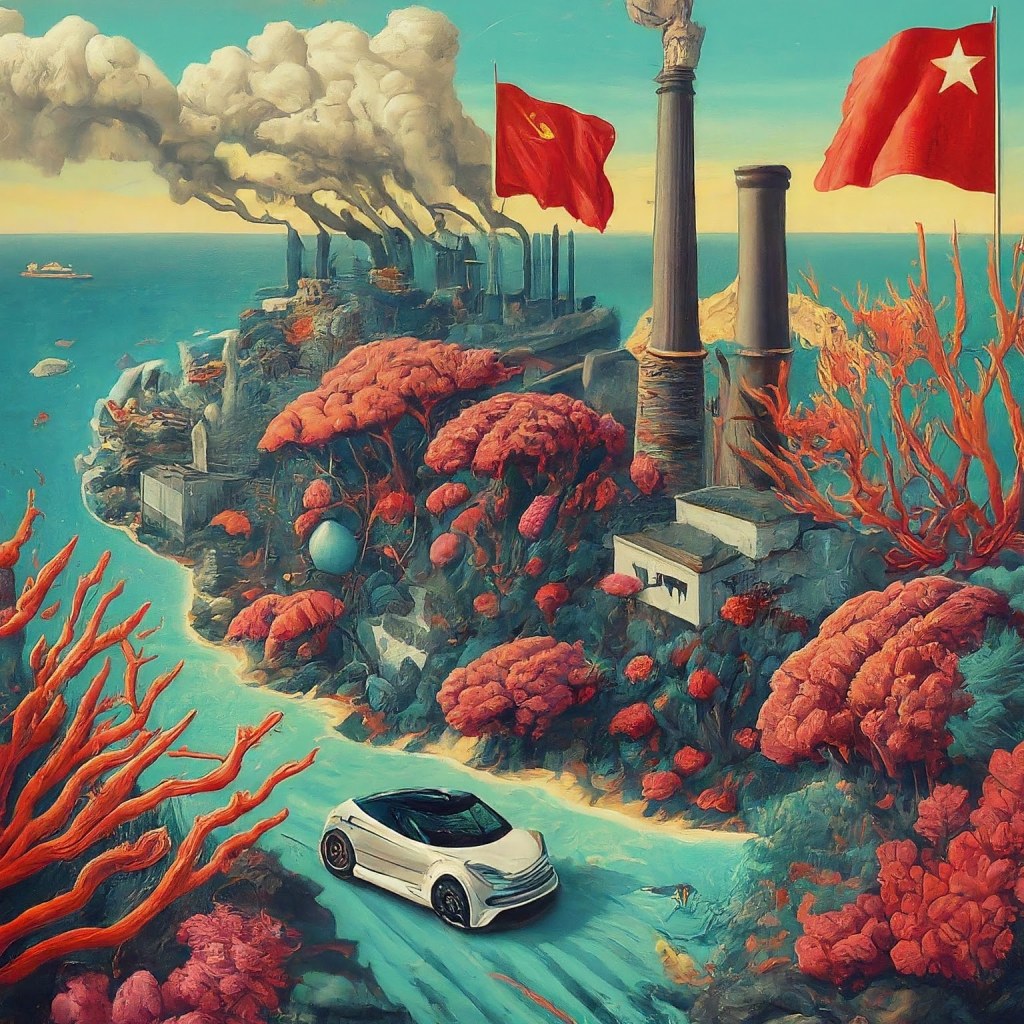


 Whither the West?