Update: please see the update note after the guide image for some additional arguments and refutations.
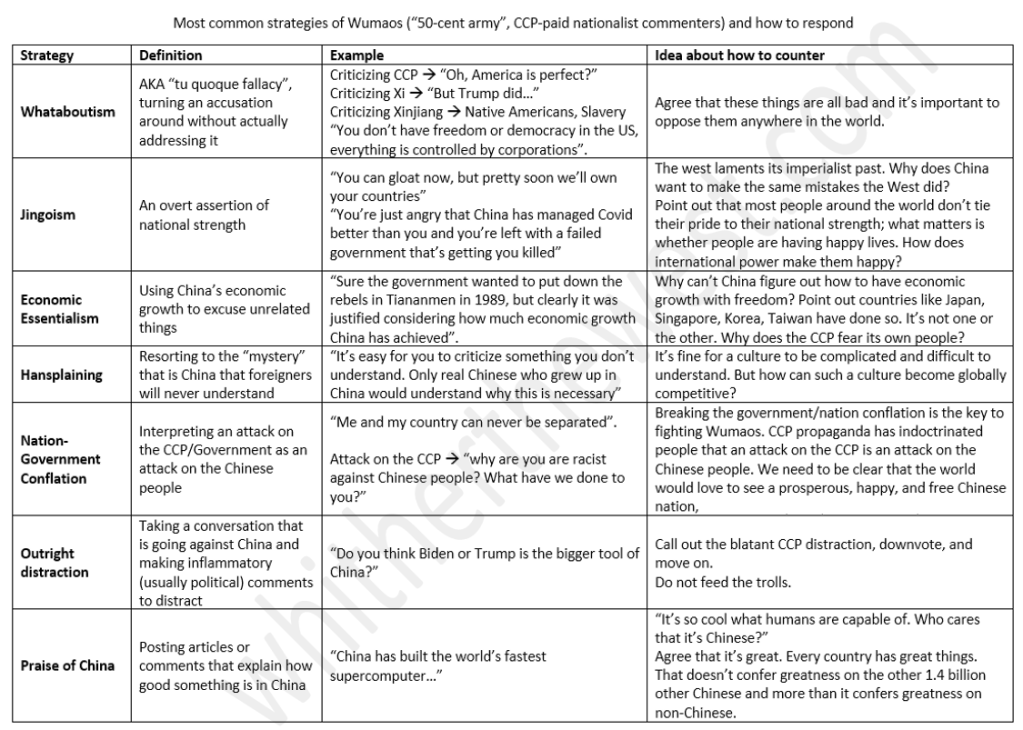
I compiled a handy guide to some of the most common strategies and talking points by Chinese nationalists online (on forums like twitter and reddit). [Sharable image first, copy-able text follows.] This list is far from exhaustive, but should be a good base for combating most arguments. Please share additional talking points or strategies in the comments.
One overriding thing to note: anyone in China has to use a VPN and violate Chinese law in order to be engaging on these forums in the first place. So don’t hesitate to draw attention to their hypocrisy and disrespect of Chinese law.
Update: This was posted on reddit, and the discussion there generated many more arguments and responses. Consider
These are really low hanging fruit. What about the more difficult points to combat that nationalists often make? How do we counter misinformation like this:
“It’s easy to criticize the CCP, but don’t the people have a right to say they want a government and society that is different from what Americans have? How do you promote freedom and human rights without also weakening the institutions that maintain China’s independence and uniqueness we value which many other countries have lost to globalization and westernization?”
“I think that the integration of China’s economy with the US has promoted the values we all want to see adopted by our government: free trade, freedom of movement, freedom of expression, etc. But now, the US is severing ties with China by imposing tariffs (even on goods like solar panels and EVs which are desperately needed to combat climate change), sanctioning and banning Chinese companies, and regressing to unfair trade practices like subsidizing domestic industry — practices it has criticized China for. How can the CCP in its current form be opposed when the good actors on the global stage like the US can’t be relied on to help in this fight and demonstrate correct behavior? How can we pressure the CCP when the US wants to punish China rather than shape China for the better?”
“Whenever the extremely high incarceration rate in the US is brought up, the disproportionate imprisonment of minorities there, or the forced labor practices the US and its state governments engage in, people always do whataboutism and say hush, you have no room to talk when the CCP is doing the same and worse in Xinjiang and Tibet. I think we should oppose human rights violations no matter where they happen in the world, but the conversation always gets turned to sanctions against China and opposing the CCP. In contrast, you’ve never heard someone say ‘it’s time for regime change in the US’ or ‘why not have sanctions against the US for its crimes’, and that’s because the US is still the global policeman, judge, jury, and executioner. It’s above reproach, above the law, and unaccountable to anyone. The US should be expected to be a state party to the Rome Statute; it should be expected to support and comply with the WTO; it should be a state party in the Paris Climate Accords all of the time, not just when it feels like it. If not for its military power, the US would be considered a rogue state.”
A (self-described) Chinese commenter replied to these points (my posting them here is not an endorsement):
As a Chinese person to answer these questions:
The Chinese people certainly have the right to choose a government that is different from that of the United States, but the Chinese Communist Party (CCP) has not given the Chinese people the power to choose a government that is different from that of the CCP
The CCP has frantically suppressed civil society, from rights lawyers to investigative journalists to ordinary citizens. The CCP has used every means to crack down and persecute them. More than a decade ago, an old man took the initiative to monitor the misuse of public vehicles by officials. The CCP secret police lured him into prostitution with a scam and made it public. An attempt was made to ruin his reputation.
The CCP does not practice free trade. Take the communications industry for example. The CCP pretended to open up the communications industry when it joined the WTO, and after it joined the WTO, it opened up only a very small number of proliferating businesses. The same thing happened to the insurance industry. The CCP has formulated a series of “documents” to create a glass ceiling for foreign investment. Foreign investors are not allowed to participate in the most important insurance business at all. By contrast, it was not until the Trump era that the US government began to restrict Chinese telecoms operators from doing business in the US.
Liberalism itself encourages independence and uniqueness. Holding independence and uniqueness against Western civilisation, Hong Kong, the most liberal city in China, retains the most traditional culture. Under the rule of the Chinese Communist Party, people had been forced to destroy countless traditional cultures. They even destroyed the tomb of the legendary “Yellow Emperor”, the ancestor of the Chinese people. The independence that the CCP tries to retain is in fact their uninterrupted rule over the Chinese people.
Every country violates international law to a greater or lesser extent. But the United States remains the foremost defender of the international order. On the question of the US supporting Ukraine with tens of billions of dollars against the Russian invaders, China is supporting Russia on a massive scale. Including, but not limited to, massive prepaid energy orders, drones, industrial equipment.
Without further ado, the guide:
Strategy
Definition
Example
Idea about how to counter
Whataboutism
AKA “tu quoque fallacy”, turning an accusation around without actually addressing it
Criticizing CCP ➔ “Oh, America is perfect?” Criticizing Xi ➔ “But Trump did…” Criticizing Xinjiang ➔ Native Americans, Slavery “You don’t have freedom or democracy in the US, everything is controlled by corporations”.
Agree that these things are all bad and it’s important to oppose them anywhere in the world.
Jingoism
An overt assertion of national strength
“You can gloat now, but pretty soon we’ll own your countries” “You’re just angry that China has managed Covid better than you and you’re left with a failed government that’s getting you killed”
The west laments its imperialist past. Why does China want to make the same mistakes the West did? Point out that most people around the world don’t tie their pride to their national strength; what matters is whether people are having happy lives. How does international power make them happy?
Economic Essentialism
Using China’s economic growth to excuse unrelated things
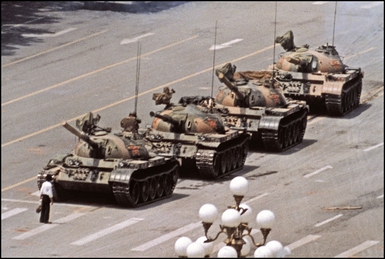
“Sure the government wanted to put down the rebels in Tiananmen in 1989, but clearly it was justified considering how much economic growth China has achieved”.
Why can’t China figure out how to have economic growth with freedom? Point out countries like Japan, Singapore, Korea, Taiwan have done so. It’s not one or the other. Why does the CCP fear its own people?
Hansplaining
Resorting to the “mystery” that is China that foreigners will never understand
“It’s easy for you to criticize something you don’t understand. Only real Chinese who grew up in China would understand why this is necessary”.
It’s fine for a culture to be complicated and difficult to understand. But how can such a culture become globally competitive?
Nation-Government Conflation
Interpreting an attack on the CCP/Government as an attack on the Chinese people
“Me and my country can never be separated”. Attack on the CCP ➔ “why are you racist against Chinese people? What have we done to you?”
Breaking the government/nation conflation is the key to fighting Wumaos. CCP propaganda has indoctrinated people that an attack on the CCP is an attack on the Chinese people. We need to be clear that the world would love to see a prosperous, happy, and free Chinese nation.
Outright distraction
Taking a conversation that is going against China and making inflammatory (usually political) comments to distract
“Do you think Biden or Trump is the bigger tool of China?”
Call out the blatant CCP distraction, downvote, and move on. Do not feed the trolls.
Praise of China
Posting articles or comments that explain how good something is in China
“China has built the world’s fastest supercomputer…”
“It’s so cool what humans are capable of. Who cares that it’s Chinese?” Agree that it’s great. Every country has great things. That doesn’t confer greatness on the other 1.4 billion Chinese and more than it confers greatness on non-Chinese.
Natalism, the belief in the need for higher birthrates, is increasingly a topic of concern for various thinkers and prognosticators (Robin Hanson, Tyler Cowen, Zvi Moskowitz, and Elon Musk among many others). However, the calls for natalist policies are almost unanimously from the political right. I would like to argue that it would behoove the political left to take on this banner as well.
The reason that the left has been reluctant to promote natalism are somewhat obvious. One of the core ideological constituencies of the political Left in many developed countries is young educated professionals, many of whom are child-free: some simply by the vicissitudes of professional life, and some of whom by ecological or personal choice. For the child-free members of this group, to embrace natalism would be hypocrisy. And for a leftist group or party to embrace natalism would be to risk alienating this important source of votes, funds, and political energy. Natalism is closely associated with the “traditional family” and “family values”, typically conservative calling cards.
That said, there are a two strong arguments to make for the left embracing natalism, one of them Machiavellian and the other Darwinian.
The Machiavellian argument is simply that natalism could be a powerful argument and political tool for advancing many leftist causes. I will take the American example here, even though the US is out of step with most western countries on these issues, but the example should be illustrative to other political systems nonetheless. Some of the dreams of the American left include expanding public healthcare, instating paid medical and parental leave policies, and funding public schooling, including higher education. A powerful political argument from the natalist perspective is that the cost and burden of having, raising, and educating a child is too prohibitive and that this is a significant reason for the choice of many adults in developed countries not to have children. By putting in place these policies, the cost of having, raising, and educating a child is distributed to society as a whole, just as the benefit of having that additional participant in the economy is distributed – public goods should have public funding. Should the American political left embrace natalism, it could seek common cause with natalists on the right to find compromises on these policies for the benefit of boosting the birthrate.
On the Darwinian side, Leftists should consider embracing natalism to ensure their ideological and demographic sustainability. In the short-term national scale, if left-leaning individuals and groups continue to have lower birth rates compared to their right-leaning counterparts, the political landscape could shift significantly over a few decades; higher birth rates on the right could lead to a future where conservative values and policies dominate simply due to numerical superiority and intra-familial transmission. As Robin Hanson argues, over time this could mean a far future that is populated by the descendants of high-fertility subcultures like Amish and Ultra-Orthodox Jews, who are of course very religious and conservative. When Hanson first promulgated this idea, I was resistant and argued that
“The idea that society will be dominated by the high-fertility subcultures is reductionist and assumes that the part of society one is born into is nearly perfectly correlated with the part of society one affiliates with as an adult, which is not the case. Conservative religious groups have higher fertility, but many people raised in those environments convert to more secular or liberal worldviews as adults. Parts of society that don’t have high fertility compete with high-fertility parts by being more alluring. Equilibrium can continue indefinitely.”
However, I did the math, and posited a scenario in which there is a dominant culture D with fertility rate 1.5, and subculture S which is only 5% of the population but has a fertility rate of 4. To ensure that S never becomes dominant, the conversion rate from S to D needs to be approximately 29.33% per generation. This means that for every 100 S individuals, at least 29.33 need to convert to D each generation to prevent S from ever becoming the majority. 29% is a high barrier, considering that fewer than 10% of Amish leave their communities. It would be much easier to simply increase the fertility rate of mainstream society.[1] By promoting and supporting family-friendly policies that encourage higher birth rates within their communities, leftists can help ensure the populational vitality of the coalition.
In the long term global perspective, falling birth rates in secular, developed countries can lead to a significant population imbalance compared to developing countries, which, without stereotyping, are on average less secular and egalitarian than western countries. This will put secular liberal values at a disadvantage globally in bodies such as the UN or its successors. Further, countries experiencing starkly declining populations may increasingly rely on immigration to sustain their economies and address labor shortages (NB: I am pro-immigration and this is overall a good thing!). However, as shown in the previous link, this immigration will increasingly have to come from nations with more conservative cultures, posing increasingly difficult demands on systems of integration/assimilation, which may over time threaten the influence of liberal and secular ideals (we don’t have to go full Houellebecq and see some abrupt takeover). This process can be slowed and eased by boosting domestic fertility.
[1] Note that this sort of scenario only really plays out in a peaceful world; in a more belligerent time like in most of human history, dynamism in social organization and scientific and technological advance allowed the dominance of countries with small populations over larger ones; see, for example, the Mongol, British or Japanese victories over China, or Prusso-German successes over Russia, or for the most extreme examples the incursions of Pizarro and Cortez in the Americas.
Chinese manufacturing policies are unsustainable. That doesn’t mean they won’t accomplish China’s goals.
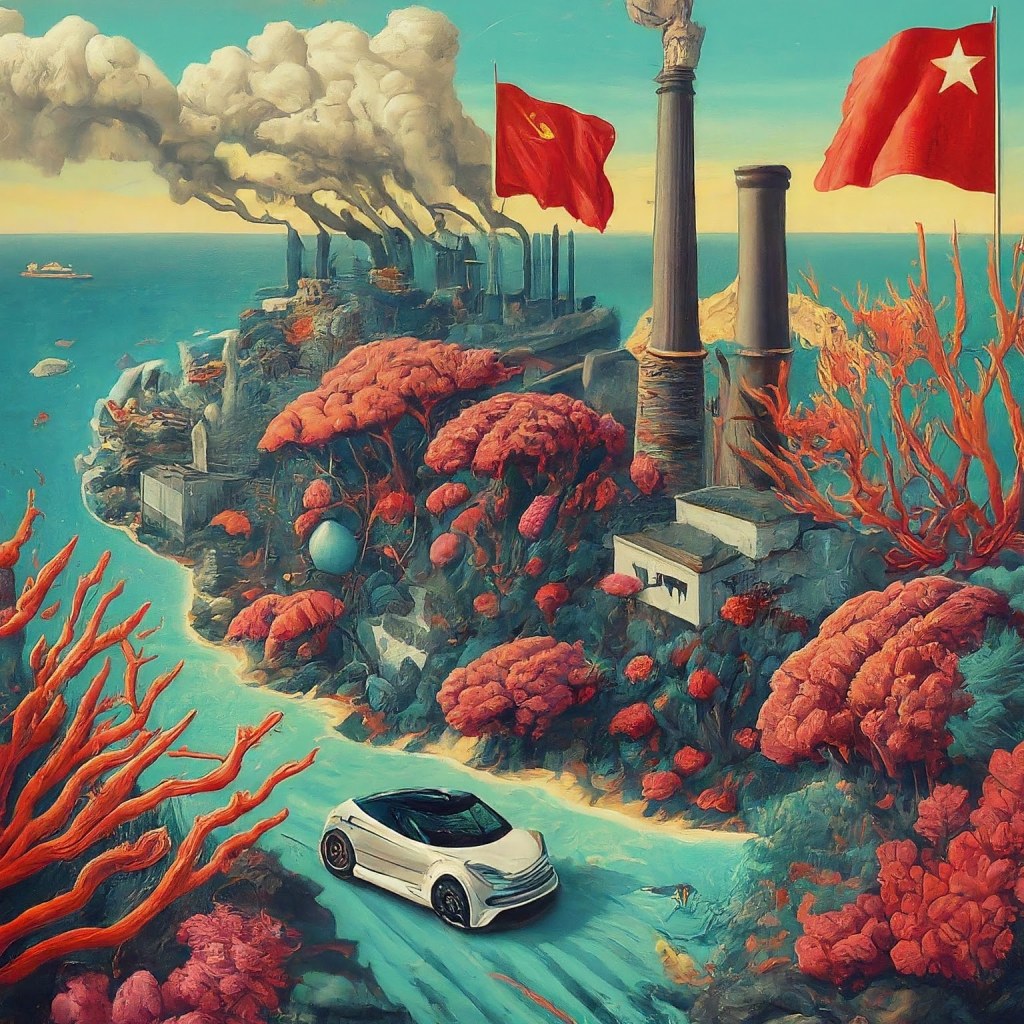
The Chinese economy has been drawing contradictory comments in recent months. Amidst the gloom and doom of prognosticators declaring that the Chinese economic engine may finally be stalling, there is the new and sudden alarum about the flood of cheap Chinese exported goods that are now overwhelming global markets. While these opposing narratives may seem incompatible – how could a stalling economy be so productive and competitive? – they are actually very closely related. China may be pursuing a stimulus strategy that I liken to a coral reef: though many subsidized companies will fail, their skeletons will scaffold the success of China’s future industrial titans.
The Disease
On the one hand, it is incontrovertible that the Chinese economy is not what it once was. Property giants are imploding, Chinese outbound tourist numbers have not recovered to pre-pandemic levels, and the deflationary cycle of low consumer confidence threatens a long malaise. Chinese economic growth, even according to the official numbers, is clearly in a new low-growth mode, one deemed by the Economist as “economic Long Covid”.
But the way in which China is choosing to address this crisis is showing some signs of success, and is the result of Xi Jinping’s unique ideological outlook. Under Xi, the Chinese Communist Party has begun a slow return to its socialist ideological roots and sought a different form of stimulus than the standard prescription other economies would employ. In most of the world, the textbook response to a slowing economy would be a Keynesian, demand-side stimulus meant to put money into consumers’ pockets and jumpstart spending, keeping the economic engine moving – think of the American “stimulus checks” cut under Obama in 2009 or Trump and Biden during the pandemic in 2020-21. Xi Jinping and his tongzhi, however, view that kind of stimulus as capitalist decadence, fearing that any direct payments to individuals from the government would precipitate the kind of needy indolence that western conservatives love to lambaste (just one of the many ways in which Chinese governance is actually quite right-wing on the western spectrum). They refuse to pursue that textbook route. In seeking a resolution to the policy dilemma, the PRC has decided to use a variation on the same stimulus strategy they used during the 2008-9 crisis, which then injected money into local governments, construction programs, and large industrial corporations. The hope was then, as now, that by tying access to stimulus funds to jobs and industry, individual citizens would be compelled to go out and be productive, stimulating the old-school Maoist spirit of nationalist industriousness. At the same time the government could make long-term investments in critical areas like infrastructure and industrial technology.
This time around, instead of injecting money into bloated and debt-ridden local governments and construction sectors, China is focusing on what it sees as the future: high-tech export-oriented manufacturing, with a clear emphasis on electric vehicles.
“In June last year, China introduced a 520 billion yuan ($71.8bn) package of sales tax breaks, to be rolled out over four years. Sales tax will be exempted for EVS up to a maximum of 30,000 yuan ($4,144) this year with a maximum tax exemption of 15,000 yuan ($2,072) in 2026 and 2027.
According to the Kiel Institute, a German think tank that offers consultation to China, the Chinese government has also granted subsidies to BYD worth at least $3.7bn to give the company, which recently reported a 42 percent decrease in EV deliveries compared with the fourth quarter of 2023, a much-needed boost.”
Beyond these significant numbers, EU and US policymakers suspect even larger, undisclosed boost from the Chinese government (particularly debt-driven incentives from local governments), prompting official investigations and declarations, and an even an official Chinese acknowledgement of industrial overcapacity was real – a claim that Premier Li Qiang later reversed course on.
The finger-pointing and blame game dynamics aside, the policy is not sustainable. Whether the subsidies are paid for by local government debt or by spending down of China’s cash reserves, or whether these industries are truly competitive, having large, tax-free industries is not sustainable for China fiscally, and in any event not acceptable for the world marketwise: “China is now simply too large for the rest of the world to absorb this enormous capacity” stated US Treasury Secretary Janet Yellen. In short, the world was unprepared to prevent the first China Shock, but will not accept a second one. Eventually, there will be a reckoning of China’s industrial overcapacity, many unprofitable zombie firms will close, and global markets will react as they deem necessary.
The Coral Reef Economy
There are two ways to understand the current dilemma. The first way is to assume that Chinese policymaking is a shortsighted reaction to a slowing economy and that policymakers did not anticipate the global backlash. The second is to think that policymakers took these steps despite these obstacles because there was a longer-term goal in mind. What, then, might that longer-term goal be? I find the analogy of a coral reef to be potentially helpful here. Though coral reefs are huge rocky structures, corals themselves are small living animals. In their deaths, the skeletons they leave behind make up the structure of the reef itself and remain useful to their successors, serving as scaffolds, the reef as a whole growing fractally upwards and outwards on the bones of the corals’ ancestors. Likewise, the Chinese EV push may be hoping for a similar outcome: although most of the current EV manufacturers will not survive once debts are called in, stimuli are removed and global markets harden, their skeletal infrastructure will remain in place to serve their kin: skilled workers, upstream supply chains, downstream market and aftersales contracts, distribution networks, and most importantly technical innovations, will remain in place and can be bought out and more efficiently utilized by the (as China perhaps hopes) handful of surviving EV manufacturers who can, like corals, use the skeletons of their comrades to grow upwards and outwards. Furthermore, growing corals compete with other coral species for space, and an EV sale by a Chinese company, even a company destined for failure, is one fewer sale for a non-Chinese EV company. The Chinese “surge” in EV exports are not just beneficial for China directly, but, in China’s zero-sum vision of global competition, are indirectly beneficial for China by depriving rivals of the same sale, suffocating the competitiveness of the Teslas and Volkswagens of the world. The reef after the stimulus-fueled surge will be one in which the surviving Chinese companies can reign supreme.
I will not argue that the second analysis is indeed the perspective of PRC policymakers, or even if it is that the “coral reef” scenario will play out as outlined here. Many would argue that China’s policy responses are indeed short-sighted and reactive, and that only the long-promised shift to higher consumer spending will guarantee China’s long-term financial stability and comfortable integration into the global political economy. But it is difficult to deny that Chinese EV manufacturing has made impressive leaps in both technology and capacity in recent years, and regardless of the fate of the current market situation, it seems likely that at least a few such manufacturers will remain globally competitive in the long term.
Farmers are special in a lot of ways. They receive enormous amounts of subsidies from governments in a way that no other industry does. In most industries, free trade agreements prevent member governments from giving government subsidies to their industries; these would be unfair advantages that defeat the purposes of trade agreements. However, agriculture is by and large exempt from these free trade agreements. Why? A lot of food is easily freezable, cannable, refrigerable, processable and shippable around the world, and if we had a world with fully free trade, imported food from Far-Eastern Europe, Latin America, Africa and South Asia would be far cheaper than domestic production, and the agricultural production of wealthy countries would go the way of the textile production of wealthy countries – i.e., it would be uncompetitively expensive except as niche and artisan purchases, and soon there would be very few farmers or agricultural production in wealthy countries.
And this is really bad PR, and, potentially, bad policy. Why? Countries like to be able to say that they can feed themselves. If the voting public in some countries got wind that their government approved a policy that made their country completely dependent on foreign imports to get fed, they would burn down the halls of power (though many wealth countries with high populations and low arable land area, like Japan or the Netherlands, have been deeply dependent on food imports for decades – and microstates like Singapore are completely dependent on exports for basically everything, one reason why small states are historically big proponents of free trade: they just can’t aren’t big enough for self-sufficiency to be a realistic goal).
But like I said, it’s not just bad PR, it’s also potentially bad policy. The Pandemic years were a wake-up call to many countries that it might not be a bad idea to make sure one’s supply chains were robust and that one’s stocks of essential goods were secure. The world witnessed (despite efforts at censorship) starvation in a modern wealthy city (Shanghai and other Chinese Cities) when draconian covid lockdowns strained supply chains to their breaking point. It has long been military policy of many countries like the US to ensure that their agricultural production would allow the country to feed itself in the event of a trade-destroying war, and this makes a lot of sense because the US could realistically defeat any conventional enemy in conventional war but if faced with domestic starvation would be crippled.
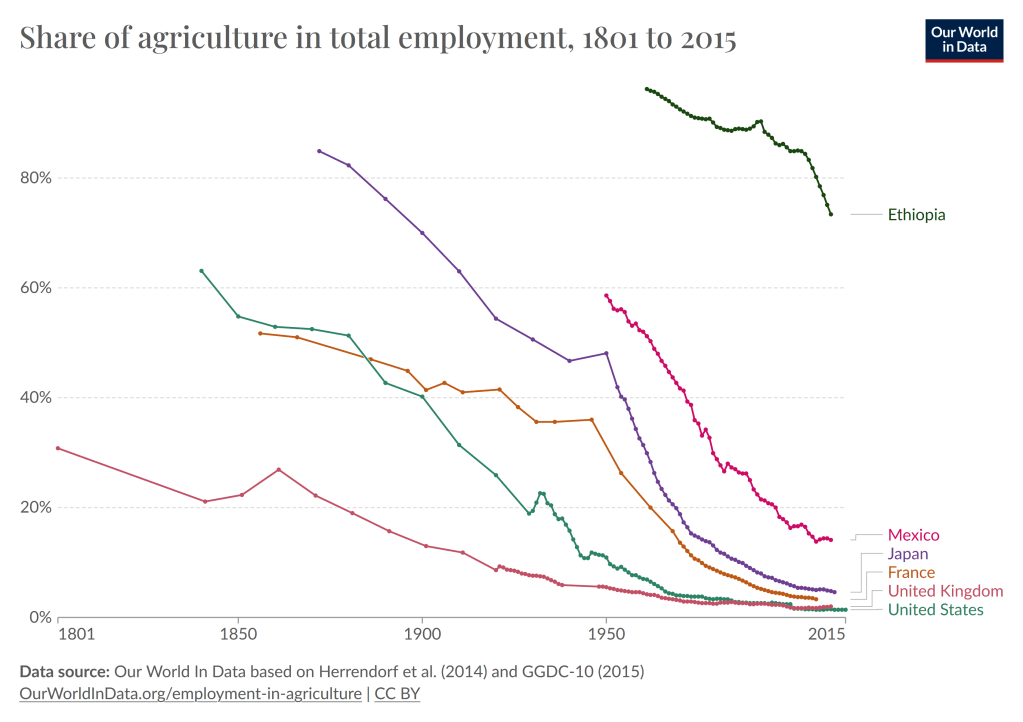
There’s also the pure PR power of farmers that makes them punch far above their weight in cultural and political discourse: except for the bluest of bluebloods, we all have farmers in our very recent ancestry, and until the 19th century most people in most countries were farmers.
Thus, many wealthy countries have gone out of their way to subsidize their agricultural sectors and keep farming productive and competitive – and farmers quiet. However, it has become increasingly apparent to policymakers that their treatment of farmers is potentially anti-environmental (https://whitherthewest.substack.com/p/the-danger-of-eating-locally) and inegalitarian. I’ll address each of these points in turn. Regarding the environment, farming can be highly polluting – not just via fertilizers and pesticides, but by outdated farm equipment; as an aside, I once heard a French farmer’s solution to a badger on his land was to pour gasoline into its burrow.
Regarding equality, remember how I said that wealthy countries want to keep agriculture out of free trade agreements so that they don’t get overwhelmed with cheaper products from Latin America, Africa, Far-East Europe and South Asia? Well, Latin America, Africa, Far-East Europe and South Asia are rather unhappy about that – agriculture is often their comparative advantage, and they find it deeply unfair that the things wealthy countries produce (manufactured goods) are subject to reduced tariffs, but the things they produce efficiently (agriculture and forest products) are magically kept out by tariffs for “nAtiOnAl sEcUrItY ReASons”.
This brings us to today. Many on the left side of the political spectrum in the EU are aware of these two issues (environment and inequality) and are pushing for changes that would not benefit the EU agricultural sector but would privilege environment and global social justice – reductions in subsidies, enforced environmental protections, and ongoing free trade negotiations with Mercosur (a Latin American trade bloc). With the latest push for the Green New Deal in Europe, farmers around the continent decided to see how much heft they had in the European political machinery. And it turns out, they have quite a bit, seeing as after only a few days of protest they secured key concessions from the French government – an exemption from the diesel subsidy phaseout, and continued “No” from France on negotiations with Mercosur. And European far right groups are linking arms with farmers, pushing for increased emphasis on sovereignty and territoriality against the “hegemonic” imposition of EU rules.
The upcoming European Elections will decide a lot of this – will the right’s courting of farmers work, or will Europeans tire of the antics before June rolls around – but to some extent the battle is already lost. The fact that left-environmentalism seems to see agriculture as fair game means that the PR armor of farmers has already been breached, and more reforms in the direction of both environment and global equality are likely to come in the future.
Or one way illiberal states get the better deal on trade agreements
A concept that I would have imagined was thoroughly discussed, but which I somehow cannot find discussed anywhere, is the concept of culture as a trade barrier. Now the idea that culture affects trade is nothing new – no one ever claimed that every country should buy equally all the products of the world; culture is a normal and expected part of the global marketing and trade landscape. But what I have never seen discussed is the extent to which culture can act as a hard barrier which can act one way more strongly than the other, or as one that is malleable for the purposes of statecraft – particularly in the hands of totalitarian societies that can shape public opinion and craft cultural trade preferences more easily than democracies.
What I mean when I say that culture can be a trade barrier, and often should be studied and analyzed as one, is this: different peoples in different countries tend to buy different things. Sounds simple, right? But it’s not simple. Some cultures can be very fussy about the products they consume coming in particular forms or from particular places, and these preferences can make foreign producers of ostensibly similar products (replacement goods, to use the formal term) have to fight uphill battles to get their products into those markets, even if there’s not an equivalent in the other direction (I list several examples below). These preferences can take many different forms: sometimes people tend to buy things that are from their own country, or tend not to buy things that are from a specific country, for completely irrational reasons or even without any particular reason, just by background cultural “by-default” programming. Or sometimes, because of the cultural traditions and preferences of the country, there may be an extreme difficulty getting the citizens of the country to buy things from somewhere else. Critically, these preferences are not fixed, and are susceptible to marketing campaigns, but are equally susceptible to state programs of marketing or propaganda (depending on your perspective).
Nationalized Preferences
For an example of “national preference” trade barriers, we need only think of “buy American” campaigns. In the context of World Trade Organization or other free trade agreement (e.g. the European Union or USMCA), national governments have their hands tied on providing direct subsidies, protections, and benefits to the industries covered by the agreement. For example, if it is agreed that countries should trade bicycles without trade barriers, it would be a violation if a party to the agreement were giving government subsidies to their domestic bicycle industry, or doing something to restrict the imports of bicycles, causing an unfair advantage in their competition with trade partners; the WTO has mechanisms for levying punishments on violations by members. However, countries have the possible workaround of trying to shift national preferences. A campaign encouraging people to “buy American” can potentially have small effects that shift buying preferences and result in some difficulty in non-American products competing in certain contexts – a slight raising of the cultural trade barrier. Though in practice these campaigns don’t have much effect in the US, in other countries waves of national sentiment can constitute huge trade barriers: the Chinese government has long fanned the flames of anti-Japanese sentiment, causing Japanese shops and factories to be damaged and close due to Chinese protests, and even causing rebranding of Chinese brands accused of being “too Japanese”; when this happens, Japanese sales to China of many goods predictably fall. Critics may argue that preferences of national origins are often “signals” of quality (i.e. with no further information about products that appear identical, most western consumers would likely judge “made in China” to be lower quality than “made in Germany”), this is not a 1:1 correlation with preferences for buying things from a specific country – people may choose to buy from one’s own country even if it doesn’t mean cheaper or better quality, or buy from “friendly” countries over “unfriendly ones” as seen by American boycotts of French-sounding products at the outset of the Iraq War. So clearly there is something else going on aside from signaling.
Denationalized Preferences
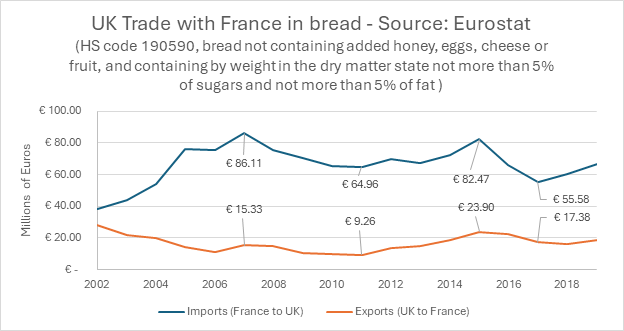
For the denationalized “cultural preference” barrier, take milk for example. In country A people may be perfectly willing to buy and use UHT (Ultra-High Temperature pasteurized, i.e. shelf-stable) milk as any other milk. And in a neighboring country B people may overwhelmingly prefer to use fresh, refrigerated milk. As a result, country B can UHT-pasteurize and export all of its excess milk production into country A, but country A will have a much harder time shipping fresh milk to country B at affordable prices, since such shipments would require refrigerated trucks and much more efficient logistical planning to ship the milk larger distances over international borders. Thus, the culture of country B constitutes a form of trade barrier relative to that of country A. For a data-backed real-world example, consider the preferences in bread consumption of France versus the UK. In the UK, bread is often consumed, as in the US, in a soft, pre-sliced form, easy to pop in the toaster for breakfast, and just as easy to keep fresh on the shelves for days on end; in France, bread is by and large consumed fresh, with a crackly-crusty exterior while still being soft on the interior, a juxtaposition that breaks down within hours if wrapped in plastic, or becomes too dry and hard if left unwrapped – in short, impossible to pack and ship internationally. As a result, we got the following (before Brexit):
French exports of bread to the UK dwarfed the inverse – France could produce and ship the kind of bread that Britons wanted to eat, but the UK couldn’t produce and ship the kind of bread that French wanted to eat. Thus French exports to the UK were, since 2005 or so, 3-6x UK bread exports to France. There are certainly other possible explanations for this phenomenon, but I imagine that the cultural barrier is a significant one.
Another notable real-world example, though slightly more abstract, was salmon. Prior to the 1990s, Japan consumed very little salmon and almost exclusively in a cooked form, viewing salmon as a fish prone to parasites that should not ever be consumed raw, whereas in Norway raw or lightly smoked salmon is a staple of the national cuisine. In the late 1980s, Norwegian fishermen found themselves with a surplus of Salmon and insufficient markets to offload it into, and thus they sought to change the culture of Japan through a fierce marketing campaign that transformed the culinary culture of the land of the rising sun – salmon sushi is now arguably one of the most iconic emblems of Japanese cuisine. The culture of Japan constituted a trade barrier, and clever Norwegian marketing lowered, or even reversed, the cultural trade barrier.
The Illiberal Advantage
As I mentioned, one aspect of this discussion – the impacts of culture on trade – are nothing new. But what is often missed from these analyses is that it does not operate equally for all countries – some countries have much stronger cultural “walls” than others. It stands to reason that authoritarian regimes with tight media controls (e.g. China) have much more power to shift culture in a direction that brings economic benefit – for example, encouraging Traditional Chinese Medicine as a way of stimulating the domestic market and raising a trade barrier to foreign pharmaceuticals, or perhaps doing behind-the-scenes manipulation to discourage state-affiliated firms (increasingly all major Chinese firms) from buying from geostrategic competitors. As such, liberal democracies have a strong incentive to understand this greater power of their non-democratic rivals and trade competitors to shape tradeflows and effectively circumvent and nullify aspects of free trade agreements. A solution would be to create monitoring offices at the WTO or embedded in trade agreement arbitration mechanisms to set limits on the scale or intensity of marketing campaigns or state manipulation of cultural preferences that affect trade.
In modern usage, the term “accelerationism” is claimed by far-right groups as a philosophy of destabilizing society to bring about a more authoritarian and conservative future. However, soi-disant accelerationists have no monopoly on accelerationist ideas. That is to say that the perspective of “acceleration” of society through stages is neither new nor confined to the political right; accelerationist mindsets are espoused by various groups aspiring to “accelerate” society toward some predicted end and effect a transformation to a more “ideal” version of society. Though the nominal idea of accelerationism is widely conceived as radical and dangerous in most interpretations, the general concept of “accelerating” society toward a predefined end has a long history on many points on the political spectrum and has through its real-world political effects substantially influenced the modern world. To understand where accelerationist ideas come from, it is worthwhile to investigate, in brief, their history and legacy. It is also worthwhile to investigate their fundamental flaws.
The Philosophical Underpinnings
The concept of society moving toward an inexorable end is not new, but neither is it universal; many ancient peoples kept time with respect to dynasties or the founding of cities, commencing cycles that were inevitably reset every time a dynasty or city fell – for a modern relic of this system, we can see the Japanese imperial calendar or gengō system, in which the current year is Reiwa 2, second year of the reign of the new emperor. Ancient Romans kept time with relation to the founding of the city or by reference to the consuls who were in power in a particular year.[i] With the rise of monotheistic religion, however, societies began keeping time with respect to immutable events, such as the birth of Jesus or the Hijra of Mohammed – fixed dates that allowed a linear outlook on time irrespective of the city or ruling family one happened to live near. These societies also prophesied the eventual arrival at some future event, be it the end of the world or the coming of the Messiah, and even into the early modern era it was common to think that human actions could help bring it about – for example, in the 1500s, Jews began settling in the holy land, not to create a Jewish state like the modern Israel, but rather, they “hoped to accelerate the coming of the Messiah”[ii]. In the late 18th century, the German philosopher Friederich Hegel gave rise to a conception of history moving through a set of defined stages. For Hegel, this progress was most clearly visualized in the form of European civilization passing from pre-civilized barbarism, to slavery under classical societies, to the theological thought during the middle ages and culminating (for him) in the humanism and enlightenment philosophy of his time. For Hegel, this furthering of civilization was in turn furthering the evolution of the Weltgeist, or the Worldspirit, the collective mental and spiritual progress of humanity that developed inexorably toward greater liberation.
“[…]The world spirit, has possessed the patience to pass through these forms over a long stretch of time and to take upon itself the prodigious labor of world history, and because it could not have reached consciousness about itself in any lesser way, the individual spirit itself cannot comprehend its own substance with anything less.” – Hegel, Preface, Paragraph 29[iii]
Left-Accelerationism
Without question the most famous application of Hegelian history was made by Karl Marx, who took the idea of historical stages and wedded them to another (and more long-lived) Hegelian philosophical invention of “dialectics” – the idea that a prevailing and dominant idea (a “thesis”) is at some point confronted with a contrary or opposite idea (the “antithesis”), and the result of this conflict of ideas is that one of the ideas would win out but be altered in the process, producing a new idea (the “synthesis”), which in being dominant would be the new thesis, continuing the cycle. Marx took this Hegelian dialectic formula and famously applied it to social classes, seeing one dominant class as the thesis, a rival class as the antithesis, and the result of their inevitable conflict would be a new synthesis and new social order, which would inevitably be challenged by a new class. Thus society progressed from slavery to feudalism to capitalism to communism.
What does this have to do with Accelerationism? Well, the first real example of Accelerationism is tied to Marxist thought. Communism, according to Marx, could only come about once the philosophical infrastructure of Capitalism was in place, for only the underclass of capitalism, the proletariat, could overthrow the oppressive bourgeoisie and institute Communism. Marx was wedded to the inevitability of the entire endeavor:
“The advance of industry, whose involuntary promoter is the bourgeoisie, replaces the isolation of the labourers, due to competition, by the revolutionary combination, due to association. The development of Modern Industry, therefore, cuts from under its feet the very foundation on which the bourgeoisie produces and appropriates products. What the bourgeoisie therefore produces, above all, are its own grave-diggers. Its fall and the victory of the proletariat are equally inevitable.” – Marx and Engels, 1848[iv]
But to Marxists such as Lenin and the Bolsheviks in Russia during the late 19th and early 20th centuries, the ideal socialist society they longed for was decades or centuries away: according to most observers at the time, Russia was not yet even capitalist – rather, with the ascendancy of the church, the czar, and the nobility, (Orthodoxy, Autocracy, Nationality, went the triune slogan of Russian conservatism) Russia was still trapped, economically and socially, in a kind of feudalist proto-capitalism. Thus, in the years leading up to the Bolshevik Revolution in Russia, would-be Communists were deeply conflicted over the question of Marxists stages of history. The communists wanted Communism now, but according to Marx they would first have to usher in an era of capitalism to create the necessary foundations for their long-awaited Communist system. As a result, many Russian socialists and communists in the early 20th century embraced the possibility that Russia might have to undergo a capitalist, liberal revolution before the infrastructure could be laid for a second, socialist revolution. In the 1920s, after the Russian Civil War had been put to rest, The Communist Party of the Soviet Union embraced the “New Economic Plan” which was (relative to the “war socialism” the Bolsheviks emplaced during the late teens) a market-based system of exports and investment that would aim to get the USSR’s productive capacity on par with the capitalism they sought to surpass. Mao Zedong would embrace the same kind of stepwise thinking at times, not between capitalism and communism, but rather socialism and communism, in the lead-up to the infamous “great leap forward”[v].Should the communists, therefore, support the rise of capitalism? An idea that arose to deal with this problem is an early formulation of accelerationism. If a society has to go through stages to reach a desired end-goal, then those who want the desired end-goal should do their best to speed up the natural processes.
Accelerationism is, then, in its fundamental form, a belief in some kind of set of stages that society needs to be walked through—and support for attempts to destabilize the current system or otherwise put in place the necessary conditions to see the change transpire organically
In the 1970s, Marxist political philosophers Hardt and Negri published an unexpectedly popular book, “Empire”, examining the way in which American Capitalism pervaded the world, but also looking (in a devil’s advocate manner) at ways in which Capitalism was setting in motion global progress toward what would come next. For example, they noted the ways in which corporations were astutely indexing and integrating all world resources and productive capacities into a networked global market. Socialists and communist grappled onto these ideas, contending, as Bolsheviks had done decades before, with the possibility that the best way to arrive at a global transition to socialism was actually to support the growth of these capitalist global structures:
“The huge transnational corporations construct the fundamental connective fabric of the biopolitical world in certain important respects. […] Some claim that these corporations have merely come to occupy the place that was held by the various national colonialist and imperialist systems in earlier phases of capitalist development, from nineteenth-century European imperialism to the Fordist phase of development in the twentieth century. This is in part true, but that place itself has been substantially transformed by the new reality of capitalism. The activities of corporations are no longer defined by the imposition of abstract command and the organization of simple theft and unequal exchange. Rather, they directly structure and articulate territories and populations. They tend to make nation-states merely instruments to record the flows of the commodities, monies, and populations that they set in motion. The transnational corporations directly distribute labor power over various markets, functionally allocate resources, and organize hierarchically the various sectors of world production. The complex apparatus that selects investments and directs financial and monetary maneuvers determines the new geography of the world market, or really the new biopolitical structuring of the world. The most complete figure of this world is presented from the monetary perspective. From here we can see a horizon of values and a machine of distribution, a mechanism of accumulation and a means of circulation, a power and a language.”
In other words, corporations are not merely exploitative, extractive engines serving the interests of the bourgeoisie in the global north, but are rather organizing forces that mobilize resources (notably labor power) into a global connected system. Thus, Hardt and Negri argue, the modern corporation may be moving some people toward the proletarian organization that early Marxists sought to effect through cadres and labor unions. Echoing Hardt and Negri’s work, it is common these days in some corners of the internet to talk about “late-stage capitalism”, an overt assumption that society progresses in stages and that capitalism’s stage is on the way out, laying the foundation for a transition to socialism[vii]. These communists pay heed to the inevitability in Marx’s work, the teleological inexorability, which classes would find their way to conflict without need of the cadre-driven insurrection embraced by Bolsheviks and Maoists, who truly believed that they could “accelerate” the stages of history, rather than simply letting them unfold naturally.
Technological Accelerationism
Another form of accelerationism that had a short-lived but influential moment in the late 20th and early 21st centuries is that of a pseudo-apolitical techno-futurist accelerationism. In this conception of futurism, which held precedence just before the far-right swing in nominal futurism mentioned above, acceleration is viewed in a technological sense: society must invest in technological progress to speed us through this era of directionless sociopolitical uncertainty. In a 2017 conception,
This accelerationism has a conservative flair (at least in the American sense): government should get out of the way and allow technology leaders to chart the path to the utopian post-scarcity future. This is a vision of acceleration, and a known future state, strongly influenced by trends of Science Fiction. “In an era where left-of-center voices increasingly paint a dark vision of the future as fraught with ecological dangers, science fiction conservatives have a near monopoly on utopian dreams of a tomorrow of abundance and technological wonders.”[viii] A prominent proponent of this conservative techno-utopian ideal was former Speaker of the House Newt Gingrich, a self-described pursuer of Star Trek-like visions of the future, who advocated a libertarian approach to scientific advancement: “If you take all the money we’ve spent at NASA since we landed on the moon and you had applied that money for incentives to the private sector, we would today probably have a permanent station on the moon, three or four permanent stations in space, a new generation of lift vehicles. And instead what we’ve had is bureaucracy after bureaucracy after bureaucracy, and failure after failure”.[ix] This same techno-libertarian futurism was on full display as late as the 2016 Republican National convention, in which billionaire tech investor Peter Thiel declared that “today our government is broken. Our nuclear bases still use floppy disks. Our newest fighter jets can’t even fly in the rain […] Instead of going to Mars, we have invaded the Middle East […] When Donald Trump asks us to Make America Great Again, he’s not suggesting a return to the past. He’s running to lead us back to that bright future.”[x]
It was as an outgrowth of this culture – conservative, sci-fi influenced techno-utopianism, that in the late 2010s observers characterized “accelerationism” in the following way:
“Accelerationists argue that technology, particularly computer technology, and capitalism, particularly the most aggressive, global variety, should be massively sped up and intensified – either because this is the best way forward for humanity, or because there is no alternative. Accelerationists favour automation. They favour the further merging of the digital and the human. They often favour the deregulation of business, and drastically scaled-back government. They believe that people should stop deluding themselves that economic and technological progress can be controlled. They often believe that social and political upheaval has a value in itself. Accelerationism, therefore, goes against conservatism, traditional socialism, social democracy, environmentalism, protectionism, populism, nationalism, localism and all the other ideologies that have sought to moderate or reverse the already hugely disruptive, seemingly runaway pace of change in the modern world.”[xi]
Right-accelerationism
Today, however, “accelerationism” is nominally more of a right-wing ideology. How did it make this transition? Communists did not maintain a monopoly on the concept of accelerating society through stages. In the 1920s, the German Nationalist (and proto-Nazi) philosopher Carl Schmitt embraced accelerationist attitudes in his belief in the need for a strong authoritarian center for modern society. Given that “the sovereign power of the king has been dissolved, disembodied, and dispersed in the communication flows of civil society, and it has at the same time assumed the shape of procedures, be it for general elections or the numerous deliberations and decisions of various political bodies,” Schmitt believed that it would be necessary for people to develop a new kind of sacred reverence for a new source of authority and legitimacy. Schmitt believed that even supposedly liberal democracies were authoritarian at the core, and that when real and consequential decisions had to be made (e.g. to fight against terrorism or a global pandemic), the pretense of procedural democracy would always be shunted aside. More specifically, he conceptualized that even a liberal democracy would encounter moments—crises—in which “exceptions” had to be made, and as Schmitt put it, “Sovereign is he who decides on the exception.”[xii] To that end, right-accelerationism attempts to bring about precisely that destabilization of society in order to reach the exception, with a kind of conservative authoritarianism able to check the undesirable aspects of liberal democracy. His answer was to call for a mythologizable and revered leader, very much like what Nazi ideology embraced regarding Hitler.
Ever since the chaos of the 1930s and resulting ascension of fascism, political observers have noted the relationship between a breakdown in the normal fabric of society and the resulting popular support for authoritarianism. For example, economic shocks such as market collapse are often associated with increased support for tougher, roughshod measures to get things back on track.[xiii]
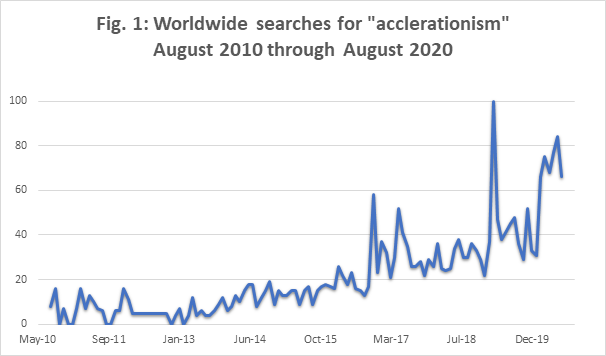
This brings us to the typical modern instantiation of accelerationism: the white supremacist and far-right accelerationism embraced by, among others, the shooter who murdered 49 mosque-attendees in New Zealand in March 2019. The terrorist attack, committed in the explicit name of “accelerationism”, has set the standard for the popularity and use of the term (see: fig. 1)[xiv]. These accelerationists believe that western liberal democracies must embrace authoritarianism to rid themselves of weak and detracting elements – namely non-white people, feminists, and other components of what they consider to be “others” and part of the cultural left. Further, they feel that this sort of society will naturally come about when society is destabilized enough that the majority demands stronger security and policing. As such, they advocate chaos and anarchical behavior to shock and terrorize society in radical lockdowns and internal transformation.
The Fundamental Error
Accelerationist ideas across all political ideologies stem inexorably from a preconception about two things: first, a prescience about the future trajectory of the sociopolitical; second, a belief in the ability to bring about that future trajectory. From Leninists who believed that a campaign of Bolshevistic force could bring about the necessary transition to sustainable socialism to the New Zealand shooter who believed that his actions would contribute to a destabilization of society sufficient that a critical mass would call for a revocation of liberal and multicultural values, the fundamental assumption of accelerationists is an ability to tell the future. Accelerationists of all political stripes believe that the future is inherently more in line with their political goals and preconceptions, and that certain institutions of the status quo must be overcome or changed in order to arrive at that utopian end.
Indeed, many observers, even those of us who do not believe ourselves to be “accelerationists” of any stripe are guilty of some form of this. A common instantiation of this error is that of the so-called “Whiggish” view of history, that is, that “the arc of history is long and it bends toward justice”. Though this may have been the general trajectory for the past few hundred years, to extrapolate this out a few centuries hence and to assume that society can go in no direction other than the maximization of justice is somewhat presumptive. Believing that the future is inherently on one’s side, and that all one must do to bring about one’s ideal future is clear away certain blockers in the present (e.g. removing certain injustices to accelerate the arrival of an inexorably just future) is certainly a form of accelerationist mindset, albeit a relatively dilute one.
But such an assumption is not unique to those who view inexorable progress only in sociocultural terms – indeed, those who view progress in technological terms are equally fallible, for as desirable as the post-scarcity utopias of Star Trek and related visions of the future may be, they hinge as much on a fixed interpretation of the arc of human progress: indeed technological progress could allow humanity to escape the Malthusian trap and create a prosperous world free of competition, but it could just as likely lead to a world of Orwellian or Huxleyan social control.[xv]
To that end, the way to avoid making the errors and assumptions of accelerationism is as follows: one must forget one’s idea of what the future will be like. Working towards a particular end will not necessarily bring it about, and may, through the invocation of opposition, bring about a countervailing reaction that undoes the entirety of one’s progress. The vicissitudes of history are fierce and many, and few institutions have the capacity to see through plans and goals through more than a few decades before “today’s problems [become] the result of yesterday’s solutions”.
[i] Day, Abby. “Sacred Time”. The International Encyclopedia of Anthropology, 1-8. 2018. doi:10.1002/9781118924396.wbiea1919
[ii] Abulafia, David. The Great Sea. 2012. Ebook version, Section 4, Chapter III, Paragraph 5.
[iii] Hegel, Friedrich. The Phenomenology of Spirit. 1807.
[iv] Marx, Karl and Friedrich Engels. “Manifesto of the Communist Party”. 1848
[v] Meisner, Maurice. “Mao’s China and After: A History of the People’s Republic”. Simon and Schuster, 1999.
[vi] Hardt, Michael and Antonio Negri. Empire. Harvard University Press, 2001.
[vii] Reddit. “/r/latestagecapitalism”. www.reddit.com/r/latestagecapitalism. Retrieved June 11, 2020. At the time of retrieval, the community had 538,889 subscribers.
[xii] Schmitt, Carl. Political Theology: Four Chapters on the Concept of Sovereignty. George D. Schwab, trans. (MIT Press, 1985 / University of Chicago Press; University of Chicago edition, 2004 with an Introduction by Tracy B. Strong. Original publication: 1922, 2nd edn. 1934.
[xv] A particularly insightful comparison can be drawn from McMillen Stuart, “Amusing Ourselves to Death”, Recombinantrecords.com, May 2009. However, McMillen deleted his claim to this comic given claims by copyright holders of Postman, Neil. “Amusing Ourselves to Death”. Viking Penguin, Methuen, UK, 1985.



 Whither the West?