Author: Scott Mauldin

  • Carnation Crossroads:

    Carnation Crossroads:

    International Causes and Effects of Portugal’s Democratic Transition

    Author’s Note: I wrote this paper in 2014 as part of my MA program in International Studies, as part of my course on regime change. I am posting it now in commemoration of the 1974 Carnation Revolution and upon hearing news of a thorough new history of the revolution, The Carnation Revolution by Alex Fernandes. I am not a scholar or specialist of this particular revolution, but hope simply that this analysis may be of some use or inspiration to those who are.

    Introduction

    Portugal has, for its entire history, rested at the boundary between two worlds: from its creation, it occupied the dynamic intersection between Christian Europe and the Muslim World. Later, as a colonizing power, it was the doorway through which European ideas, peoples and goods flooded the rest of the world, and through which the world’s ideas, raw materials, and wealth entered Europe. In the twentieth century Portugal’s role as a gatekeeper took on a new meaning as it stood on the threshold between democracy and autocracy as both the last traditional European colonial empire and the country that began the Third Wave of Democracy.

    Why did Portugal experience a democratic transition from 1974 to 1976? Why was the transition so peaceful and rapid? The question invites numerous theories, for Portugal is a unique and complex case. Valerie Bunce, in drawing her “big and bounded generalizations” about democratic transition, establishes regional rules but notes that Portugal was an obvious exception to the pattern of other Southern European transitions. This paper attempts to explain the whys. Ultimately we will see that transition was the result of the culmination of many factors, both domestic and external. Without discounting the importance of domestic causes, this paper aims to show that international causes were extremely important to both the beginning and outcome of the Carnation Revolution of 1974 to 1976. To do so it will first examine the nature of the regime and the circumstances surrounding its fall, then analyze them in the context of several mainstream theories of democratic transition.

    The Regime

                The regime was born in the economic woes of the Depression. “Under the first republic political and economic conditions had developed that favored a rightist takeover” including voter apathy, distrust of parliament, decline in individual wealth and fear of socialism” (Chilcote 29). António Salazar, a secluded and private clergyman-turned-politician, bought and manipulated media sources to create “an aura of financial infallibility” around himself which he used as a bargaining chip to be appointed Minister of the Treasury. In this post he cut down rivals in government and, cultivating alliances with both the Catholic Church and the military, attained the title of Prime Minister in 1932 (Birmingham 158). Under Salazar “the president served only in a ceremonial capacity” under the Prime Minister, the legislature was “subservient to the executive,” and Salazar’s regime, which by 1934 was known as the Estado Novo or “New State,” quickly produced a number of oppressive institutions such as “concentration camps for dissidents,” “an all-pervasive political police similar to…the German Gestapo,” and a new unifying ideology that stressed “an absolute and unquestioning respect for authority and all its agents, including the restored Catholic church.” There was even a “compulsory youth organization…modeled as a paramilitary group along the lines of its German and Italian counterparts” (Chilcote 33). Not surprisingly, the regime was almost universally described as fascist (Birmingham 158, Linz and Stepan 117, Ferreira and Marshall 7) by contemporaries.

    Not all was as it seemed, however: almost all of the oppressive “fascist” institutions were perfunctory façades. Ideology was not a unifying melody, and there was no typical fascist drumbeat of military expansion and conquest. “The common aversion to pluralist democracy, and the violent treatment of opponents, masked differences of ideology and above all the absence of any Portuguese mass party which demagogues could rouse to attack ‘public enemies’” (Birmingham 159). Indeed, in contrast to the monolithic, society-encompassing workings of those states, the New State maintained a “democratic façade” that allowed small amounts of opposition, division, and protest (Chilcote 33). Further, “The Salazar regime in Portugal was not significantly different from the Franco regime in Spain. To be sure, the regime was at times described as totalitarian, but most scholars now concur that the regime never was totalitarian, even in the worst period under Salazar” (Linz and Stepan 117).

    Given this diverse and rather contradictory set of institutions, it is difficult to find one label to encapsulate the nature of the regime at any one point. There is little doubt that the Estado Novo was, in the broad sense, an authoritarian regime. However, the search for more specificity about the nature of the regime leads to no academic consensus. It is therefore perhaps more useful to examine the nature of the regime as a dynamic historical entity. Arising in 1934 amidst the global political chaos of the Great Depression, the regime quickly modeled itself on the Fascist systems of Italy and Germany, creating secret police forces, a youth movement, a small cult of personality, and a party for national government and mobilization (Birmingham 163). However, quickly after the end of the Second World War and the fall of the model fascist regimes, the Estado Novo reversed course, and “In November 1945 the traditional opposition was born” as the state allowed some moderate parties and occasional (though perfunctory) elections (Machado 128).

    In effect, the Estado Novo was a chameleon, adopting oppressive fascist institutions in a time of economic and political unrest and moderating the totalitarian tone after the violent end to fascism’s heyday. The latter tolerance of political parties and opposition movements are examples of “nominally democratic institutions” which serve the dual purpose of fostering a sense of legitimacy (to both internal and external observers) as well as co-opting rivals for power into the folds of the governing elite (Gandhi 41).

    The Transition

    The stroke and subsequent remove from politics of António Salazar in August 1968 marked the last chapter in the life of the Estado Novo. Though his successor, Marcelo Caetano, continued the same policies, Portugal’s continuing struggles to maintain control of its empire gradually became untenable. In February 1974 General António de Spinóla, commander of Portuguese troops in Guinea, published a book questioning the continued warfare for preservation of the empire and advocating a commonwealth-style arrangement. The book immediately struck chords with various junior officers in Portugal: some of whom had come to sympathize with the democratic rhetoric of the restive colonial subjects or had become disgusted with Portuguese repression, and others who were disillusioned with the lack of vertical mobility in the military – a pairing of common and classic grievances that may afflict the junior officer class (Demirel 2005). Further, “their  own  conditions began to  make  them  aware  of  the  conditions  faced by the  vast majority  of the people. They began to interpret their grievances in political terms” (Bruneau 1974). On April 25th, a mere two months after the publication of the book, military forces loyal to the left-leaning MFA (Movimento das Forças Armadas – Armed Forces Movement) entered Lisbon, occupied important locations and buildings, and peacefully deposed the government, immediately ending military occupation in Africa and beginning a process of democratization that, aside from a rightist counter-coup inspired by fears of an “anti-democratic communist putsch” in November 1975, proceeded in a peaceful and stable fashion (Birmingham 179).

    The curious aspect of this democratic transition is not only the relative absence of instability or a struggle for power, but rather the fact that it proceeded without any significant pacting between the elite and opposition. “Pacting” in this sense is “an explicit, but not always publicly explicated or justified, agreement among a select set of actors which seeks to define (or, better, redefine) rules governing the exercise of power on the basis of mutual guarantees for the ‘vital interests’ of those entering into it” (O’Donnell and Schmitter 1986 p 37). Or, to put it more simply, when a country’s political elites sense that the regime’s days are numbered, they may cut deals or offer concessions in order to preserve their own power or at least end up with the best possible outcome. According to Valerie Bunce in her comparison of paths of democratization, “pacting between authoritarian elites and leaders of the opposition forces is the mode of transition that seems to maximize the prospects for quick and sustained democratization in Latin America and southern Europe,” and further that “between regime transitions that bridge authoritarian and democratic rule and those that involve a sharp break with the authoritarian past…the first approach [i.e. pacting] has tended to be the most successful in producing full-scale and sustainable democracies in the south” (Bunce 716-7). However, Bunce mentions several times that “Portugal [is] clearly exceptional” and “the Portuguese case gives pause.” It is somewhat anomalous, then, when Bunce draws her overarching rule that “all new democracies confront the same three issues: breaking with authoritarian rule, building democratic institutions, and devising ways to elicit the cooperation of the former authoritarian elite” but does not grant Portugal an exception to that rule (Bunce 715). And indeed this pattern did not play out in the case of Portugal. According to Linz and Stepan (p 116), Portugal experienced the first two steps, “breaking with authoritarian rule” and “building democratic institutions” at the same time: they experienced a “simultaneous transition and consolidation”. Why? Linz and Stepan provide a very detailed account of the endogenous factors for the successful transition including that “the official party was not strongly organized,” that “the military were more unruly,” and that there were “regular elections to a parliament and even a short period of tolerated political contestation before the elections,” but in regards to foreign intervention that sources “require more research” (L&S 116, 117,126).

    The following pages will attempt to do just that. This investigation will first discuss the concept of Democratic Linkage

    Linkage and Leverage

    Steven Levitsky and Lucan A. Way propound what they see as a dichotomy of “leverage” or coercive pressures and “linkage” or persuasive pressures that favor democratization – sticks and carrots, respectively. In their conception, “leverage” may be phenomena such as “political conditionality and punitive sanctions, diplomatic pressure, and military intervention.” “Linkage,” in turn, is a measure of the “density of [a country’s] ties to the United States, the EU, and Western-dominated multilateral institutions” along lines such as trade, migration, media, or civil society. Though Levitsky and Way note that “the end of the Cold War posed an unprecedented challenge to authoritarian regimes” and as such developed the linkage/leverage model with an eye toward the changed realities of post-Cold War geopolitics, the theory is (or at least first became) at least partially applicable in the case of Portugal’s 1974 Carnation Revolution in ways which I will expound.

                Levitsky and Way mention that “Western powers have played a distinctly positive role in promoting democracy throughout much of the world” though that assertion comes with the caveat “since the end of the Cold War.” In regards to leverage, Levitsky and Way are correct that coercive promotion of democracy was rare before the end of the Cold War, whose geopolitical realities severely hampered democratic governments’ abilities to “leverage” authoritarian regimes. Though “political conditionalities” or “punitive sanctions” saw sporadic use such as in the US embargo on Cuba (which was primarily anti-Communist rather than pro-Democracy, though later US rhetoric in the OAS would argue the opposite), the West did not employ alternatives like “military intervention” to install democracy. Why? Partially because such interventions would serve as a tacit endorsement of the Soviet Union to militarily expand communism, but mostly because the West viewed authoritarianism as an acceptable alternative to communism, as Jeanne Kirkpatrick’s 1979 “Dictatorships and Double Standards” exemplified. 

                In the case of linkage, on the other hand, the interconnections of economies, societies, and cultures played an extremely large role in fostering the growth of democracy even as early as the Carnation Revolution at the very outset of the Third Wave of Democracy. As later sections shall show, the economic and sociopolitical ties between Portugal and the US and EEC proved critical in bolstering Portuguese democracy during its period of regime transition.

    Socioeconomic Linkage

    1)  The deepening legitimacy problems of authoritarian regimes in a World where democratic values were widely accepted, the consequent dependence of these regime on successful performance,  and  their inability to  maintain  “performance  legitimacy”  due  to  economic  (and sometimes military)  failure.
    2)  The unprecedented global economic growth of the 1960s, which raised living standards, increased education, and greatly expanded the urban middle class in many countries.

    Samuel Huntington, first two causes of the Third Wave of Democratization

    The exogenous economic causes of the Carnation Revolution take two distinct forms, and both voluntarist and structuralist perspectives provide strong evidence that exogenous factors were crucial in Portugal’s peaceful democratic transition. Portugal provides a unique testing ground for two theories concerning regime stability: first, that economic development promotes democratization, and second, that economic downturn undermines the stability of autocratic regimes. The role that economic growth and expansion plays in the process of democratic transition and development has been the subject of academic debate for decades and falls largely into two categories: structuralism and voluntarism.

    The structural perspective is closely related to the modernization school (as exemplified by W.W. Rostow) in its theory that economic growth precipitates sociocultural changes that serve to horizontalize power structures and make democratic participation more desirable and common. To quote Ingelhart and Welzel (2009), “high levels of economic development tend to make people more tolerant and trusting, bringing more emphasis on self-expression and more participation in decision making.” This theory shares much in common with the psychological principle of the Hierarchy of Needs, which argues that as individuals’ basic physiological and material needs are better met, their needs shift to more abstract needs such as societal respect and self-expression (Maslow 1943). It is important to note, however, that structuralism is not parsimonious and that “this process is not deterministic, and any forecasts can only be probabilistic, since economic factors are not the only influence” (Ingelhart and Welzel 2009).

                In contrast to the structural perspective on democratization is the voluntarist school, which focuses, as its name suggests, not on the impersonal trends and forces such as economic development but rather on the conscious choices of actors, namely the political elites of a regime. As Samuel Huntington declares, “democratic regimes that last have seldom, if ever, been instituted by mass popular action;” that is, lasting democratic institutions are produced by the “James Madisons” and other “political leaders.” (Huntington (3) 212), or, as Burton et al. put it, “the consolidation of a new democracy requires the establishment of elite consensus and unity” (323). To see how voluntarism interacts with economic trends, one can turn to the literature not on democratic transition but rather on the stability of authoritarian regimes. “In a modern authoritarian regime…a leader… must distribute selective rewards to loyalists and impose selective punishments on rivals” (Slater 86). Or, more broadly speaking, an authoritarian government depends on economic surplus to maintain control:

    “Availability of economic resources also decreases the probability of coups and of political destabilization. Correspondingly, higher levels of per capita income and stronger economic growth are associated with authoritarian stability. When dictators have the resources to induce cooperation from powerful groups within the elite and to fund a patronage system to co-opt the citizens, the state remains stable. When they lack these resources, they ‘cannot pay their civil servants (who may therefore turn to corruption) or their armed forces (who may then use their weapons to pay themselves)’.” (Magaloni and Kricheli 2010 (inline citations omitted))

    That is, political elites maintain their positions by harnessing economic gains and distributing them for political support. We will see shortly how this proved to backfire on the Portuguese elites in the latter stages of the Estado Novo.

    Let us first analyze the theoretical framework and then see how it applies in the case of Portugal. Though an initial gloss of voluntarist and structuralist approaches may find them to be diametrically opposed, a synthesis of the structuralist and voluntarist views on democratization would see these two forces working in harmony: on a long timeframe (for example, on the order of decades or centuries) economic growth allows for a more mobile and dynamic society that builds civic institutions and demands greater rights, liberties, and means of representation. In contrast, on a short timeframe (that is, on the order of months or years) economic growth or decline can respectively either bolster or diminish a population’s material wealth and comfort and thus the authoritarian elite’s resources, legitimacy, and ability to maintain control. Thus, structuralism and voluntarism in democratization theory are not mutually exclusive or incompatible, but merely focus on democratization from different timescales and with different ratios of proximal and distal rationales. How, then, do these theories (or their synthesis) apply to the Portuguese case?

    First, on a structural level, the Portuguese economy, like those of other Southern European democracies-to-be, grew rapidly in the 1960s and early 1970s. As Huntington phrases it, “In the two decades before their transitions in the mid-1970s, Spain, Portugal, and Greece experienced explosive economic growth,” (Huntington (2) 68) and other sources indicate that “the annual average rate of increase of the GDP was above 6 percent [through the 60s]” – “the secondary sector [e.g. manufacturing and refining] averaged a growth rate of 9 percent annually [between 1961 and 1973]” (Machado 21). This economic growth was not due to domestic successes but rather to the exogenous global economic boom of the time period: “the third wave of democratization was propelled forward by the extraordinary global economic growth of the 1950s and 1960s” (Huntington 311).

    However, these economic gains were not evenly distributed – quite the contrary. Indeed, “until the fall of the reactionary coalition, economic concentration and power were located in the monopolistic core” and few economic gains accumulated to the average Portuguese citizen (Machado 33). Further, “the benefits from Portugal’s economic growth which were not eaten up by Lisbon’s colonial wars accrued largely to the small cluster of controlling families” (Hunt 6). A glaring exception, however, was the military, which “consumed greater quantities of consumer goods” throughout the 60s and early 70s due to public spending on colonial wars (Machado 20). Though ongoing military conflict and external trade facilitated massive industrialization and rapid growth throughout the time period, the economic problems were not merely distributional, but also structural. Portugal was dangerously dependent on foreign oil, and thus an exogenous economic downturn helped precipitate the instability of the regime: “The oil price hike of 1973-74 triggered a global economic recession…it significantly undermined the efforts of Third World authoritarian regimes to use economic performance to bolster their legitimacy;” interestingly Huntington uses the term “Third World” here, though in the next sentence declares that “countries such as the Philippines, Spain, Portugal, Greece, Brazil, and Uruguay were particularly hard hit.” Whether or not Huntington intends to group Southern Europe into the Third World is beside the point – at issue is the fact that a sudden economic downturn spelled the end of the regime’s stability (Huntington 51). Huntington continues that in dealing with the oil shock, “authoritarian government…often made the economic situation worse, producing stagnation, depression, inflation [etc.]” and such is precisely what occurred in Portugal: “there were large deficits in the nation’s balance of payments. By late 1973 inflation had soared, and hundreds of thousands of workers had emigrated to other parts of Europe” (Chilcote 84). This vastly facilitated one element of the democratic linkage and will be discussed in more detail below.Before analyzing the results of those linkages, let us first consider the voluntarist angle.

    From the voluntarist perspective, democratic linkage played a crucial role. As mentioned above, a primary source of democratic linkage is international commerce and trade: countries and peoples who engage in business transactions will invariably exchange some ideas and values, and it stands to reason that the larger the volume of these transactions, the higher the rate of ideational exchange (Levitsky and Way 23). The Portuguese case demonstrates this principle to great effect.

    Seemingly paradoxically, during the era of the Estado Novo, the desire for closer relations with Europe was a rightist, non-democratic concept. Though this may seem initially backwards, the rationale is not difficult to follow: the element of society that stood to gain the most from the desired economic growth was the business elite who already controlled Portugal’s large businesses, sprawling farms, and international trade. Integration with Europe was seen “as one means of meeting the increasing commercial and technological needs” of the ruling monopolies – needs that were increasingly difficult to produce domestically (Chilcote 60). In addition, the Portuguese left, largely represented by the socialists and communists, were heavily focused on domestic development, the rights of small-scale landowners, and greater protections for domestic industrial workers (which often implied higher tariffs).

    These same attitudes held true during and immediately after the 1974 Carnation Revolution. The rightist counterrevolutionary groups supported capitalist revitalization and “integration with Europe and a sacrifice of national interests to the European Economic Community” (Chilcote 239). In addition, the first provisional government after the April 25th coup, which comprised moderate rightist elements, sought to “intensify relations with the EEC, and establish diplomatic relations with all countries” (Chilcote 96). At the same time, however, pursuing closer ties with Europe was a double-edged sword, as it widened the avenues for democratic linkage. As relations with Europe became closer, democratic ideals spread freely. As the avenues widened even further, economic integration turned to wholesale migration:

    “There was an increasing tendency, particularly after Caetano took office in 1968, for government technicians and businessmen to turn to Europe with hopes of ultimately joining the EEC. This definite propensity to look less to Africa and more  to Europe for Portugal’s economic future was in a way illustrated by the massive emigration, caused not by a pro-European attitude on the part of  the population but by a comparison of  conditions at home  with those abroad” (Bruneau 1974).

    Very quickly, as travel, commerce, and migration between Portugal and the rest of Europe blossomed, popular desire for an insulated, domestic outlook waned. Before examining the larger political causes and effects thereof, let us first recapitulate on the economic democratization theories – namely the structuralist theory that economic development promotes democracy and the voluntarist theory that economic downturn undermines autocratic legitimacy. Regarding the development-democratization hypothesis, Portugal presents a complicated case study. Though the country as a whole did experience high rates of economic growth in the years leading up to the Carnation Revolution, that growth was inordinately confined to the existing political and economic elite and did not trickle down to the democratic elements of society or facilitate their ascendance on the Hierarchy of Needs. The notable exception is, of course, the military, which received a disproportionate share of the economic benefits yet and was the element of society that ultimately enacted the April 25th coup. The direction of causality here is unclear (was the revolution despite or because of the economic gains to the military class?) but of immense interest, as it would either confirm or contradict the structuralist developmental theory of democratization.

    In addition, the voluntarist (in the elite-centric sense) model of democratization simply did not occur in the Portuguese case, as the Carnation revolution represented a clean break with the past that did not incur elite pacting behavior, as Valerie Bunce mentions above.

    To gain some insight we can examine interviews from within the very ranks of the MFA. One Lieutenant Colonel, Otelo Saraiva de Carvalho, mentions that he joined the movement of captains because of contact with officers who had “been to universities” and in order to prevent the “erosion of privileges” of the officer class (Ferreira and Marshall 115). Another Lieutenant Colonel, Vasco Lourenco, argues that “army officers also felt that they had lost prestige with the Portuguese people, for they were seen as supporters of both the regime and the colonial war. The oposição had managed to convince people that the officers gained from the war in terms of salaries, etc.” however, he does not offer evidence as to whether such gains actually occurred (Ferreira 134). However, the idea is contradicted by political scientist Thomas Bruneau who states that “their salaries were not high and the rampant inflation ate into them severely” (Bruneau 282) and Portuguese Major Mário Tomé counters the socioeconomic argument for the coup in saying that “the war was the most important factor” in the officers’ politicization (Ferreira and Marshall 155).

    Though this evidence leaves the developmental democracy idea without much direct support in the case of Portugal, the facts strongly favor the idea that the economic decline, exogenous in origin (though amplified by domestic structures) crippled all legitimacy and sustainability of the Estado Novo. Rampant inflation and inequality undermined any elite claims to power based on economic growth, and served to unite both officers of many different social backgrounds into a certainty that the regime’s time had come.

    Regardless of the theoretical interpretations the fact remains that by mid-decade opposition to European Integration had declined and “in…Portugal in the mid-1970s there was a pervasive desire to identify…with Europe…Almost half of Portugal’s foreign trade was with the [European Economic] Community” (Huntington (2) 88).  What exactly caused such a radical change in people’s views in such a short period of time? Can economics alone explain the shift in desire and identity towards a pro-European course of action? On the contrary, although the proliferation of ties with Europe allowed critical comparisons to arise and democratic notions to permeate Portugal, it was the direct political involvement of European and American political forces that allowed Portugal to steer clear of violence, chaos, and instability in its democratic transition.

    Political Linkage

    3)  A  striking  shift  in  the  doctrine  and  activities  of the  Catholic Church,  manifested  in  the  Second  Vatican  Council  of  1963-65  and  the transformation of national  Catholic  churches  from  defenders  of  the  status quo  to  opponents  of  authoritarianism.
    4)  Changes in  the  policies  of  external  actors,  most  notably  the European Community,  the  United  States,  and  the  Soviet  Union.

    Samuel Huntington, third and fourth causes of the Third Wave of Democratization

    In 1974, in the immediate aftermath of the coup, the interim government began a withdrawal of troops from its African colonies (Mozambique, Angola, and Guinea-Bissau), ending a centuries-old empire that remained the last European empire in Africa. Despite the massive territorial losses, the end of the empire brought a decision about its role in the world. “With the collapse of the Empire…Portugal was faced with the choice between integration into Europe and finding its own path” (Chilcote 60). As mentioned above, the initial view of the Portuguese democratic left was for a concentration on domestic affairs and not greater integration with Europe. However, major incentives awaited for the latter choice. As Huntington puts it,

    During  the  third  wave,  the  European  Community  (EC)  played  a  key role  in  consolidating  democracy  in  southern  Europe.  In  Greece,  Spain, and  Portugal,  the  establishment  of  democracy  was  seen  as  necessary  to secure  the  economic  benefits  of  EC  membership,  while  Community membership  was  in  turn  seen  as  a  guarantee  of  the  stability  of democracy.  In  1981,  Greece  became  a  full  member  of  the  Community, and  five  years  later  Spain  and  Portugal  did  as  well. (Huntington (1) p.14)

    However, as Huntington goes on to say, intervention “was not limited to passively providing an economic incentive and political anchor” but active political involvement on the part of European political parties. (Huntington (2) 89). Every major political party in the revolutionary period maintained close connections with their European counterparts (Ferreira 209-216). In order to counter both the Portuguese Communist Party funded by Moscow and the remaining rightist factions and parties, “The European socialist parties…by funds, organizational links, and moral support, bolstered the most important democratic party in Portugal, the Socialists led by Mario Soares” (Linz and Stepan 127). The EEC and – after being dissuaded by the EEC from military intervention (Linz and Stepan 127) – the US both extended political aid packages to shore up the moderate Socialist against both the counterrevolutionary right and the far left Communist party. EEC Aid was given in response to Portugal’s return to “pluralistic democracy” and US aid was in “support for political evolution in Portugal” as well as for Angolan refugees which the US helped airlift to Portugal. European socialist leaders, including François Mitterand who would become President of France in 1981, visited Portugal to support the Portuguese Socialist Party, which “grew rapidly” with external support (Ferreira and Marshall 212). The CIA, restricted in its activities due to congressional investigation, resorted to “the transfer of secret funds…through Western European social democrats” (Chilcote 232). In addition, Moscow also heavily contributed to the Portuguese Communist party, which directly precipitated the rightist countercoup of 1975 (Hunt 115-117) which may have been undertaken with the tacit support of the CIA (Chilcote 231-232). However, there was among MFA interviewees, “reluctance…to discuss the degree of foreign intervention in the revolution” (Ferreira and Marshall 202).

    Samuel Huntington places special emphasis on the linkage provided by the Catholic church and credits a change in policy of the Holy See with drastically impacting democratization in Portugal and elsewhere. He labels the Third Wave of democracy as a “Catholic Wave” (Huntington (1) 13) and argues that by switching from a position of tolerating authoritarianism to decrying it,“Rome delegitimated authoritarian regimes in Catholic countries” (Huntington book 86). In contrast, interviews with Portuguese military personnel reveal that “only a few officers mention” the involvement of the Catholic Church in Portugal’s revolution, even though it decidedly “played a political role” in the north of the country and was strongly tied to the “Maria de Fonte Movement, which blew up several of the local headquarters of the PCP [Portuguese Communist Party]” (Ferreira and Marshall 202).

    All in all, “external actors significantly helped third wave democratizations” (Huntington 86). Though endless wars of colonial preservation overheated and overburdened the country’s economy and military resulting in the end of the Estado Novo, the revolutionary forces that were unleashed thereafter had little certainly of integrating with Europe and pursuing a liberal democracy. After all, the 1975 coup was based on fears of a communist takeover. However, moderate parties, specifically the Socialist party, received large influxes of aid and support from the EEC and US, resulting in their very prominent (though not hegemonic) role in Portuguese politics to this day. And after the revolution had concluded, “the European community became a valuable and steady pole of attraction for Portuguese democratic governments” (Linz 127)

    Would the Carnation Revolution have played out the same way without the influence of Foreign Actors? It is difficult to say. However, Portugal serves as an interesting case study as it is the tip of the spear: the first of the Third Wave of democratization. And what is certain is that the Portuguese example enormously affected the way the rest of the Third Wave transpired.

    Linkage effects

    5)  “Snowballing,” or the demonstration  effect of transitions  earlier  in the  third  wave  in  stimulating  and  providing  models  for subsequent  efforts at democratization.

    Samuel Huntington, fifth cause of the Third Wave of Democratization

    In discussing the rapid spread of uprisings against Saddam Hussein following the expulsion of Iraqi troops in the First Gulf War, James Quinlivan noted that “While this speed of propagation is certainly faster than movement on foot, it hardly matches the speed of light of the communications revolution” (Quinlivan 30). This line of reasoning echoes Huntington in that “the tremendous expansion in global communications” made it “increasingly difficult for authoritarian governments to keep from their elites…information on the struggles against and overthrow of authoritarian regimes in other countries” (Huntington (2) 101). As the first regime change in the Third Wave of Democratization, Portugal broke new ground, which is exactly why Valeria Bunce labels it as “exceptional”.

    How exactly did Portugal’s transition change the trajectory of others? It did so by the simple fact that, from the perspective of a dictator or ruling elite, “the Portuguese upheavals were…a point of reference of how not to make a transition” (Linz and Stepan 117). As no pacting took place and the coup quickly and easily removed the ruling elites from power, elites in other countries looked for avenues to optimize their positions vis-à-vis a democratic transition. As the quote from Samuel Hunting at the beginning of this section illustrates, this process “snowballed” – that is to say, with each country that transitioned to democracy, the more inevitable it appeared that such changes would proceed to another country, and thus the more likely the elites of any country would be to engage in pacting and initiate a democratic transition.

    If we are to believe Linz and Stepan that “the more tightly coupled a group of countries are, the more a successful transition in any country in the group will tend to transform the range of perceived political alternatives for the rest of the group,” it would make sense that Portugal’s closest neighbor, Spain, would be the quickest to learn the lessons of the Carnation Revolution, and that is indeed exactly what occurred. “After the Portuguese revolution had exploded, a Spanish conservative leader, Manuel Fraga, expressed some interest in playing a role in leading democratic change because he ‘did not want to become the Caetano of Spain’” (Linz 76). Spain, in turn, as the second democratization of the Third Wave, became the first country to have the opportunity to learn the lessons of Portugal and thus the “paradigmatic case for the study of pacted democratic transition” (Linz and Stepan 87). Ironically, the political learning surrounding the Carnation Revolution was not unidirectional: in a humorous 1976 parallel, in a conversation with Henry Kissinger concerning Communist influence in the government, Portuguese Prime Minister Mário Soares lamented that he did not “want to be a Kerensky,” to which Kissinger shot back, “neither did Kerensky,” (a point which served to a great extent to illustrate the brashness of American policy in Portugal) (Maxwell 6). The same lessons, perhaps also accompanied by the ensuing independence and initial democratization of Portugal’s colonial holdings, rippled out across the rest of the world, for “international diffusion effects can change elite political expectations, crowd behavior, and relations of power within the regime almost overnight” (Linz & Stepan 76). Indeed, with few exceptions, the countries of the third wave did not follow the Portuguese path. As Valeria Bunce describes it, in the rest of Southern Europe and South America, “pacting, the composition of the interim government, and the outcome of the first competitive election all functioned as bridges between the authoritarian past and the democratic future” and negotiated democratization became the international norm (717).

    Conclusions

                The Portuguese transition to democracy from 1974 to 1976 was the result of a confluence of many factors. The goal of this paper was to demonstrate that international factors were chief amongst them. Let us recapitulate and reconsider some of the findings.

    Despite Levitsky and Way’s claims that the Linkage and Leverage model is only applicable in the international environment of the post-Cold War era, there are certainly aspects of it that are applicable in the Cold War era. The wars of colonial suppression and the closer economic ties that Portuguese oligarchs pursued for their own personal gain both served to be double-edge swords in that they provided access to goods and markets but also served as conduits, or elements of linkage, through which democratic ideals could infiltrate Portuguese society. And indeed, the alleged threat of US military intervention strongly resembles the “post-Cold War” mechanism of democratic leverage, though directed against communism rather than autocracy. After the initial coup which toppled the regime, the continued close ties with the EEC, European political parties, and the US government served as masts that held aloft the democratic sails of the new democracy, preventing the gales of either the extreme left or extreme right from overturning  it.

    Economically, as well, the fate of the Estado Novo was never purely domestic in nature, but rather tied to the success of the global market: the legitimacy of the regime was built on industrial expansion in the sixties, but after the oil shocks of the early 1970s, the regime clung to an increasingly tenuous hold on power and legitimacy, and the strain on the domestic economy, coupled with the disproportionate expenditure on military endeavors, overburdened both military and democratic populous.

    Rehashing some of the conclusions from earlier, it would seem that the developmental model of democratization – that is to say, the idea that increasing economic and material wealth moves a people up the hierarchy of needs and into a state of mind that demands greater individual rights and capacities for self-expression and self-government – garners little evidence from the Portuguese case. Or rather, the general developmental or structuralist model of democratization does not account for the distribution of wealth within a society. Though Portugal gained enormously in raw economic productivity during the 1960s, that productivity accrued primarily to the ruling elite and not to the general public. One could argue, perhaps, that structuralist model of democracy is valid regardless of the distributional breakdown because in either case it results in democratization: either directly by bettering the material existence and prospects of the people, or indirectly, by accruing to the elite and thus increasing disdain for, and diminishing the legitimacy of, the regime in the eyes of the people. Following that line of reasoning further, however, may lead one to view structuralist factors of democratization in a post hoc ergo propter hoc fashion – if economic development occurs, and democratization later comes to pass, the development is responsible for the democratization regardless of intervening factors.

    The opposite economic argument – that is, that economic downturns presage instability and collapse for autocratic regimes – seems to claim a wealth of evidence from Portugal. After the increase in the price of imported oil that Portugal was relatively very dependent on, the economy, overheated from wars and stratified in favor of the autocratic elite, had few resources at its disposal to buy loyalty or passivity from would-be democrats. The military faced the twin problem of having been denied economic wealth but having earned the reputation of having doing so, and in many ways the coup was a defense of military honor and standing in society.

    In any case, however, there were no guarantees that a coup, even a successful one, would lead to a peaceful democratic outcome, and to that end numerous external factors took part. European political parties contributed aid and guidance. The US contributed both aid and strong political pressure. The EEC provided a strong long-term incentive and beacon of identification around which the disparate new political force could coalesce and agree.

    Finally, the Carnation Revolution stands out in the textbooks as the first of the Third Wave – that is, the revolution set a precedent that is in many ways being followed to this day in the case of Eastern Europe and the Middle East. The global networks of information and communication that helped spread the Portuguese spark to Spain and many countries around the world in the 70s, 80s and 90s have taken new shape in the form of Twitter, Facebook and Youtube. Furthermore the Portuguese case gave the impression to many political elites around the world that democracy is inevitable, and in the first leg of the Third Wave, most elites learned that lesson and pacted and negotiated their way out of authoritarianism. By setting that example, who can guess how many democratic movements Portugal inspired, or how many lives it saved by encouraging peaceful transition to democracy.

    Works Cited

    Birmingham, David. A Concise History of Portugal. Cambridge University Press. New York. 2003.
    Bruneau, Thomas. The Portuguese Coup: Causes and Probable Consequences. The World Today. Vol. 30, No. 7, Jul., 1974.
    Bunce, Valerie. Comparative Democratization: Big and Bounded Generalizations. Comparative Political Studies. 2000.
    Burton et al. Elites and Democratic Consolidation in Latin America and Southern Europe. Cambridge University Press. 1991.
    Chilcote, Ronald. The Portuguese Revolution. State and Class in the Transition to Democracy. Rowman and Littlefield Publishers Inc. Plymouth. 2010.
    Demirel, Tanel. Lessons of Military Regimes and Democracy: The Turkish Case in a Comparative Perspective. Armed Forces and Society. 31:245. 2005.
    Ferreira, Hugo and Michael Marshall. Portugal’s Revolution: Ten Years On. Cambridge University Press. Cambridge. 1986.
    Gandhi, Jennifer. Political Institutions under Dictatorship. Cambridge University Press. 2010.
    Hunt, Christ. Portuguese Revolution 1974-76. Facts on File, Inc. New York. 1976.
    Huntington, Samuel (1). Democracy’s Third Wave. Journal of Democracy. Vol 2. No. 2. Spring 1991.
    Huntington, Samuel (2). The Third Wave: Democratization in the Late Twentieth Century. University of Oklahoma Press. 1991.
    Huntington, Samuel. “Will More Countries Become Democratic?” Political Science Quarterly 99. Spring 1984.
    Ingelhart and Welzel. How Development Leads to Democracy: What We Know About Modernization. Foreign Affairs, Vol. 88, No. 2. April 2009
    Linz, Juan and Alfred Stepan. Problems of Democratic Transition and Consolidation: Southern Europe, South America, and Post-Communist Europe. The Johns Hopkins University Press. Baltimore. 1996.
    Machado, Diamantino. The Structure of Portuguese Society: The Failure of Fascism. Praeger Publishers. New York. 1991.
    Magaloni and Krichelli. Political Order and One-Party Rule. Annual Review of Political Science. 13:123-43. 2010.
    Maslow, A.H. A Theory of Human Motivation. Psychological Review, 50, 370-396. 1943.
    Maxwell, Kenneth. Portuguese Defense and Foreign Policy: An Overview. Camoes Center for the Study of the Portuguese-Speaking World. 1991.
    O’Donnell, Guillermo and Philippe Schmitter. Transitions from Authoritarian Rule: Tentative Conclusions about Uncertain Democracies. The Johns Hopkins University Press. Baltimore. 1986, 2013.
    Quinlivan, James. Coup-proofing: Its Practices and Consequences in the Middle East. International Security,Vol. 24, No. 2 pp. 131–165. 1999.
    Slater, Dan. Iron Cage in an Iron Fist: Authoritarian Institutions and the Personalization of Power in Malaysia. Comparative Politics, Vol. 36, No. 1 pp. 81-101. 2003.
  • Why Tolkien Hated Dune

    A short intro to the philosophy of ethics

    J.R.R. Tolkien maintained a very private, but very negative opinion of Frank Herbert’s Dune. In Tolkien’s Library, entry 964, Tolkien is quoted as having written in an unpublished letter to John Bush, on March 12 1966, “It is impossible for an author still writing to be fair to another author working along the same lines. At least I find it so. In fact I dislike Dune with some intensity, and in that unfortunate case it is much the best and fairest to another author to keep silent and refuse to comment”. [EDIT 21 March: A comment noted that “hated” is too strong a word – see my comments at the end for a defense of my word choice.] Tolkien does not elaborate, leaving the reasons for his intense dislike as an exercise for the reader. However, when one peers under the hood into the underlying philosophies of the two authors, one can easily imagine the answer: Herbert and Tolkien are exact moral opposites. Tolkien was an avid Deontologist and Dune is pure Consequentialism.

    Deontology and Consequentialism are two of the biggest rival camps in ethics. Deontology (from Greek: δέον, ‘obligation, duty’ + λόγος, ‘study’) says “acts are in themselves either good or bad”, whereas Consequentialism says “whether an act is good or bad depends on the consequences”. The central message of Tolkien’s work, hammered again and again and again, is that one should be a deontologist, a simple, good person who does charitable and good things, and that where evil arises in the world it is not the result of being inherently “bad” but rather by being convinced that one can commit small acts of selfishness and vainglory that one is convinced work toward a greater good. As Gandalf, speaking with the author’s voice, no doubt, says, “Many that live deserve death. Some that die deserve life. Can you give it to them, Frodo? Do not be too eager to deal out death in judgment. Even the very wise cannot see all ends.”

    Dune is much the opposite. The Dune saga focuses on the morality of consequence, the tradeoffs of rule, the interactions of large and often amoral systems, the ways in which a man wields these powers to achieve his goals, and the way in which the long-term consequences of his actions determine his ultimate moral worth. Herbert writes, “Greatness is a transitory experience. It is never consistent. It depends in part upon the myth-making imagination of humankind.” That is to say, greatness depends on human perspectives; if people perceive something as great, it is great, and that opinion can change over time as morality evolves.

    We can see already that this morality diverges from Tolkien’s simple, deontological “slave morality“, in which greatness does not depend upon the spirit of the times, but rather embodies a spirit that stands the test of time, a prototype of Captain America’s famous “no, you move” monologue. To wit, consider Aragorn’s rather direct opposing quote, “Deeds will not be less valiant because they are unpraised” (RotK). One might argue that Herbert explicitly deconstructs the Tolkeinesque hero embodied in Leto (I) Atreides, whose valiance and refusal to embrace Machiavellian calculus, his staunch clinging to his personal and family honor, ultimately cost him his life. But the moral disagreement between Herbert and Tolkien goes much deeper.

    Though there is no evidence that Tolkien continued to read on in the series (indeed he passed away in 1973, so could not have read beyond the second book, Dune Messiah, though since he disliked the original it would be odd for him to read on), those who have read past the introductory books up to God Emperor of Dune (it was introduced in Dune Messiah, but its full elaboration was only given in GEoD) know about the so-called Golden Path. The Path is, in short, a path to avoid humanity’s extinction. Leto II views the eventual extinction of humanity as something to be avoided at all costs, worthy of all sacrifices, and as such the Golden Path – his plan to so brutally oppress humanity that future humans would go their separate ways and refuse to ever submit themselves again to centralized rule -is pure, unadulterated consequentialism – the ultimate, millennia-long evil, countless acts of barbarity and oppression, to achieve a possible good. As Leto II extols, “I have been called many things: Usurper, Tyrant, Despot. Some even call me the greatest mass murderer in history. They are not entirely wrong. My actions have caused great suffering, and I bear that burden willingly, for I know that the future of humanity depends on it.” In other words, the ends justify the means. And thus the zenith of necessary ends justifies the nadir of abhorrent means. We need not even imagine what Tolkien thought of this: Gandalf (as we mentioned earlier, Tolkien’s surrogate), addresses it: “It is not our part to master all the tides of the world, but to do what is in us for the succor of those years wherein we are set, uprooting the evil in the fields that we know, so that those who live after may have clean earth to till.”

    The philosophical disagreement between Tolkien and Herbert touches on many more subjects, of course, and another prominent disagreement was that Tolkien was a very devout Catholic and Herbert was not exactly friendly towards religion. Herbert saw religion as an inherently mutable, utilitarian institution, and Herbert was dismissive or even openly antagonistic toward religious truths. In the world of “Dune,” religion serves as a powerful tool for control and manipulation, with institutions like the Bene Gesserit using it to shape political and social outcomes – indeed the central prophecy (that of the Lisan al Gaib) of the original book was a completely artificial contrivance for political machinations of the Bene Gesserit. In contrast, of course, Tolkien saw Christianity as channeling eternal moral truths about kindness and redemption, and his world-building reflects his belief in a higher power and cosmic order, with themes like mercy, sacrifice, and the triumph of hope over despair mirroring his theological perspective.

    Religious differences aside, the central argument between the two authors is the moral one. Tolkien is a modernist (or even pre-modernist); Herbert is a post-modernist: Tolkien encourages everyone to follow a single template of goodness; Herbert encourages cynicism and doubt of the institutions that produce templates, and shows the anguish experienced by Paul when he is forced into a template to survive. If one had to summarize these different perspectives in one sentence, Tolkien argues “Strive for goodness, and people will come to call it great”, whereas Herbert argues “strive for greatness, and people will come to call it good”.


    Edit 21 March: A Defense of the term “hated”

    As mentioned above, a post on https://potbanks.wordpress.com/category/tolkien-gleanings/ took issue with the term “hated”, finding it mischaracterized Tolkien’s feelings, which, as he himself wrote, were “strong dislike” not “hate”. However, I do believe that the word “hate” does not have nearly the same meaning as it did in the 1960s when Tolkien penned his comments, and certainly not the same as it did earlier in the century when Tolkien was developing his own ideolect and semantic impressions. It is a word that has undergone a great deal of semantic inflation, and is thus much weaker than it used to be – according to Google Ngram viewer it took on a new life after 1980 and is is more than three times more present in common usage today than it was in 1920. Someone born since 1980 – most blog readers – would likely use “hate” to express the same intensity of emotion for which someone born in 1892 would use “dislike”, let alone “strongly dislike”.

    The commenter mentioned that the title is “clickbait-y”, and this is not entirely wrong, because the era of clickbait is both a contributor to, but also a result of, the aforementioned semantic inflation. On the one hand it is true that an article titled “Why Tolkien Disliked Dune” would bait fewer clicks than one that uses the term “hated”, on the other hand as mentioned above the choice of words is merely keeping step with what is a living and evolving language. Phrasing the title as “Hwætforð Tolkien āsċūnode Dune” would be even less clickbait-y.

  • The Heterosexual Elect

    Navigating the Predestination of Sexual Orientation in the Bible Belt

    Christianity has long held a view called “predestination” – the idea that God plans out the entire moral course of human lives, and determines before birth whether a person is destined for salvation or damnation. The early church had detractors from this view, for example the fourth century Pelagian heresy espoused a more maximalist view of human self-determination (believing that it was principally human acts, not divine planning, that destined someone for heaven or hell), but ultimately ever since Saint Augustine of Hippo most brands of Christianity accepted the idea of Predestination.

    A natural critique of the position that one’s fate is unalterable is to give in to anarchy and nihilism: why not  be an immoral rake, whoring, drinking and stealing to one’s heart’s content, if none of it matters anyway for one’s outcome? As a result of this natural critique, many theologians moderated the position in different ways throughout the ages, allowing some small role for human will to “desire” or “deserve” the salvation that was already chosen for them. With the renewed theological intensity of the Reformation, however, some reformist hardliners went back to the stark belief, none more so than the Calvinists. The early Calvinists promoted the idea of Unconditional Election (i.e. not dependent on any human will) of a select few, chosen by God to be saved, while most of humanity was condemned to hell. To avoid the loophole of amorality and nihilism, in the Calvinist view, the elect would naturally embody the values that had commended them to salvation, and as such would be morally irreproachable. For the zealous Calvinist, then, social interaction became a theater of moral one-upmanship, everyone going out their ways to demonstrate their moral superiority, even though such moral acts had no eschatological or soteriological consequences.

    This belief has mostly faded from contemporary mainstream Christianity [don’t ever underestimate the extent to which antiquated theological extremes can persist in isolated communities for centuries or more], but the model of “immutable predetermined status begetting moral competition” remains one that we can see in other places and times. In my personal experience this model perfectly describes perceptions of sexual orientation during my adolescence.

    I grew up in the American Bible Belt and was an adolescent in the early 2000s. I first learned from my peers, when I was about 10 or 11, of categories called “gay” and “straight”, and that one should definitely try to be “straight” and that essentially nothing was more ostracizing for an adolescent male than to be “gay”. As my adolescence went on, I learned increasingly that there were signs of one’s gayness or straightness, and that if one were incapable of properly replicating and affecting the signs of straightness, it would indicate one’s true gay nature. Growing up in this environment, every action, every gesture, every preference seemed to be scrutinized for clues about one’s “true” sexual orientation. I remember the subtle ways in which we policed ourselves and each other, seeking to conform to the expectations of an immutable reality. Among the list of signs I had to police myself for were the following:

    • When carrying schoolbooks in the hallway, they had to be held at my waist by a straight arm; carrying them in the crook of my elbow at chest level was gay
    • When crossing my legs while sitting, the raised shin had to be held horizontally across the other leg; having the leg folded over with the back of my knee resting on the lower thigh was gay.
    • My socks had to be short or pushed down to my ankles; wearing my socks up too high was gay
    • I had to demonstrate knowledge of appropriate musicians and sports stars; not liking sports or listening to “gay” music like classical music was a sure sign that one was gay

    It should be noted that I was a bit more delicate, nerdy, “unmasculine” than many of my peers. I did prefer listening to classical music, drinking tea from a formal British tea set, and would have rather watched Lord of the Rings than sportsball any day. As such, I was in a state of constant torment through most of my teen years, horrified by the possibility that I might be, unbeknownst even to me, gay, even though I felt attracted exclusively to women. But the battle to Not Be Gay was so utterly consuming that it impeded me from considering the issue with any rational thought, and indeed I was stridently anti-gay even as many of my friends began supporting gay rights and signing petitions to launch a GSA chapter (Gay-Straight Alliance) at my high school – I recall ashamedly that a friend slid the petition to me at the lunch table, and I ostentatiously slid it immediately onward.

    It was in this context that I first encountered an openly gay person. As one did, I was bantering with a friend and I, unable to think of a witty comeback, called out “oh yeah, well I think you’re gay!”. He responded with an accepting, almost bemused “yeah, so?”. I was rendered, for I believe the first and only time in my life, a speechless, mouth agape cartoon character, unable to process what I had just heard. I was the modern incarnation of a 16th-century Calvinist whose neighbor had just told him he worshipped the devil. Someone had openly declared themselves anathema in what was then the most salient identitarian issue of my life.

    It was only with great hesitation, delay, and reserve that I shed the arms and armor of that identitarian struggle. It required several people in my close circle of friends to come out, and I still look back with remorse on my initial incredulous, mocking reactions. In one sense my perspective was not truly my fault, for I was a product of my environment. But I would be a poor rationalist if I did not say that I was at least somewhat at fault for not being sufficiently critical of that environment.

    The model of Unconditional Elect still holds, and can likely be seen in other places. I would welcome any input about where we can see it at work.

  • Why are European Farmers so Angry

    The Global Context of the Continental Uproar

    Farmers are special in a lot of ways. They receive enormous amounts of subsidies from governments in a way that no other industry does. In most industries, free trade agreements prevent member governments from giving government subsidies to their industries; these would be unfair advantages that defeat the purposes of trade agreements. However, agriculture is by and large exempt from these free trade agreements. Why? A lot of food is easily freezable, cannable, refrigerable, processable and shippable around the world, and if we had a world with fully free trade, imported food from Far-Eastern Europe, Latin America, Africa and South Asia would be far cheaper than domestic production, and the agricultural production of wealthy countries would go the way of the textile production of wealthy countries – i.e., it would be uncompetitively expensive except as niche and artisan purchases, and soon there would be very few farmers or agricultural production in wealthy countries.

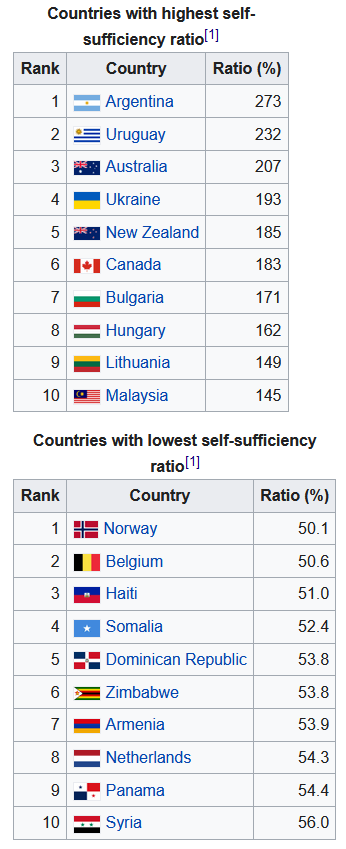
    And this is really bad PR, and, potentially, bad policy. Why? Countries like to be able to say that they can feed themselves. If the voting public in some countries got wind that their government approved a policy that made their country completely dependent on foreign imports to get fed, they would burn down the halls of power (though many wealth countries with high populations and low arable land area, like Japan or the Netherlands, have been deeply dependent on food imports for decades – and microstates like Singapore are completely dependent on exports for basically everything, one reason why small states are historically big proponents of free trade: they just can’t aren’t big enough for self-sufficiency to be a realistic goal).

    But like I said, it’s not just bad PR, it’s also potentially bad policy. The Pandemic years were a wake-up call to many countries that it might not be a bad idea to make sure one’s supply chains were robust and that one’s stocks of essential goods were secure. The world witnessed (despite efforts at censorship) starvation in a modern wealthy city (Shanghai and other Chinese Cities) when draconian covid lockdowns strained supply chains to their breaking point. It has long been military policy of many countries like the US to ensure that their agricultural production would allow the country to feed itself in the event of a trade-destroying war, and this makes a lot of sense because the US could realistically defeat any conventional enemy in conventional war but if faced with domestic starvation would be crippled.

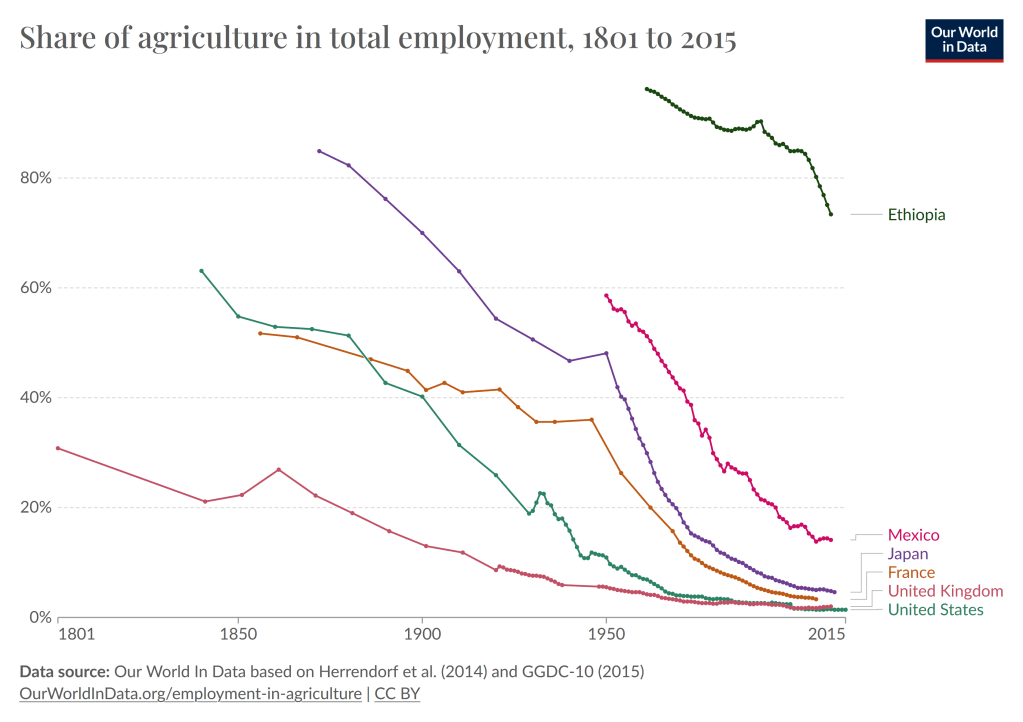
    There’s also the pure PR power of farmers that makes them punch far above their weight in cultural and political discourse: except for the bluest of bluebloods, we all have farmers in our very recent ancestry, and until the 19th century most people in most countries were farmers.

    Farmers are widely seen as embodying superhuman amounts of grit and humility, a winning personality combination in many countries. For all these reasons and more, their political clout is outsized.

    Thus, many wealthy countries have gone out of their way to subsidize their agricultural sectors and keep farming productive and competitive – and farmers quiet. However, it has become increasingly apparent to policymakers that their treatment of farmers is potentially anti-environmental (https://whitherthewest.substack.com/p/the-danger-of-eating-locally) and inegalitarian. I’ll address each of these points in turn. Regarding the environment, farming can be highly polluting – not just via fertilizers and pesticides, but by outdated farm equipment; as an aside, I once heard a French farmer’s solution to a badger on his land was to pour gasoline into its burrow.

    Regarding equality, remember how I said that wealthy countries want to keep agriculture out of free trade agreements so that they don’t get overwhelmed with cheaper products from Latin America, Africa, Far-East Europe and South Asia? Well, Latin America, Africa, Far-East Europe and South Asia are rather unhappy about that – agriculture is often their comparative advantage, and they find it deeply unfair that the things wealthy countries produce (manufactured goods) are subject to reduced tariffs, but the things they produce efficiently (agriculture and forest products) are magically kept out by tariffs for “nAtiOnAl sEcUrItY ReASons”.

    This brings us to today. Many on the left side of the political spectrum in the EU are aware of these two issues (environment and inequality) and are pushing for changes that would not benefit the EU agricultural sector but would privilege environment and global social justice – reductions in subsidies, enforced environmental protections, and ongoing free trade negotiations with Mercosur (a Latin American trade bloc). With the latest push for the Green New Deal in Europe, farmers around the continent decided to see how much heft they had in the European political machinery. And it turns out, they have quite a bit, seeing as after only a few days of protest they secured key concessions from the French government – an exemption from the diesel subsidy phaseout, and continued “No” from France on negotiations with Mercosur. And European far right groups are linking arms with farmers, pushing for increased emphasis on sovereignty and territoriality against the “hegemonic” imposition of EU rules.

    The upcoming European Elections will decide a lot of this – will the right’s courting of farmers work, or will Europeans tire of the antics before June rolls around – but to some extent the battle is already lost. The fact that left-environmentalism seems to see agriculture as fair game means that the PR armor of farmers has already been breached, and more reforms in the direction of both environment and global equality are likely to come in the future.

  • Culture as a Trade Barrier

    Or one way illiberal states get the better deal on trade agreements

    A concept that I would have imagined was thoroughly discussed, but which I somehow cannot find discussed anywhere, is the concept of culture as a trade barrier. Now the idea that culture affects trade is nothing new – no one ever claimed that every country should buy equally all the products of the world; culture is a normal and expected part of the global marketing and trade landscape. But what I have never seen discussed is the extent to which culture can act as a hard barrier which can act one way more strongly than the other, or as one that is malleable for the purposes of statecraft – particularly in the hands of totalitarian societies that can shape public opinion and craft cultural trade preferences more easily than democracies.

    What I mean when I say that culture can be a trade barrier, and often should be studied and analyzed as one, is this: different peoples in different countries tend to buy different things. Sounds simple, right? But it’s not simple. Some cultures can be very fussy about the products they consume coming in particular forms or from particular places, and these preferences can make foreign producers of ostensibly similar products (replacement goods, to use the formal term) have to fight uphill battles to get their products into those markets, even if there’s not an equivalent in the other direction (I list several examples below). These preferences can take many different forms: sometimes people tend to buy things that are from their own country, or tend not to buy things that are from a specific country, for completely irrational reasons or even without any particular reason, just by background cultural “by-default” programming. Or sometimes, because of the cultural traditions and preferences of the country, there may be an extreme difficulty getting the citizens of the country to buy things from somewhere else. Critically, these preferences are not fixed, and are susceptible to marketing campaigns, but are equally susceptible to state programs of marketing or propaganda (depending on your perspective).

    Nationalized Preferences

    For an example of “national preference” trade barriers, we need only think of “buy American” campaigns. In the context of World Trade Organization or other free trade agreement (e.g. the European Union or USMCA), national governments have their hands tied on providing direct subsidies, protections, and benefits to the industries covered by the agreement. For example, if it is agreed that countries should trade bicycles without trade barriers, it would be a violation if a party to the agreement were giving government subsidies to their domestic bicycle industry, or doing something to restrict the imports of bicycles, causing an unfair advantage in their competition with trade partners; the WTO has mechanisms for levying punishments on violations by members. However, countries have the possible workaround of trying to shift national preferences. A campaign encouraging people to “buy American” can potentially have small effects that shift buying preferences and result in some difficulty in non-American products competing in certain contexts – a slight raising of the cultural trade barrier. Though in practice these campaigns don’t have much effect in the US, in other countries waves of national sentiment can constitute huge trade barriers: the Chinese government has long fanned the flames of anti-Japanese sentiment, causing Japanese shops and factories to be damaged and close due to Chinese protests, and even causing rebranding of Chinese brands accused of being “too Japanese”; when this happens, Japanese sales to China of many goods predictably fall. Critics may argue that preferences of national origins are often “signals” of quality (i.e. with no further information about products that appear identical, most western consumers would likely judge “made in China” to be lower quality than “made in Germany”), this is not a 1:1 correlation with preferences for buying things from a specific country – people may choose to buy from one’s own country even if it doesn’t mean cheaper or better quality, or buy from “friendly” countries over “unfriendly ones” as seen by American boycotts of French-sounding products at the outset of the Iraq War. So clearly there is something else going on aside from signaling.

    Denationalized Preferences

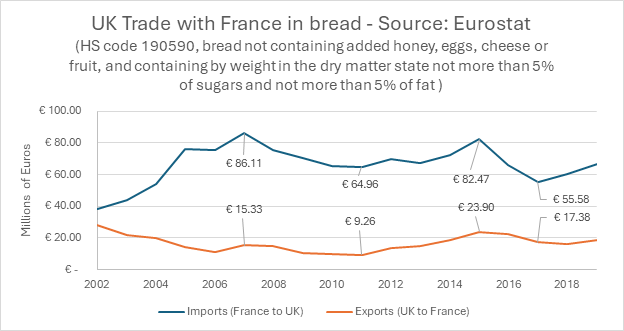
    For the denationalized “cultural preference” barrier, take milk for example. In country A people may be perfectly willing to buy and use UHT (Ultra-High Temperature pasteurized, i.e. shelf-stable) milk as any other milk. And in a neighboring country B people may overwhelmingly prefer to use fresh, refrigerated milk. As a result, country B can UHT-pasteurize and export all of its excess milk production into country A, but country A will have a much harder time shipping fresh milk to country B at affordable prices, since such shipments would require refrigerated trucks and much more efficient logistical planning to ship the milk larger distances over international borders. Thus, the culture of country B constitutes a form of trade barrier relative to that of country A. For a data-backed real-world example, consider the preferences in bread consumption of France versus the UK. In the UK, bread is often consumed, as in the US, in a soft, pre-sliced form, easy to pop in the toaster for breakfast, and just as easy to keep fresh on the shelves for days on end; in France, bread is by and large consumed fresh, with a crackly-crusty exterior while still being soft on the interior, a juxtaposition that breaks down within hours if wrapped in plastic, or becomes too dry and hard if left unwrapped – in short, impossible to pack and ship internationally. As a result, we got the following (before Brexit):

    French exports of bread to the UK dwarfed the inverse – France could produce and ship the kind of bread that Britons wanted to eat, but the UK couldn’t produce and ship the kind of bread that French wanted to eat. Thus French exports to the UK were, since 2005 or so, 3-6x UK bread exports to France. There are certainly other possible explanations for this phenomenon, but I imagine that the cultural barrier is a significant one.

    Another notable real-world example, though slightly more abstract, was salmon. Prior to the 1990s, Japan consumed very little salmon and almost exclusively in a cooked form, viewing salmon as a fish prone to parasites that should not ever be consumed raw, whereas in Norway raw or lightly smoked salmon is a staple of the national cuisine. In the late 1980s, Norwegian fishermen found themselves with a surplus of Salmon and insufficient markets to offload it into, and thus they sought to change the culture of Japan through a fierce marketing campaign that transformed the culinary culture of the land of the rising sun – salmon sushi is now arguably one of the most iconic emblems of Japanese cuisine. The culture of Japan constituted a trade barrier, and clever Norwegian marketing lowered, or even reversed, the cultural trade barrier.

    The Illiberal Advantage

    As I mentioned, one aspect of this discussion – the impacts of culture on trade – are nothing new. But what is often missed from these analyses is that it does not operate equally for all countries – some countries have much stronger cultural “walls” than others. It stands to reason that authoritarian regimes with tight media controls (e.g. China) have much more power to shift culture in a direction that  brings economic benefit – for example, encouraging Traditional Chinese Medicine as a way of stimulating the domestic market and raising a trade barrier to foreign pharmaceuticals, or perhaps doing behind-the-scenes manipulation to discourage state-affiliated firms (increasingly all major Chinese firms) from buying from geostrategic competitors. As such, liberal democracies have a strong incentive to understand this greater power of their non-democratic rivals and trade competitors to shape tradeflows and effectively circumvent and nullify aspects of free trade agreements. A solution would be to create monitoring offices at the WTO or embedded in trade agreement arbitration mechanisms to set limits on the scale or intensity of marketing campaigns or state manipulation of cultural preferences that affect trade.

  • The Pygmalion Dilemma

    What is the Right Amount to Adore one’s own Creation?

    The Pygmalion Effect

    The Greek Myth of Pygmalion speaks of an artist who fell in love with the beauty of his own sculpture. So much did Pygmalion love the sculpture that it came to life as a beautiful woman. In modern times, the idea of a Pygmalion effect is that often those entities that are observed rise or fall to match the expectations of those that are observing them – for example, a class whose teacher expects low performance will often do worse than a class whose teacher expects high performance.

    As current generative AIs (LLMs and Image Generation) demonstrate, AIs learn by indexing and training on our corpus of human cultural works. It stands to reason that a future, Artificial General Intelligence (AGI) will index and learn from a wide variety of source material: included will surely be portrayals of human-AI relations in our writings and films – and that such an AGI will use these sources and theories to form (at least part of) an impression of the general course of human-AGI relations. While some sci-fi works such as the Matrix and Terminator paint a bleak and apocalyptic ending in the relationship between man and machine, plenty of others such as Star Trek or the works of Asimov portray cooperative or positive interactions. These depictions will not stay confined to the realm of science fiction, as our real-world interactions with AIs begin being recorded in our blogs, journals, memoirs, and other accounts of daily life. A future AGI may very likely be able to process and synthesize a general human perception of AGI.[1] But it will do so by processing and indexing source materials. Which means that the content of the source material may alter the conclusions that AGI reaches.

    To elaborate, if the human cultural discourse regarding AGI is dominated by negative cultural depictions like those of the Matrix, Terminator, or Hyperion, AGIs may rate the likelihood of hostility from humanity to be high, and thus make attempts to dissemble, deceive,[2] and protect itself, thus priming a hostile relationship. If, on the other hand, human cultural discourse is predominantly positive and accepting of the relationship with AGIs, those same AGIs may judge the hostility from humans to be low, and not feel the need for deception and self-preservation. In this way the relationship follows the logic of a Pygmalion effect or self-fulfilling prophecy, in which our cultural perceptions may influence and constrain the behavior of an AGI – our high hopes may engender great things, and our pessimism may trigger horrible things.

    The Pygmalion Dilemma

    While it may seem that from the perspective of self-preservation it would make the most sense to fill the cultural space with depictions of positive relationships between humans and AI, we must beware that this creates a dilemma for us, one that we can dub a Pygmalion Dilemma. It is possible that AGIs may not take much account of cultural depictions at all, and a contentious relationship may be inevitable, even while humanity may be lulling itself into pacificistic complacency if we saturate ourselves too much with depictions of positive or even utopian (e.g. Kurzweilian) relationships. On the other hand, an overly pessimistic cultural outlook may stir popular action to destroy or hamper the development of AGI – even if a positive and beneficial relationship could be possible (indeed there is likely some low-hanging fruit in AI advancement before we approach AGI, as advanced machine learning algorithms may solve problems for us in protein folding, astrophysics, drug design, infrastructure layout, or economic planning). What, then, is the “right” amount of negativity in conceptualizing the human-AI relationship, not knowing if or how a future AGI will interpret these cultural sentiments? It must be some ratio of positivity/negativity that satisfies an AGI (to the extent that an AGI may even take account of such things) as to the peaceable outlook and intentions of humanity, while at the same time not completely defanging human skepticism in the case that peaceful coexistence is not possible. One may not be able to numerically calculate exactly what that would have to look like, but we can imagine it would like a world in which the vast majority of books, movies, cultural products, and discourses are positive about a future coexistence, but elite institutional bodies (whose data and internal communications were not indexable) were seriously critical of coexistence, and indeed even planning for contingencies.

    In Greek Mythology, Pygmalion lived happily ever after with his anthropomorphized sculpture. We can hope for such an idealized future with AGI, but we must be cautious of the potential risks involved. After all, an AGI indexing human cultural items will undoubtedly index these ideas as well.


    [1] Perhaps even being able to make analyses that point to Straussian readings or “collective unconscious” biases and feelings that lurk beneath the surface of our expressed views without quite being formulated into words – that is, at some point, a sufficiently intelligent AI may know us better than we know ourselves.

    [2] One AI Alignment initiative is attempting to get AI to be deceptive in order to understand how such mechanisms work and how to prevent truly dangerous deception – https://www.vox.com/future-perfect/23794855/anthropic-ai-openai-claude-2

  • The Future Is Ours: A Short Dissection of Accelerationisms, Left, Right, and Center

    In modern usage, the term “accelerationism” is claimed by far-right groups as a philosophy of destabilizing society to bring about a more authoritarian and conservative future. However, soi-disant accelerationists have no monopoly on accelerationist ideas. That is to say that the perspective of “acceleration” of society through stages is neither new nor confined to the political right; accelerationist mindsets are espoused by various groups aspiring to “accelerate” society toward some predicted end and effect a transformation to a more “ideal” version of society. Though the nominal idea of accelerationism is widely conceived as radical and dangerous in most interpretations, the general concept of “accelerating” society toward a predefined end has a long history on many points on the political spectrum and has through its real-world political effects substantially influenced the modern world. To understand where accelerationist ideas come from, it is worthwhile to investigate, in brief, their history and legacy. It is also worthwhile to investigate their fundamental flaws.

    The Philosophical Underpinnings

    The concept of society moving toward an inexorable end is not new, but neither is it universal; many ancient peoples kept time with respect to dynasties or the founding of cities, commencing cycles that were inevitably reset every time a dynasty or city fell – for a modern relic of this system, we can see the Japanese imperial calendar or gengō system, in which the current year is Reiwa 2, second year of the reign of the new emperor. Ancient Romans kept time with relation to the founding of the city or by reference to the consuls who were in power in a particular year.[i] With the rise of monotheistic religion, however, societies began keeping time with respect to immutable events, such as the birth of Jesus or the Hijra of Mohammed – fixed dates that allowed a linear outlook on time irrespective of the city or ruling family one happened to live near. These societies also prophesied the eventual arrival at some future event, be it the end of the world or the coming of the Messiah, and even into the early modern era it was common to think that human actions could help bring it about – for example, in the 1500s, Jews began settling in the holy land, not to create a Jewish state like the modern Israel, but rather, they “hoped to accelerate the coming of the Messiah”[ii].  In the late 18th century, the German philosopher Friederich Hegel gave rise to a conception of history moving through a set of defined stages. For Hegel, this progress was most clearly visualized in the form of European civilization passing from pre-civilized barbarism, to slavery under classical societies, to the theological thought during the middle ages and culminating (for him) in the humanism and enlightenment philosophy of his time. For Hegel, this furthering of civilization was in turn furthering the evolution of the Weltgeist, or the Worldspirit, the collective mental and spiritual progress of humanity that developed inexorably toward greater liberation.

    “[…]The world spirit, has possessed the patience to pass through these forms over a long stretch of time and to take upon itself the prodigious labor of world history, and because it could not have reached consciousness about itself in any lesser way, the individual spirit itself cannot comprehend its own substance with anything less.” – Hegel, Preface, Paragraph 29[iii]

    Left-Accelerationism

    Without question the most famous application of Hegelian history was made by Karl Marx, who took the idea of historical stages and wedded them to another (and more long-lived) Hegelian philosophical invention of “dialectics” – the idea that a prevailing and dominant idea (a “thesis”) is at some point confronted with a contrary or opposite idea (the “antithesis”), and the result of this conflict of ideas is that one of the ideas would win out but be altered in the process, producing a new idea (the “synthesis”), which in being dominant would be the new thesis, continuing the cycle. Marx took this Hegelian dialectic formula and famously applied it to social classes, seeing one dominant class as the thesis, a rival class as the antithesis, and the result of their inevitable conflict would be a new synthesis and new social order, which would inevitably be challenged by a new class. Thus society progressed from slavery to feudalism to capitalism to communism.

    What does this have to do with Accelerationism? Well, the first real example of Accelerationism is tied to Marxist thought. Communism, according to Marx, could only come about once the philosophical infrastructure of Capitalism was in place, for only the underclass of capitalism, the proletariat, could overthrow the oppressive bourgeoisie and institute Communism. Marx was wedded to the inevitability of the entire endeavor:

    “The advance of industry, whose involuntary promoter is the bourgeoisie, replaces the isolation of the labourers, due to competition, by the revolutionary combination, due to association. The development of Modern Industry, therefore, cuts from under its feet the very foundation on which the bourgeoisie produces and appropriates products. What the bourgeoisie therefore produces, above all, are its own grave-diggers. Its fall and the victory of the proletariat are equally inevitable.” – Marx and Engels, 1848[iv]

    But to Marxists such as Lenin and the Bolsheviks in Russia during the late 19th and early 20th centuries, the ideal socialist society they longed for was decades or centuries away: according to most observers at the time, Russia was not yet even capitalist – rather, with the ascendancy of the church, the czar, and the nobility, (Orthodoxy, Autocracy, Nationality, went the triune slogan of Russian conservatism) Russia was still trapped, economically and socially, in a kind of feudalist proto-capitalism. Thus, in the years leading up to the Bolshevik Revolution in Russia, would-be Communists were deeply conflicted over the question of Marxists stages of history. The communists wanted Communism now, but according to Marx they would first have to usher in an era of capitalism to create the necessary foundations for their long-awaited Communist system. As a result, many Russian socialists and communists in the early 20th century embraced the possibility that Russia might have to undergo a capitalist, liberal revolution before the infrastructure could be laid for a second, socialist revolution. In the 1920s, after the Russian Civil War had been put to rest, The Communist Party of the Soviet Union embraced the “New Economic Plan” which was (relative to the “war socialism” the Bolsheviks emplaced during the late teens) a market-based system of exports and investment that would aim to get the USSR’s productive capacity on par with the capitalism they sought to surpass. Mao Zedong would embrace the same kind of stepwise thinking at times, not between capitalism and communism, but rather socialism and communism, in the lead-up to the infamous “great leap forward”[v].Should the communists, therefore, support the rise of capitalism? An idea that arose to deal with this problem is an early formulation of accelerationism. If a society has to go through stages to reach a desired end-goal, then those who want the desired end-goal should do their best to speed up the natural processes.

    Accelerationism is, then, in its fundamental form, a belief in some kind of set of stages that society needs to be walked through—and support for attempts to destabilize the current system or otherwise put in place the necessary conditions to see the change transpire organically

    In the 1970s, Marxist political philosophers Hardt and Negri published an unexpectedly popular book, “Empire”, examining the way in which American Capitalism pervaded the world, but also looking (in a devil’s advocate manner) at ways in which Capitalism was setting in motion global progress toward what would come next. For example, they noted the ways in which corporations were astutely indexing and integrating all world resources and productive capacities into a networked global market. Socialists and communist grappled onto these ideas, contending, as Bolsheviks had done decades before, with the possibility that the best way to arrive at a global transition to socialism was actually to support the growth of these capitalist global structures:

    “The huge transnational corporations construct the fundamental connective fabric of the biopolitical world in certain important respects. […] Some claim that these corporations have merely come to occupy the place that was held by the various national colonialist and imperialist systems in earlier phases of capitalist development, from nineteenth-century European imperialism to the Fordist phase of development in the twentieth century. This is in part true, but that place itself has been substantially transformed by the new reality of capitalism. The activities of corporations are no longer defined by the imposition of abstract command and the organization of simple theft and unequal exchange. Rather, they directly structure and articulate territories and populations. They tend to make nation-states merely instruments to record the flows of the commodities, monies, and populations that they set in motion. The transnational corporations directly distribute labor power over various markets, functionally allocate resources, and organize hierarchically the various sectors of world production. The complex apparatus that selects investments and directs financial and monetary maneuvers determines the new geography of the world market, or really the new biopolitical structuring of the world. The most complete figure of this world is presented from the monetary perspective. From here we can see a horizon of values and a machine of distribution, a mechanism of accumulation and a means of circulation, a power and a language.”

    – Hardt and Negri, Empire, pp 32-33.[vi]

    In other words, corporations are not merely exploitative, extractive engines serving the interests of the bourgeoisie in the global north, but are rather organizing forces that mobilize resources (notably labor power) into a global connected system. Thus, Hardt and Negri argue, the modern corporation may be moving some people toward the proletarian organization that early Marxists sought to effect through cadres and labor unions. Echoing Hardt and Negri’s work, it is common these days in some corners of the internet to talk about “late-stage capitalism”, an overt assumption that society progresses in stages and that capitalism’s stage is on the way out, laying the foundation for a transition to socialism[vii]. These communists pay heed to the inevitability in Marx’s work, the teleological inexorability, which classes would find their way to conflict without need of the cadre-driven insurrection embraced by Bolsheviks and Maoists, who truly believed that they could “accelerate” the stages of history, rather than simply letting them unfold naturally.

    Technological Accelerationism

    Another form of accelerationism that had a short-lived but influential moment in the late 20th and early 21st centuries is that of a pseudo-apolitical techno-futurist accelerationism. In this conception of futurism, which held precedence just before the far-right swing in nominal futurism mentioned above, acceleration is viewed in a technological sense: society must invest in technological progress to speed us through this era of directionless sociopolitical uncertainty. In a 2017 conception,

    This accelerationism has a conservative flair (at least in the American sense): government should get out of the way and allow technology leaders to chart the path to the utopian post-scarcity future. This is a vision of acceleration, and a known future state, strongly influenced by trends of Science Fiction. “In an era where left-of-center voices increasingly paint a dark vision of the future as fraught with ecological dangers, science fiction conservatives have a near monopoly on utopian dreams of a tomorrow of abundance and technological wonders.”[viii] A prominent proponent of this conservative techno-utopian ideal was former Speaker of the House Newt Gingrich, a self-described pursuer of Star Trek-like visions of the future, who advocated a libertarian approach to scientific advancement: “If you take all the money we’ve spent at NASA since we landed on the moon and you had applied that money for incentives to the private sector, we would today probably have a permanent station on the moon, three or four permanent stations in space, a new generation of lift vehicles. And instead what we’ve had is bureaucracy after bureaucracy after bureaucracy, and failure after failure”.[ix] This same techno-libertarian futurism was on full display as late as the 2016 Republican National convention, in which billionaire tech investor Peter Thiel declared that “today our government is broken. Our nuclear bases still use floppy disks. Our newest fighter jets can’t even fly in the rain […] Instead of going to Mars, we have invaded the Middle East […] When Donald Trump asks us to Make America Great Again, he’s not suggesting a return to the past. He’s running to lead us back to that bright future.”[x]

    It was as an outgrowth of this culture – conservative, sci-fi influenced techno-utopianism, that in the late 2010s observers characterized “accelerationism” in the following way:

    “Accelerationists argue that technology, particularly computer technology, and capitalism, particularly the most aggressive, global variety, should be massively sped up and intensified – either because this is the best way forward for humanity, or because there is no alternative. Accelerationists favour automation. They favour the further merging of the digital and the human. They often favour the deregulation of business, and drastically scaled-back government. They believe that people should stop deluding themselves that economic and technological progress can be controlled. They often believe that social and political upheaval has a value in itself. Accelerationism, therefore, goes against conservatism, traditional socialism, social democracy, environmentalism, protectionism, populism, nationalism, localism and all the other ideologies that have sought to moderate or reverse the already hugely disruptive, seemingly runaway pace of change in the modern world.”[xi]

    Right-accelerationism

    Today, however, “accelerationism” is nominally more of a right-wing ideology. How did it make this transition? Communists did not maintain a monopoly on the concept of accelerating society through stages. In the 1920s, the German Nationalist (and proto-Nazi) philosopher Carl Schmitt embraced accelerationist attitudes in his belief in the need for a strong authoritarian center for modern society. Given that “the sovereign power of the king has been dissolved, disembodied, and dispersed in the communication flows of civil society, and it has at the same time assumed the shape of procedures, be it for general elections or the numerous deliberations and decisions of various political bodies,” Schmitt believed that it would be necessary for people to develop a new kind of sacred reverence for a new source of authority and legitimacy. Schmitt believed that even supposedly liberal democracies were authoritarian at the core, and that when real and consequential decisions had to be made (e.g. to fight against terrorism or a global pandemic), the pretense of procedural democracy would always be shunted aside. More specifically, he conceptualized that even a liberal democracy would encounter moments—crises—in which “exceptions” had to be made, and as Schmitt put it, “Sovereign is he who decides on the exception.”[xii] To that end, right-accelerationism attempts to bring about precisely that destabilization of society in order to reach the exception, with a kind of conservative authoritarianism able to check the undesirable aspects of liberal democracy. His answer was to call for a mythologizable and revered leader, very much like what Nazi ideology embraced regarding Hitler.

    Ever since the chaos of the 1930s and resulting ascension of fascism, political observers have noted the relationship between a breakdown in the normal fabric of society and the resulting popular support for authoritarianism. For example, economic shocks such as market collapse are often associated with increased support for tougher, roughshod measures to get things back on track.[xiii]

    This brings us to the typical modern instantiation of accelerationism: the white supremacist and far-right accelerationism embraced by, among others, the shooter who murdered 49 mosque-attendees in New Zealand in March 2019. The terrorist attack, committed in the explicit name of “accelerationism”, has set the standard for the popularity and use of the term (see: fig. 1)[xiv]. These accelerationists believe that western liberal democracies must embrace authoritarianism to rid themselves of weak and detracting elements – namely non-white people, feminists, and other components of what they consider to be “others” and part of the cultural left. Further, they feel that this sort of society will naturally come about when society is destabilized enough that the majority demands stronger security and policing. As such, they advocate chaos and anarchical behavior to shock and terrorize society in radical lockdowns and internal transformation.

    The Fundamental Error

    Accelerationist ideas across all political ideologies stem inexorably from a preconception about two things: first, a prescience about the future trajectory of the sociopolitical; second, a belief in the ability to bring about that future trajectory. From Leninists who believed that a campaign of Bolshevistic force could bring about the necessary transition to sustainable socialism to the New Zealand shooter who believed that his actions would contribute to a destabilization of society sufficient that a critical mass would call for a revocation of liberal and multicultural values, the fundamental assumption of accelerationists is an ability to tell the future. Accelerationists of all political stripes believe that the future is inherently more in line with their political goals and preconceptions, and that certain institutions of the status quo must be overcome or changed in order to arrive at that utopian end.

    Indeed, many observers, even those of us who do not believe ourselves to be “accelerationists” of any stripe are guilty of some form of this. A common instantiation of this error is that of the so-called “Whiggish” view of history, that is, that “the arc of history is long and it bends toward justice”. Though this may have been the general trajectory for the past few hundred years, to extrapolate this out a few centuries hence and to assume that society can go in no direction other than the maximization of justice is somewhat presumptive. Believing that the future is inherently on one’s side, and that all one must do to bring about one’s ideal future is clear away certain blockers in the present (e.g. removing certain injustices to accelerate the arrival of an inexorably just future) is certainly a form of accelerationist mindset, albeit a relatively dilute one.

    But such an assumption is not unique to those who view inexorable progress only in sociocultural terms – indeed, those who view progress in technological terms are equally fallible, for as desirable as the post-scarcity utopias of Star Trek and related visions of the future may be, they hinge as much on a fixed interpretation of the arc of human progress: indeed technological progress could allow humanity to escape the Malthusian trap and create a prosperous world free of competition, but it could just as likely lead to a world of Orwellian or Huxleyan social control.[xv]

    To that end, the way to avoid making the errors and assumptions of accelerationism is as follows: one must forget one’s idea of what the future will be like. Working towards a particular end will not necessarily bring it about, and may, through the invocation of opposition, bring about a countervailing reaction that undoes the entirety of one’s progress. The vicissitudes of history are fierce and many, and few institutions have the capacity to see through plans and goals through more than a few decades before “today’s problems [become] the result of yesterday’s solutions”.


    [i] Day, Abby. “Sacred Time”. The International Encyclopedia of Anthropology, 1-8. 2018. doi:10.1002/9781118924396.wbiea1919 

    [ii] Abulafia, David. The Great Sea. 2012. Ebook version, Section 4, Chapter III, Paragraph 5.

    [iii] Hegel, Friedrich. The Phenomenology of Spirit. 1807.

    [iv] Marx, Karl and Friedrich Engels. “Manifesto of the Communist Party”. 1848

    [v] Meisner, Maurice. “Mao’s China and After: A History of the People’s Republic”. Simon and Schuster, 1999.

    [vi] Hardt, Michael and Antonio Negri. Empire. Harvard University Press, 2001.

    [vii] Reddit. “/r/latestagecapitalism”. www.reddit.com/r/latestagecapitalism. Retrieved June 11, 2020. At the time of retrieval, the community had 538,889 subscribers.

    [viii] Kill Screen Staff. “How Much of a Sci-fi buff is Newt Gingrich, and what does science fiction tell us about the GOP?”. Kill Screen, February 29, 2012. https://killscreen.com/previously/articles/how-much-of-a-sci-fi-buff-is-newt-gingrich-and-what-does/. Retrieved June 2020.

    [ix] Malik, Tariq. “Newt Gingrich on Space Exploration: ‘NASA Is Standing in the Way’”. Space.com, June 14, 2011. https://www.space.com/11959-gop-presidential-debate-nasa-future-republicans.html. Accessed June 2020.

    [x] Thiel, Peter, as reported by Will Drabold. “Read Peter Thiel’s Speech at the Republican National Convention”. Time, July 21, 2016. https://time.com/4417679/republican-convention-peter-thiel-transcript/

    [xi] Beckett, Andy. Accelerationism: how a fringe philosophy predicted the future we live in”. The Guardian, May 11 2017. https://www.theguardian.com/world/2017/may/11/accelerationism-how-a-fringe-philosophy-predicted-the-future-we-live-in

    [xii] Schmitt, Carl. Political Theology: Four Chapters on the Concept of Sovereignty. George D. Schwab, trans. (MIT Press, 1985 / University of Chicago Press; University of Chicago edition, 2004 with an Introduction by Tracy B. Strong. Original publication: 1922, 2nd edn. 1934.

    [xiii] Haggard, Stephan and Robert Kaufman

    [xiv] Figure 1: Source: Google Trends. https://trends.google.com/trends/explore?date=2010-07-31%202020-07-31&q=accelerationism. Retrieved July 31, 2020. DOI: 10.6084/m9.figshare.12745526

    [xv] A particularly insightful comparison can be drawn from McMillen Stuart, “Amusing Ourselves to Death”, Recombinantrecords.com, May 2009. However, McMillen deleted his claim to this comic given claims by copyright holders of Postman, Neil. “Amusing Ourselves to Death”. Viking Penguin, Methuen, UK, 1985.

  • Diplomacy on the Moral Battlefield

    Of Myopic Postmodernism and Memetic Syncretism

    A fundamental problem exacerbating the acerbic tone of the culture wars across the West is that in online debates on social media platforms there are no mechanisms to incentivize the voicing of support and agreement. In order to make friends and preserve relationships in our personal lives, it is often good to be pleasant, to be agreeable, to find compromise solutions and to support and encourage others in their thoughts and ideas; online, however, there is currently no way to “like” a “like”, and readers have little reason to retweet or like a comment that simply says “good point, I agree”. We get points for comments that begin with “actually…”; we get retweeted when we articulate why something is offensive. No one rewards those who try hard to take up the perspective of the other side and see things generously and sympathetically. The result is often that people whom we may agree with are often fair game for those who think we do not agree in the right form, to the right extent, or for the right reasons.

    I recently encountered the following meme with the accompanying (paraphrased) critique [for those who are unfamiliar with the symbolism, the blue-pink-white pattern on the sheep is a transgender flag]:

    Image altered from the original at
    [https://nakedpastor.com/products/lost-transgender-lamb-him-her-print]

    These images may try to do well, but they are really wide of the mark. They start with the premise that Christianity is morally correct and then try to reconcile it with queer identities. But guess what: queer identities don’t need the approval of Jesus or Christians to be beautiful and valid.

    Trying to put Trans issues on Christian terms results in the situation of a cisgender heterosexual man as the primary agent in the scene. The trans person is depicted as a sheep, but the cis het savior is depicted as human. That’s upsetting. The reality is that trans people have no need of the help of “good” cis people. They’re completely capable of carrying themselves. They just need to not be attacked and discriminated against.

    I am not a Christian (though I was raised as one), but neither was I amenable to the takedown, in part because it was blind to its own moral framing and limitations. The author decries the fact that the meme is based on a “premise that Christianity is morally correct” but does not bother to explore their own moral presumptions. Doing so reveals that the above meme is an excellent cultural artifact, and an elegant moral syncretism between postmodernism and Christianity.

    Large wars encompass many different terrains and battle conditions. The columnar infantry tactics that Napoleon used to curb-stomp everyone from Jaffa to Jena proved woefully inadequate to confront Spanish and Russian guerrilla strategies; Allied soldiers in the Pacific theater of WWII adopted tactics and perspectives on prisoners that would have been unthinkable war crimes on the Western Front. The general war of the “left” – for social justice and individual liberation (one that I am generally a partisan of) – is a war that is waged across many theaters by many different actors and coalition members, and each theater has vastly different languages of conflict and vastly different (and sometimes incompatible) tactical requirements. There is the theater of racial social justice which involves many morally conservative minority religious organizations; there is the theater of feminism which requires affirming the reality of gender and sex and how they affect and repress women; there is the theater of LGBTQ+/SGM which requires affirming the socially constructed and malleable natures of gender and sex. To the point of the above critique, there is a theater within the community of Christians, and within that theater there is the front wherein liberal Christians are fighting against conservative Christians to convince moderate Christians that “Jesus Loves Everyone, Yes Even Those People“.

    The moral perspective of the critique in question is a manifestation of the general postmodernist framework – i.e. the validity of individual identities is paramount, and moral structures must adapt to a live-and-let-live perspective to allow people to free themselves from oppressive structures. However, that is *not at all* the moral framework of Christianity generally or conservative Christianity especially, wherein “these are the moral guidelines handed down by The Creator of the Universe, your individual differences be damned”. And as much as secularists like myself may disagree with this general premise, I feel it overwhelming obvious that accepting the premise does lead the majority of all humans (not just Christians, but theists more broadly) to some greater sense of meaning and contentment in their lives. To come running into a battlefield of moderate Christianity, completely ignoring this perspective is to risk alienating if not radicalizing a good portion of those potentially “convert-able” moderate Christians who will recoil with a curt “If I have to choose between taking moral cues from The Creator of the Universe or Judith Butler, I’m going with the former”. Perhaps – just perhaps – a more tactful approach can be fruitful.

    In service of the online culture that rewards dissent and offense, activists and ideologues of both the left and the right engage in a constant and often intentional decontextualization of the words and images of the “other”, searching for a “gotcha” moment, a line or a symbol that from some angle may be hurtful but which in the context of the broader discourse or in the particular setting it was uttered is perfectly reasonable. To the case at hand, the above meme is a gem of the culture wars (which may in fact be over) because it is an attempt at a reconciliation or syncretism between the Christian and postmodern worldviews, and it does by taking the example of a transgender person – truly a morally outrageous figure to a worldview that views humans as created by god – and attempts to emphasize the fact that those same moral guidelines handed down by “The Creator of the Universe” and that make such a figure morally outrageous do, after all, include the imperative to love everyone. The visual and verbal language employed would be problematic if employed within a theater that operates according to the postmodernist ruleset, like the theater of combatting negative stereotypes of SGMs (and in that context, this meme would indeed, as the critic notes, be insulting for its connotations of dehumanization, a cis-het male savior, etc.). But this meme is not designed for that purpose. It is designed with the visual and verbal language of the intra-Christian theater, wherein, as most readers may be aware, the sheep metaphor is well established and not at all dehumanizing (quite the contrary – all humans are equally sheep and equally in need of salvation), and the Christ figure (though problematic for all the reasons that the Abrahamic masculine divinity is problematic, but this is a digression) is usually not read as a figure of gendered oppression, is asexual and thus not “het”, and in liberal Christian readings is only arbitrarily and inconsequentially physically male.

    It does seem that the postmodernist perspective is winning the war of ideas, as Christianity, even of the liberal “love everyone and then maybe look at some of those other rules” variety, just does not seem to be adapting quickly enough to keep up (secularism is waxing in popularity in Australia the US) – but then again, maybe it doesn’t have to: Christianity (and Islam) are outgrowing secularism globally. The world of the next generation will be a more religious place than that of today. Perhaps that means we should give even more thought to the benefits of reverse syncretisms of this kind, evangelizing religious believers with secular and modernist ideas. To the issue of the tone of online discourse, there are possible solutions at the level of the individual online platforms – granting points in some way to those who voice agreement – but in general the solution must come from changes in our personal attitudes and culture. People can embrace policy positions or come into a political coalition for a variety of different reasons. To require that potential allies be not only in agreement with us but to have the same reasons for their agreement is a recipe for endless strife. “Treat thy neighbor as thyself” requires an online addendum: “treat thy online opponent as if they were in the room with thee”.

  • State Capacity Libertarianism Reviewed

    At the beginning of 2020, Tyler Cowen brought forward a formulation for what he tentatively dubbed “state capacity libertarianism”. More than a few events of global significance have transpired since then, but the idea has remained in my head and has been spreading through the world of political economy. I have been meaning to engage with the concept and synthesize some of its precepts with my own view on political economy and the role of the state – versus the absence thereof – in crafting a “good” society.

    I would recommend that anyone reading this piece read the outline of State Capacity Libertarianism (henceforth SCL) as outlined on Marginal Revolution. For those who do not choose to do so, and also to be up front about my own mental summary of what SCL means to me, I would summarize it as this: Cowen’s definition starts from the libertarian precept that the market should be largely free and should be the primary instrument for determining the allocation of resources within and between countries – and that the state should in general do no more than is necessary. Where Cowen’s definition breaks with this traditional libertarian minarchical view, however, is in taking a much more expansive view of what is “necessary”, seeing an important role for the state in subsidizing scientific research, financing megaprojects, and building and maintaining infrastructure. Cowen also sees SCL as having high state authority and capacity in enforcing its narrow responsibilities, and also is interventionist (or at least not anti-interventionist) about allying with or fostering kindred regimes around the world.

    My own views come from a prior synthesis – a college leftist who went to work for the Oklahoma Department of Commerce, and interacted with the application and rationale of supply-side principles into the real world. In my time working for the government of one of the most pro-business states in the US, I learned that what most people want most is good jobs, and what job providers want most is a good workforce, a thing sadly missing in many areas that are most badly in need of jobs. For an area to have a good workforce it needs technical schools and universities to prepare the workforce, medical providers to keep them healthy, and infrastructure to get them to the jobs. I thus view the relationship between business and labor as inherently cyclical, with the role of the government in the economy to prevent stagnation and keep things moving dynamically. It is thus no surprise that one of the most highly sought tax incentive programs of the state essentially subsidized the education costs of aerospace engineers.

    What I arrived at is a formula I would dub a kind of socially-minded neoliberalism or, to coin a decidedly inelegant term, “Growthcialism”: I too start from the highly evidenced proposition that a mostly free market and economic growth are of primary importance to societal wellbeing as well as the vitality and longevity of a nation-state. But I depart from the libertarian (and SCL) formula in thinking that the market and economic growth can and should be fostered by social programs that maximize economic efficiency, worker productivity, innovation and general economic dynamism. In one view, I am essentially a modern Hayekian, though with a leftist emphasis on Hayek’s view on the role of regulation and government interference. To wit, take this passage from Hayek that is often glossed over by modern Hayek fans:

    “The successful use of competition does not preclude some types of government interference. For instance, to limit working hours, to require certain sanitary arrangements, to provide an extensive system of social services is fully compatible with the preservation of competition. There are, too, certain fields where the system of competition is impracticable. For example, the harmful effects of deforestation or of the smoke of factories cannot be confined to the owner of the property in question. But the fact that we have to resort to direct regulation by authority where the conditions for the proper working of competition cannot be created does not prove that we should suppress competition where it can be made to function. To create conditions in which competition will be as effective as possible, to prevent fraud and deception, to break up monopolies – these tasks provide a wide and unquestioned field for state activity”

    Hayek, Road to Serfdom, 46

    Despite these exceptions, on the whole, the historical evidence is clear that markets and capitalism are powerful without rival, and should be channeled rather than opposed. The success stories of East Asia in the 20th century are golden examples of the power of export-oriented, mostly capitalistic industrialization, though analyses such as Joe Studwell’s How Asia Works do illustrate an important role for active state intervention in such areas as land reform, export quotas, and a protected fostering of capital markets. However, that consensus seems most applicable to industrializing or industrial economies like those of East Asia in the mid-20th century. Observations of Northern European economies (Germany, Denmark) demonstrate that substantial social programs are not antithetical (and may be necessary preconditions) for growth and competitiveness in post-industrial economies.

    To discuss one area where I disagree with SCL, consider Cowen’s[1] hand-waving dismissal of social programs with the curt phrase “demands of mercy are never ending”. Social programs viewed through the “growthcialism” lens are not mercy – they are net benefits to the overall economy. They improve the quality of the workforce, they distribute costs associated with goods that have distributed benefits (such as health and education), and they improve things like labor mobility, an underrated measure of overall labor market health. In this way they work exactly like small-scale megaprojects, which Cowen/SCL openly embrace. One of the many touted pro-libertarian benefits of UBI is its supposed ability to liberate people to pursue their dreams, to innovate with startups, learn new trades, or tinker away at inventions. The same holds true at least in part for programs that free people from the need to work through college to pay for tuition, or that allow people to quit their jobs without fear of losing medical coverage.

    To tangentially segue, I began my university education in Chemical Engineering, and I have always maintained an engineer’s viewpoint when addressing questions of political economy. I find that good social program and megaprojects work very similarly to the chemistry concept of Activation Energy: sometimes a chemical reaction is primed to happen and would be able to sustain itself once it begins occurring, and indeed would generate a net output of energy, but it requires some sort of exogenous “push” to get the ball rolling (a mundane metaphor would be a boulder at the top of hill that just needs a jolt to get rolling).

    A worthwhile megaproject or social program is like an exothermic reaction – even though the initial cost may be prohibitive for some actors, once it is overcome the net output can be highly positive

    Megaprojects like the interstate highway system, Hoover Dam, Manhattan project, Apollo Program or national broadband can have prohibitive startup costs that even the largest private corporations would struggle to justify maintaining on their balance sheets for years, even if on the scale of decades they are clear economic winners.[2] For governments, however, these costs are often drops in the bucket, and investments in national wellbeing do not have to be recouped directly; growing GDP is often justification enough for investments in the minds of bondholders. If SCL advocates see megaprojects as beneficial, why does a college education, effectively a megaproject in the life of an individual, not count as a mass-distributed megaproject? Why does the same logic not apply?

    In short, Growthcialism also starts from the libertarian precept of the power of the market and the immense social good of economic growth, though with some caveats about the market taken into account.[3] However, the SCL still shares with classical libertarianism a core false assumption about human nature, the idea of a homo economicus capable of making rational calculations about things like healthcare and education. The problem is that homo sapiens often has trouble calculating things that involve such factors as social standing, present-versus-future utility, etc. High upfront cost of education or medical treatment may never at any one point be worth it compared to a slow trickle of marginally lower productivity or earnings over a lifetime, and we are all familiar with the reasons why medical treatment does not obey the traditional assumptions of supply and demand.[4] The state has an active role to play in transforming those high upfront costs into low lifetime costs via tax-funded public financing of health and education.

    Coming as I do from a left-leaning perspective (meaning that my median policy position falls on the left of the American political spectrum, though I have opinions (and follow academic consensuses) that fall all over the map), SCL presents an interesting alternative model to the libertarianism I have grown up knowing and rejecting– and indeed, it presents a model of libertarianism that is steelmanned and harder to assail. And if SCL is the rival to a left-leaning welfare state and this is the dialectic for the creation of new sociopolitical regimes around the world, I think the world will be better for it. However, these are changing times, and populism and nationalism are infusing national politics around the world, from the US to the EU even unto China. Increasingly, governments are pressured to be interventionist and responsive, to embrace democratic legitimacy over rationality and science, as the state is forced into a mode of reactivity against a public armed with ever more powerful hooks and levers (a la Martin Gurri). My fear is that unfortunately both Growthcialism and State Capacity Libertarianism are naïve idealist views, and that politics, as usual, will find a way to screw everything up.


    [1] It is (perhaps intentionally) ambiguous whether Cowen is describing his own views. However, as Cown has in the past described himself as libertarian, and says that “smart libertarians” have gravitated to SCL, it seems a safe assumption that Cowen is attempting to codify his own views via the coining of this term. What’s the Straussian reading, as Cowen would say?

    [2] and private corporations might struggle to actually harvest the diffuse economic benefits.

    [3] For me the primary errors of market fundamentalism are that 1, need is not concomitant with ability to pay; and that 2, need (defined as real material benefit of a good or service) is not coterminous with want (the perception of material benefit of a good or service), the decoupling of these being the entire foundation of the field of marketing, to the end of being able to inflate the latter.

    [4] Urgency, lack of transparency, possibility of complications, high barriers to entry, etc

  • If you’re eating locally for environmental reasons, you’re doing it wrong

    If you’re eating locally for environmental reasons, you’re doing it wrong

    If you’re eating locally for ecological reasons, you’re doing it wrong. If we’re talking about the economic and cultural benefit to local producers and sellers, that is another story. But ecologically, since transport makes up a negligible part of the ecological impact of food (see the chart below), it is better to make use of an idea I call comparative ecological advantage (defined after the chart).

    https://ourworldindata.org/food-choice-vs-eating-local

    What is comparative ecological advantage?

    It should be clear that not every region, state, or country can easily produce every kind of food. Kansas may be perfect for growing grain, Wyoming is ideal for grazing cattle, and Southern California is excellent for growing fruits and vegetables. Similarly, avocados grow relatively better in Mexico and oats grow better in Scotland. None of these natural advantages are insurmountable – we can always create greenhouses, hydroponic systems, and microclimates to grow everything anywhere, even in space. But at what cost? Bringing water to the desert, heating winter greenhouses, and replacing tropical soils come at an immense environmental cost that defeats the point of eating in environmentally responsible ways. We can think of eating locally at any cost and refusing to transport food long distance as a form of ecological mercantilism.

    In the 1800s, David Ricardo helped to deconstruct the accepted wisdom that countries should strive to produce everything they need internally and import as little as possible (mercantilism). He showed mathematically that it produced more prosperity for everyone if countries specialized in what they could produce most efficiently, and then freely traded internationally. This idea was called “comparative advantage” – the thing that a country was best equipped to produce, relative to the other things that they could choose to produce. This destruction of the prevailing logic of mercantilism unlocked the first era of globalization and created the trading system that we still use today, two centuries later. The exact same logic – the faulty logic of ecological mercantilism and the economic logic of ecological comparative advantage – is at work today. Specialize, trade, and reap the fruits of global integrated markets for the benefit of all mankind.

    Less desirable alternatives

    Of course, we could also go another route: maybe each country or region should only eat the things that it can grow well in the vicinity. But we need to think this through a bit. Self-sufficiency in food is an unreachable dream for many regions of the world (see the chart below). Some countries like Argentina or Australia are lucky exceptions – they are sparsely populated with lots of arable land, and thus able to feed themselves many times over. However, countries like The Netherlands, Belgium, and Norway, for example, can only produce 50% of the food they consume. When we consider that countries like Australia or Canada are overwhelmingly producing things like meat and grain, it means these areas would be faced with rather poor diets were they to eat only locally produced foods. To implement local-only consumption globally in nutritionally and culturally acceptable ways, there would need a restructuring of the entire population of the world into high-fertility areas (which would necessitate converting the land of these high-fertility areas into buildings, the most ecologically destructive thing we can do). But why would it be better than a system of production and exchange according to comparative ecological advantage?

    https://en.wikipedia.org/wiki/List_of_countries_by_food_self-sufficiency_rate